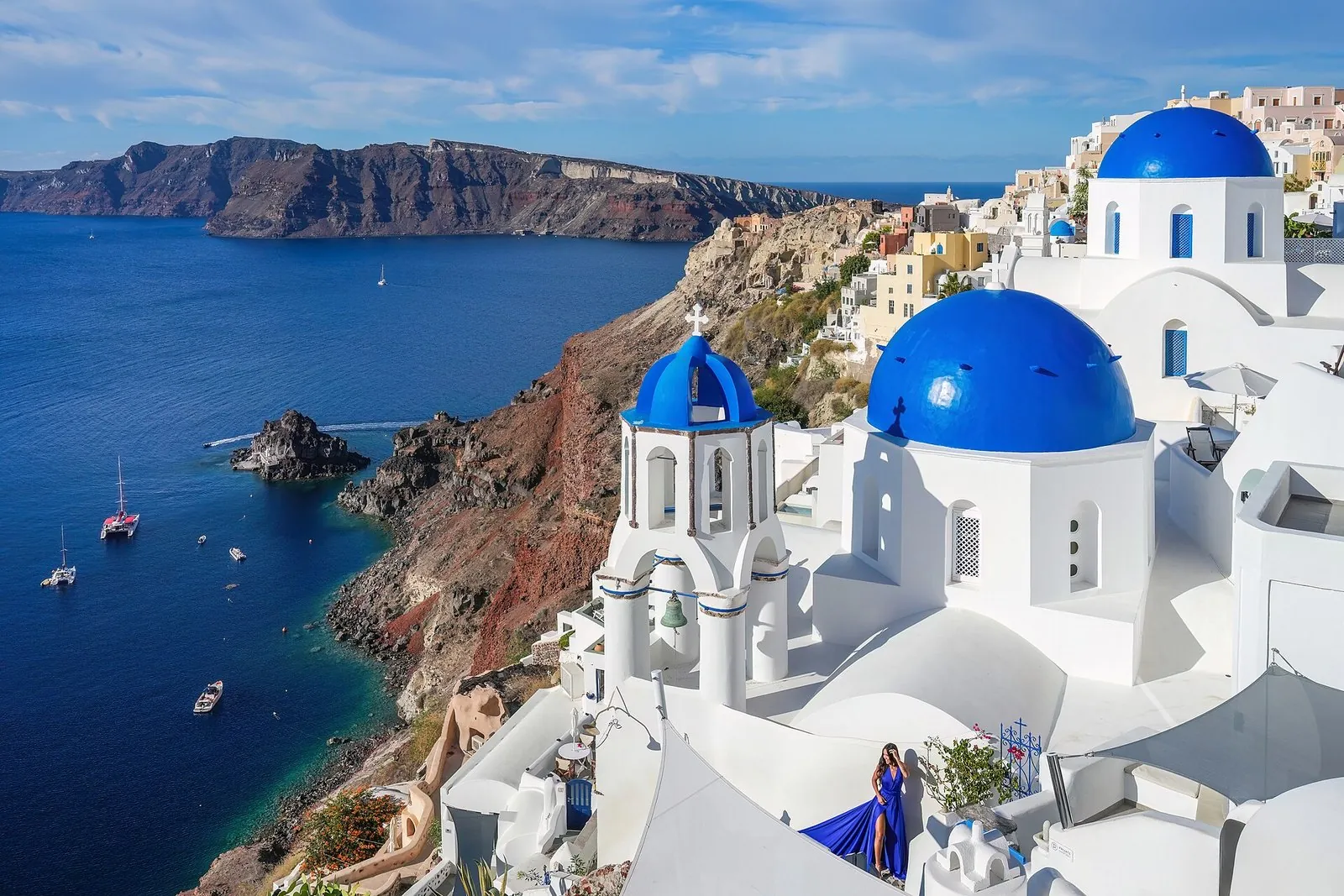
The list of things to do in Santorini starts with the caldera, the flooded crater of a volcano that blew itself apart about 3,600 years ago and left a ring of cliffs with villages balanced along the rim. Most visitors spend their whole trip looking at it. The better trips also go below it and away from it: onto the water, into a Bronze Age town buried in ash, through wine villages where nobody is selling a sunset. This guide picks 60 experiences across the island, with what each costs, how long it takes, whether to book and when to go.
Quick answer: If you only do five things, watch one sunset from the caldera rim, hike from Fira toward Oia early in the morning, take a boat onto the caldera, visit the prehistoric town at Akrotiri (EUR 20 on the Ministry of Culture’s 2026 ticket list) and spend an evening in Pyrgos. Then add beaches, wine and the villages as the days allow.
Last updated September 27, 2026. We checked ticket prices and opening hours for the archaeological sites and museums on the Greek Ministry of Culture’s pages, the Karavolades steps and the Civil Protection measures, cable car and bus fares, and event dates against official sources in September 2026. Hours change with the season, so confirm before you go.
- Akrotiri is open: the prehistoric town reopened on April 11, 2025; tickets are EUR 20, and in the second half of September 2026 it’s open 08:00-19:00 on most days (08:30-15:30 on Mondays and Thursdays).
- Ancient Thera and the museums: Ancient Thera and the Museum of Prehistoric Thera each cost EUR 10. In summer, Ancient Thera closes on Wednesdays and the museum on Tuesdays, and the Archaeological Museum of Thera in Fira is open again.
- Red Beach is boat-only: the cliff path has been closed since 2013, and rockfalls in 2025 reinforced the closure. Boats from Akrotiri harbor cost roughly EUR 5-8.
- The steps are open: the Karavolades steps between Fira and the Old Port reopened after a closure from July 27 to August 3, 2026. The cable car costs EUR 10 one way for adults (2026 price list).
- The 2026 trap: Civil Protection measures until March 31, 2027 close the Ammoudi road to general traffic and the shoreline path from Ammoudi to Agios Nikolaos, and restrict access around Fira’s Old Port.
- Free days: Ministry sites are free on the last weekend of September and on the first Sunday of each month from November to March, among other dates.
On this page: Top 12 at a glance | Views, sunsets and walks | On the water | History and museums | Villages | Food and wine | Active Santorini | Evenings | Slow days | By village | What to skip | FAQ
The Best Things to Do in Santorini at a Glance
If you have three or four days, these are the twelve Santorini attractions we’d build around. Costs are per adult and dated where they come from an official list; “varies” means the price depends on the operator, the boat or the season.
| Experience | Cost | Time needed | Book ahead? | Best time |
|---|---|---|---|---|
| Sunset from the caldera rim | Free | 1.5-2 hours | No (yes for a sunset table) | Arrive 60-90 minutes before sunset |
| Fira to Oia hike | Free | 3-5 hours | No | Start by 8 a.m. in summer |
| Caldera boat tour | Varies | 4-6 hours | 1-3 days in summer | Morning, or a sunset cruise |
| Akrotiri prehistoric town | EUR 20 (2026) | 1.5-2 hours | No | At opening time |
| Museum of Prehistoric Thera | EUR 10 (2026) | 1-1.5 hours | No | Midday, out of the heat (closed Tuesdays) |
| Ancient Thera | EUR 10 (2026) | 2-3 hours with the climb | No | Morning (closed Wednesdays in summer) |
| Pyrgos village | Free | 1-2 hours | No | Late afternoon into dinner |
| Wine tasting | Varies | 1-1.5 hours | 1-2 days in summer | Late afternoon |
| Red Beach by boat | Boat roughly EUR 5-8 | 1-2 hours | No | Morning |
| Perissa and Perivolos beaches | Free (sunbeds extra) | Half a day | No | Morning or late afternoon |
| Cable car to Fira’s Old Port | EUR 10 one way (2026) | 30 minutes plus lines | No | Early, before the cruise rush |
| Megalochori and Emporio | Free | 1 hour each | No | Morning |
Caldera Views, Sunsets and Walks
The caldera is why most people come, and it rewards more than one look. Watch it at sunset and at sunrise, walk along its rim, climb to its highest points and ride down its face. These eleven cover the ways to see it.
1. Watch the sunset from Oia
The famous one, and worth doing once. A Santorini sunset from Oia, at the northern tip of the island, is the most photographed moment in Greece: the sun drops toward the sea, the white houses turn gold and then pink, and a crowd along the old castle walls applauds. In 2026 sunset times run from about 17:05 in late December to about 20:40 in late June, so the timing of your evening changes a lot with the season.
Plan it: free; arrive 60-90 minutes early in summer for a spot; KTEL buses from Fira cost EUR 2.20 (EUR 2.80 at night, 00:30-05:00, on the May 2026 table), but the buses back fill fast. Best for: first-timers who want the classic view and don’t mind company.
2. Find a quieter sunset on the caldera rim
The same light with half the crowd. Imerovigli and Firostefani, between Fira and Oia, look across the caldera toward the setting sun, and any terrace or path along the rim gives you the view without the shoving. Pyrgos, inland and higher, gives a wider panorama over the whole island at dusk.
Plan it: free along the paths; a drink on a terrace costs more at sunset; arrive 45 minutes early. Best for: couples and anyone who wants to actually watch the sunset instead of photographing the backs of heads.
3. Catch the sunset at the Akrotiri lighthouse
Wild, windy and wide open. The lighthouse at the island’s southwestern tip stands on bare cliffs with open sea on three sides, and the sunset here feels more like the edge of the world than a village event. There’s little shade, no shops and limited parking, which is exactly why people love it.
Plan it: free; drive or take a taxi, since buses don’t serve the tip; arrive an hour early in summer and bring a layer, as the wind can be strong. Best for: travelers with a car who want a sunset without a crowd.
4. See the sunrise from the east coast
The show nobody lines up for. Santorini faces the sunrise on its long eastern side, and dawn over the Aegean from Kamari beach, the hills above Pyrgos or the empty caldera paths is quiet in a way sunset never is. Photographers know the soft morning light on the caldera villages is often better than the golden hour.
Plan it: free; about an hour; no booking; set an alarm. Best for: early risers, jet-lagged arrivals and photographers.
5. Walk the caldera edge from Fira to Imerovigli
The best view on the island for the price of a coffee. The path along the rim from Fira through Firostefani to Imerovigli is mostly paved, mostly easy and lined with the views that make the island famous: the cliffs dropping hundreds of meters to the water, the volcanic islands in the middle and Oia on the far curve. It’s the short version of the famous hike and suits almost everyone.
Plan it: free; roughly an hour each way at a strolling pace; no booking; morning or the hour before sunset. Best for: everyone, including travelers who don’t want a long hike.
6. Hike from Fira to Oia along the rim
The island’s great walk. The Fira to Oia hike follows the caldera rim from the capital to the northern tip, past Imerovigli, chapels and the high point of the route, with the view changing at every bend. Blue Star Ferries’ island guide puts it at 9.5 km and about three hours; most people take longer, with photo stops. Beyond Imerovigli the path turns to rough, exposed trail with almost no shade.
Plan it: free; 3-5 hours; start by 8 a.m. in summer with plenty of water, sun protection and proper shoes; take the bus back from Oia (EUR 2.20). Best for: fit walkers who want the caldera to themselves for a morning.
7. Walk out toward Skaros Rock
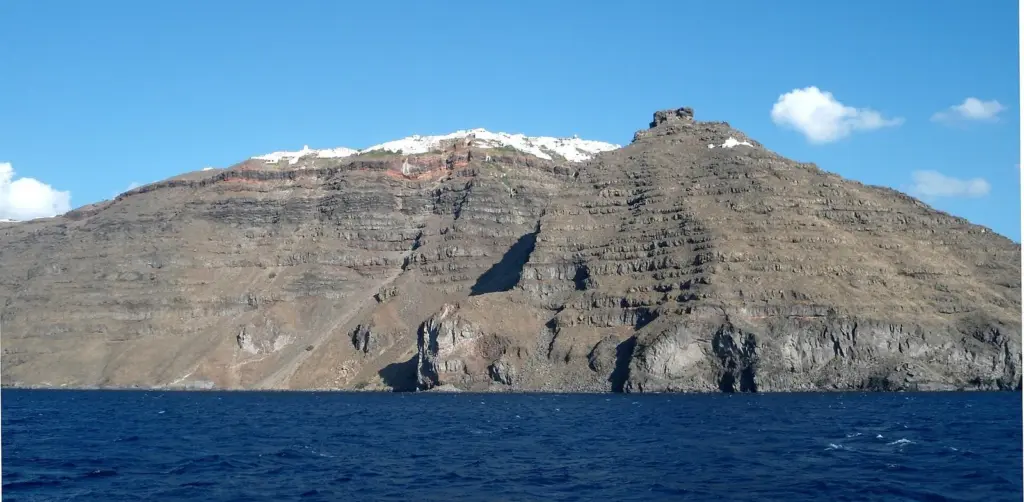
A medieval stronghold on a headland. Skaros Rock juts out from the cliff below Imerovigli, and in the Middle Ages it carried a castle and the island’s main settlement; almost nothing of the castle survives, but the walk down and around the headland gives some of the best caldera views anywhere. Landslides have hit these slopes, so check with the municipality whether the path is open before you go.
Plan it: free; 1-1.5 hours; no booking; morning. Check locally before you go, and don’t climb beyond barriers or signs. Best for: sure-footed walkers staying in Imerovigli.
8. Drive up to Profitis Ilias, the island’s highest point
The whole island below you. Profitis Ilias, the mountain above Pyrgos, rises to about 567 meters and is topped by a monastery and a cluster of antennas. On a clear day the view takes in the caldera, the airport, the east coast beaches and neighboring islands. Check whether the monastery itself is open to visitors; the road and the views are the point.
Plan it: free; 30-60 minutes; no booking; clear mornings or late afternoon. The road climbs from Pyrgos. Best for: travelers with a car and anyone who wants to understand the island’s shape.
9. Ride the cable car down to Fira’s Old Port
A quick drop down the caldera wall. The cable car links Fira with the Old Port at the waterline in a few minutes, and the ride down the cliff face is a small thrill in itself. On the 2026 price list it costs EUR 10 one way for adults, EUR 5 reduced and EUR 5 per piece of luggage. The Old Port sits inside a 2026 Civil Protection restricted zone, though the cable car and the path itself were not restricted.
Plan it: EUR 10 each way; 30 minutes plus lines; no booking; early morning, before cruise passengers arrive, or late afternoon, after they’ve left. Best for: anyone heading to boat tours from the Old Port, and people who don’t fancy 600 steps.
10. Walk the Karavolades steps
The old way up, zigzagging down the cliff. The Karavolades steps wind between Fira and the Old Port in hundreds of broad stone steps; sources count anywhere from about 588 to 650. They were closed from July 27 to August 3, 2026, after a retaining-wall collapse and reopened by municipal order. Donkeys use the same path, which means dung, flies and the occasional traffic jam.
Plan it: free; 20-40 minutes down, longer up; walk down rather than up in summer heat, and take the cable car back. Best for: fit walkers who want the cliff on foot. We’d skip riding the donkeys.
11. Find the blue domes
The postcard, in person. The blue-domed churches above the caldera in Oia are the island’s most recognizable image, and they look best in the morning, when the light is soft and the lanes are quiet. Other blue domes dot the rim in Firostefani and Imerovigli. Be respectful: these are working churches and, often, private rooftops, so don’t climb walls or trespass for a photo.
Plan it: free; 30-60 minutes; no booking; early morning. Best for: photographers and first-time visitors.
On the Water
Santorini looks different from below. The caldera’s cliffs, the volcanic islands in the middle and the beaches around the coast are best seen from the water, and a day on a boat is the most popular excursion on the island for good reason.
12. Sail the caldera on a boat tour
The day most visitors remember. A Santorini boat tour takes you inside the caldera to see the cliffs from below, with stops that usually include the volcano, the hot springs and Thirasia or a swim stop. Choose between traditional wooden boats on fixed routes, catamaran cruises with a meal and snorkeling, and private boats. Morning tours are calmer and cooler; sunset cruises are the romantic option.
Plan it: prices vary by boat and season; 4-6 hours; book 1-3 days ahead in summer; check what’s included, such as meals, drinks, towels and the volcano entrance fee. Best for: everyone, especially first-time visitors.
13. Walk on the Nea Kameni volcano
Standing on the island that’s still growing. Nea Kameni, the black island in the middle of the caldera, is the young volcanic cone that formed over the last few centuries. Tours land you at a small jetty, and a path climbs across bare lava to the summit craters, where you can see steam vents on some days and the whole caldera around you. It’s hot, dusty and shadeless in summer.
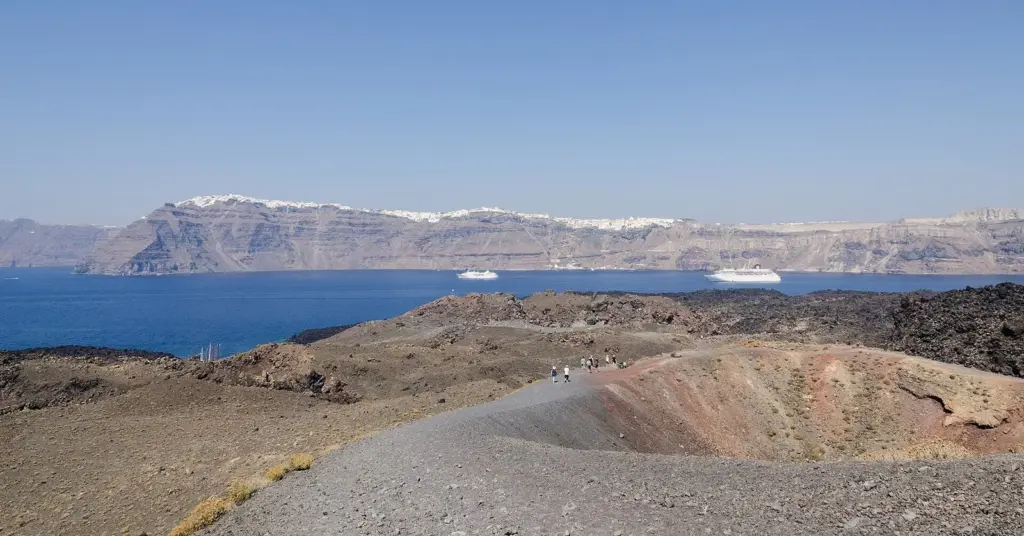
Plan it: reached by boat tour; 1-1.5 hours on the island; an entrance fee is charged, so ask your operator for the current amount and whether your tour includes it. Wear sturdy shoes and bring water. Best for: families with older children and anyone curious about volcanoes.
14. Swim in the hot springs at Palea Kameni
Warm, orange water in a volcanic cove. Most caldera tours stop off Palea Kameni, where you swim from the boat into a small bay tinted rust-orange by iron-rich water seeping from the volcano. It’s noticeably warmer than the open sea, though not bath-hot. The iron can stain light swimsuits, so wear a dark one.
Plan it: reached by boat tour; 30 minutes in the water; for confident swimmers, since you swim from the boat. Best for: swimmers and anyone who likes a story to tell.
15. Visit Thirasia, the island across the caldera
What Santorini looked like before the crowds. Thirasia, the smaller island on the western side of the caldera, has a few villages, tavernas at its small harbor and the same cliffs with far fewer people. Many caldera boat tours stop here for lunch, and a few hours is enough to climb to the village of Manolas for the view back across to Oia.
Plan it: by boat tour or local boat; half a day; book the tour ahead in summer. Best for: travelers who want a glimpse of a quieter Cycladic island.
16. See Red Beach from a boat
Red cliffs, dark sand, no footpath. Red Beach near Akrotiri is famous for its towering red volcanic cliffs, but the cliff path has been officially closed since 2013 because of rockfalls, and the February 2025 earthquake swarm set off more. The only way in now is by boat: small boats from Akrotiri harbor charge roughly EUR 5-8 for the short ride, about 10 minutes.
Plan it: boat roughly EUR 5-8; 1-2 hours; no booking; morning, before the wind picks up. Don’t climb the barriers for a shortcut; the closure is there for a reason. Best for: photographers and beachgoers combining it with Akrotiri.
17. Spend a day on Perissa and Perivolos
The long black-sand beach. Perissa and Perivolos form one long stretch of dark volcanic sand on the southeast coast, lined with sunbeds, tavernas and beach bars. Santorini beaches aren’t the soft white sand of the Caribbean, but this is the island’s best all-day beach: shallow in places, easy to reach and busy enough to always find lunch. The black sand gets very hot by midday, so bring beach shoes.
Plan it: free, with sunbeds extra; half a day or more; no booking; morning or late afternoon. Buses from Fira cost EUR 2.70 (May 2026 table). Best for: families and anyone who wants a real beach day.
18. Swim at Kamari below Mesa Vouno
A promenade beach with a mountain behind it. Kamari, on the east coast near the airport, has a long black-pebble beach backed by a pedestrian promenade of tavernas, cafes and shops, with the cliffs of Mesa Vouno, where Ancient Thera sits, rising at one end. The water deepens quickly and is often clear.
Plan it: free, with sunbeds extra; half a day; no booking; any time. Buses from Fira cost EUR 2.20 (May 2026 table). Best for: travelers staying on the east coast and anyone combining a swim with Ancient Thera.
19. Walk under the sculpted cliffs at Vlychada
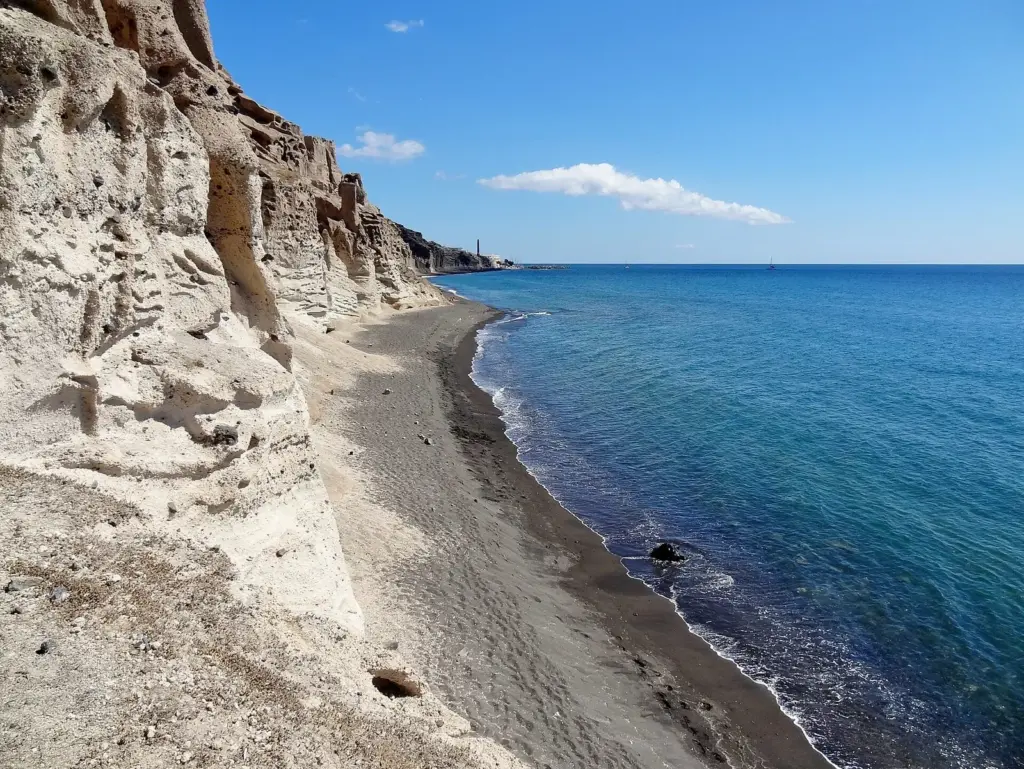
The south coast’s strangest beach. Vlychada, near the marina on the south coast, is backed by pale cliffs of volcanic ash carved by the wind into ripples and hollows, a surprising contrast to the dark sand. It’s quieter than Perissa, and the marina next door has fish tavernas.
Plan it: free; half a day; no booking; late afternoon, when the cliffs glow. Best for: photographers and anyone after a quieter beach.
20. Take a boat to White Beach and the south coast
Coves you can’t drive to. White Beach and the small coves beyond Red Beach are reached only by boat, and the short trips from Akrotiri harbor, or the longer south-coast cruises, are an easy way to see the island’s other colors: white cliffs, red rock and dark sand. Pack snorkel gear, as the water is clear.
Plan it: prices vary; 1-3 hours; no booking for the short boats, booking for cruises; morning. Best for: beach hoppers and swimmers.
21. Watch the sunset from the water
No crowd, just the boat. Sunset cruises time their return so you watch the sun set behind Thirasia or the open sea from inside the caldera, usually with a meal and drinks. It solves the Oia crowd problem and shows you the villages lit up above you. The downside is that it’s usually more expensive than a day cruise and can be choppy if the wind picks up.
Plan it: prices vary; about 5 hours; book several days ahead in summer. Best for: couples and anyone celebrating.
History and Museums
Santorini’s history is as dramatic as its scenery: a Bronze Age town buried by the eruption, a Greek and Roman city on a mountaintop, Venetian castles and a 20th-century earthquake that emptied whole villages. The Ministry of Culture runs the main sites, and a combined Hellenic Heritage ticket covers Akrotiri, Ancient Thera and the Museum of Prehistoric Thera. All three are free on the last weekend of September and on the first Sunday of each month from November to March.
22. Walk the streets of prehistoric Akrotiri
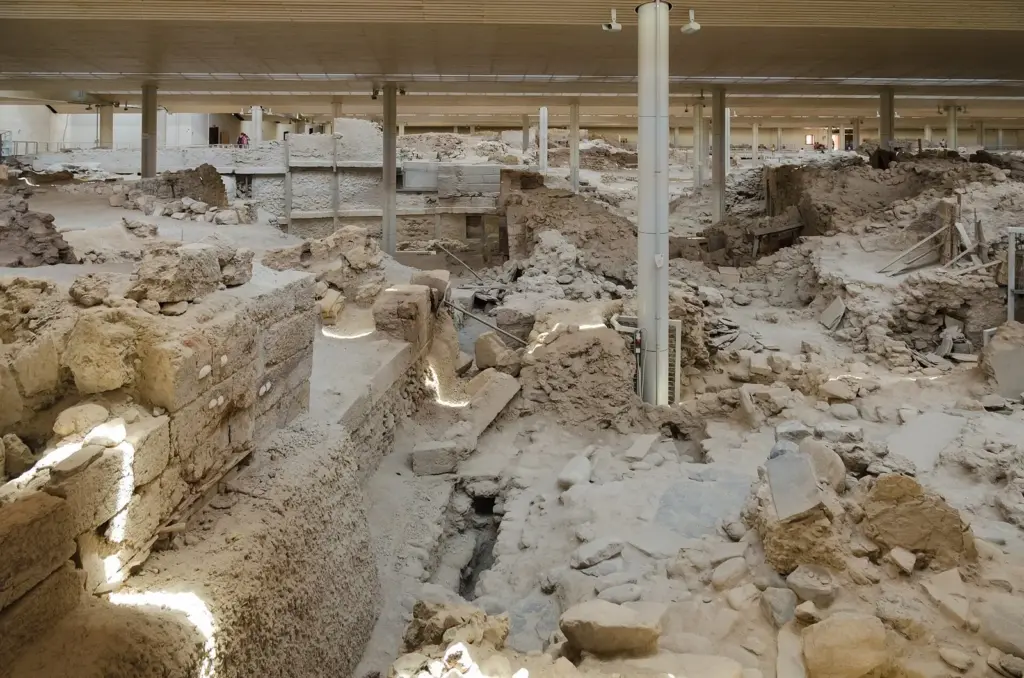
A Bronze Age town preserved under ash. Akrotiri was a thriving port town when the eruption buried it about 3,600 years ago, and the ash preserved multi-story houses, streets, storage jars and the wall paintings now in museums. A modern roof covers the excavation, and walkways take you above and between the buildings. It’s one of the most important archaeological sites in the Aegean and, on a hot day, one of the few shaded sights on the island. It reopened on April 11, 2025, after a safety closure.
Plan it: EUR 20 (Ministry of Culture, 2026). Hours taper through the fall: September 16-30, 2026 it’s open 08:00-19:00 (last entry 18:30), October 1-15 08:00-18:30 and October 16-31 08:00-18:00, but only 08:30-15:30 on Mondays and Thursdays; winter hours are 08:30-15:30, closed Tuesdays. Allow 1.5-2 hours; buses from Fira cost EUR 2.20. A guide or audio guide helps a lot. Best for: everyone, even people who “don’t do ruins”.
23. See Akrotiri’s treasures at the Museum of Prehistoric Thera
Where the wall paintings and finds from Akrotiri live. The Museum of Prehistoric Thera in Fira displays the pottery, tools and famous wall paintings found at Akrotiri, and it’s the natural pair to a site visit: go to the site first, then see what came out of it. It’s small, air-conditioned and easy to fit into a Fira afternoon.
Plan it: EUR 10 full, EUR 5 reduced; open 08:30-15:30, closed Tuesdays, winter and summer (Ministry of Culture, 2026). Allow 1-1.5 hours. Best for: anyone who visited Akrotiri, and families escaping the midday heat.
24. Climb to Ancient Thera on Mesa Vouno
A mountaintop city with sea on both sides. Ancient Thera spreads along the ridge of Mesa Vouno, the mountain between Kamari and Perissa, with the remains of temples, houses, a theater and an agora from the Hellenistic and Roman town, and views down to both beaches. The Ancient Thera hike up from Perissa follows an old path to the saddle below the site, and a road with hairpin bends climbs from Kamari for the last stretch by car or shuttle.
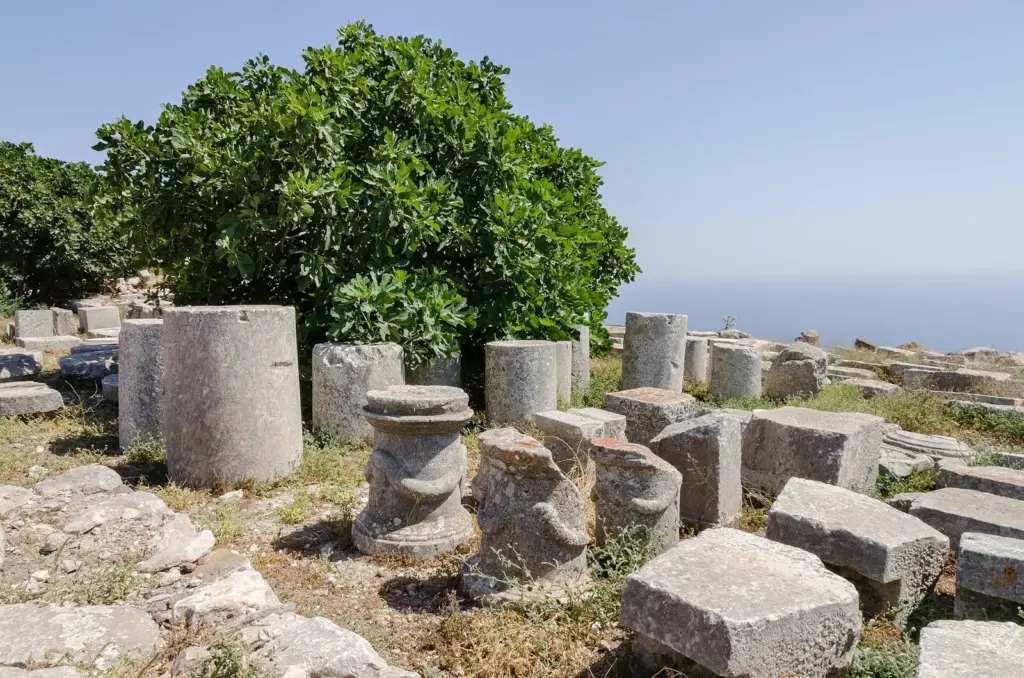
Plan it: EUR 10 full, EUR 5 reduced. Summer hours are 08:30-15:30, closed Wednesdays; in winter it opens only Friday to Sunday in November, by appointment from December to February, and Thursday to Monday in March (Ministry of Culture, 2026). Allow 2-3 hours with the climb; go early and bring water, as the site is exposed. Best for: history lovers and walkers.
25. Visit the Archaeological Museum of Thera
Ancient Thera’s finds, back on show. The Archaeological Museum of Thera in Fira holds sculpture, pottery and inscriptions from Ancient Thera and the island’s ancient cemeteries. The Ministry’s page once listed it as closed for works; in September 2026 it listed summer opening hours again, which makes it worth adding to a Fira day.
Plan it: EUR 10 full, EUR 5 reduced; summer hours Tuesday to Friday and Sunday 08:30-15:30 and Saturday 09:00-21:00, closed Mondays and public holidays (Ministry of Culture, 2026). Check winter hours before you go. Best for: anyone who has been to Ancient Thera.
26. Step into Megaron Gyzi in Fira’s Catholic quarter
A mansion turned cultural center. Megaron Gyzi, an old mansion in Fira’s Catholic quarter, houses a cultural center with exhibitions on the island’s history and art and hosts a summer festival. It’s a calm, shaded break from the lanes outside, with glimpses of the Fira that existed before the tourism boom.
Plan it: open May 1 to October 31, Monday to Saturday 10:00-16:00; its own site says admission to its events is free. Allow 45 minutes. Best for: culture lovers and anyone curious about pre-tourism Santorini.
27. Learn the tomato story at the Tomato Industrial Museum
How a cannery shaped an island. The Tomato Industrial Museum “D. Nomikos”, at the Santorini Arts Factory in Vlychada, occupies a former tomato-processing factory and tells how the island’s small, intense cherry tomatoes supported families for generations. The old machinery, the stories of the people who worked there and the setting by the sea make it one of the island’s most original small museums.
Plan it: EUR 12 full, EUR 10 reduced (ages 8-18, students, over-65s and the unemployed), free for children under 8; open Tuesday to Sunday, April through November, 10:00-18:00, closed Mondays. Allow an hour, and combine it with Vlychada beach. Best for: families, food lovers and anyone tired of caldera views.
28. Look inside Fira’s Orthodox Metropolitan Cathedral
The big church above the caldera. Fira’s Orthodox Metropolitan Cathedral, rebuilt after the 1956 earthquake, dominates the town with its white walls and arcades, and its interior is covered with modern frescoes by a local artist. Step in from the heat, dressed modestly, and it’s one of the calmest moments you’ll have in Fira.
Plan it: free; 20 minutes; no booking; outside service times. Cover shoulders and knees. Best for: anyone in Fira, especially at midday.
29. Wander Fira’s Catholic quarter
The Venetian legacy in stone. In the north of Fira, a quieter quarter grew up around the island’s Catholic community, a legacy of Venetian rule, with the Catholic cathedral of Saint John the Baptist, its bell tower and a convent. The lanes here are calmer than the main shopping streets, and they lead naturally to Megaron Gyzi and the caldera path north.
Plan it: free; 30-45 minutes; no booking; morning or late afternoon. Best for: walkers heading from Fira toward Firostefani.
Villages Beyond the Caldera Rim
Most visitors see Oia and Fira and leave thinking that’s Santorini. The villages inland and to the south are where the island still lives its own life: older, quieter and cheaper, with wine country between them. Each one below repays an hour or two, and several are better at dinner time than at noon.
30. Wander Pyrgos up to its Kasteli
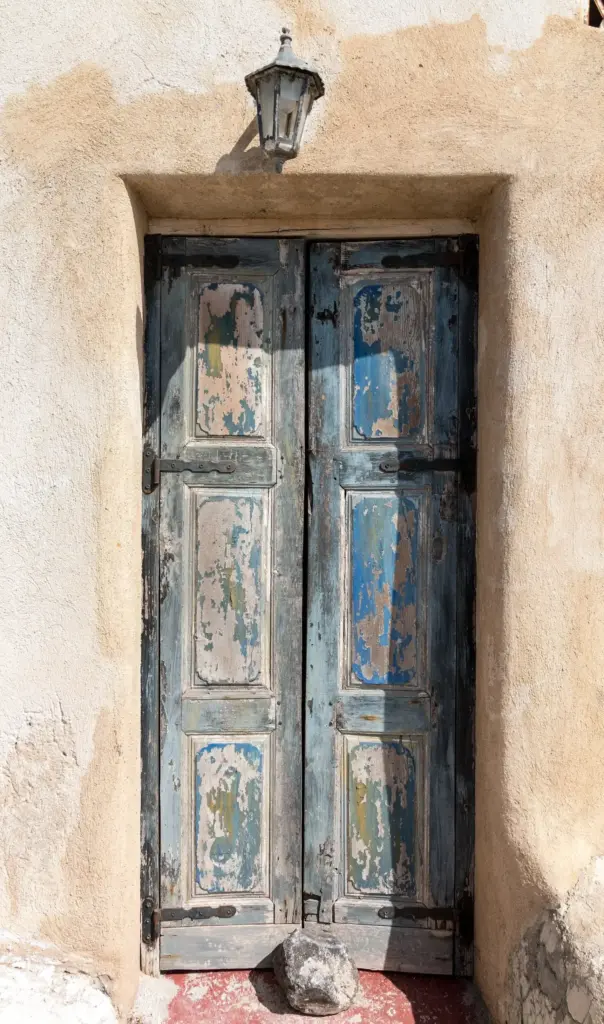
Inland, hilltop, Venetian. Pyrgos climbs a hill in the middle of the island in tight rings of lanes that end at its old Venetian castle, the Kasteli. From the top you see most of Santorini at once: the caldera on one side, vineyards running down to the east coast on the other. It’s the village that most rewards aimless walking, all arches, chapels and stairways that turn into rooftops, and in the evening the tavernas below the castle fill with people who came for dinner and stayed for the view.
Plan it: free; 1-2 hours; no booking; late afternoon into dinner. KTEL buses from Fira cost EUR 2.20 (table updated May 19, 2026). Best for: anyone who wants Oia’s lanes without Oia’s crowds.
31. Explore Megalochori’s lanes and bell towers
The wine-country village. Megalochori, on the south side of the island, is a medieval village of whitewashed alleys, old mansions and bell towers that lean over the lanes. Wine made its fortune: one of its old wineries became the Vedema resort, which says it grew out of a 400-year-old winery. Come in the morning for empty lanes and soft light, or at dusk when the square fills up.
Plan it: free; about an hour; no booking; morning or early evening. Buses from Fira cost EUR 2.20 (May 2026 table); it’s about 10.7 km by the bus route. Best for: photographers and anyone combining a village walk with a winery visit.
32. Get lost in Emporio’s fortified Kasteli
A medieval maze built against pirates. Emporio, in the south near Perissa, has one of the island’s best-preserved fortified quarters: houses packed together to form an outer wall, with narrow passages and blind corners meant to slow down raiders. Few tour groups come, and on a weekday morning you may have the lanes to yourself. The windmills on the ridge above the village are a short walk away.
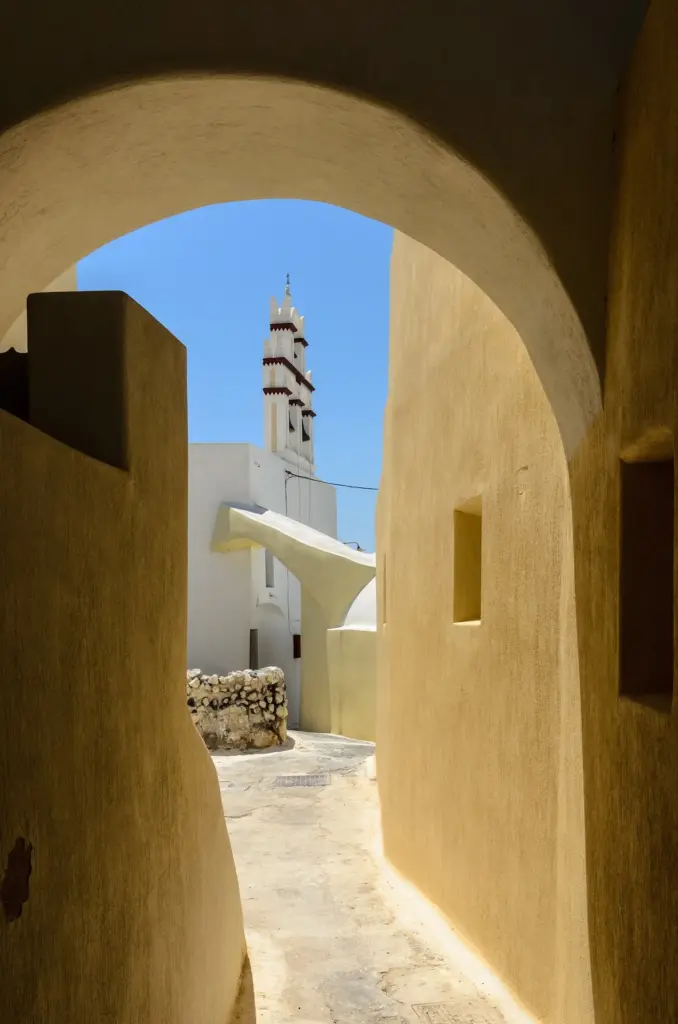
Plan it: free; 1 hour; no booking; morning. Pair it with a swim at Perissa, a few minutes away. Best for: history lovers and anyone tired of caldera crowds.
33. See Oia before the crowds arrive
The famous village, on your terms. The Oia Santorini most people picture is a sunset crowd packed along the castle walls. At 8 or 9 in the morning it’s a different place: shopkeepers sweeping steps, cats on the walls, and the blue domes and windmills without a hundred phones in front of them. Walk the main marble-paved path, then drop down any side stair toward the caldera.
Plan it: free; 2 hours; no booking; early morning. KTEL buses from Fira cost EUR 2.20 (night fare EUR 2.80, 00:30-05:00, May 2026 table). Best for: photographers and anyone staying elsewhere who wants Oia without the evening crush.
34. Linger in Firostefani and Imerovigli
The caldera villages between Fira and Oia. Firostefani starts where Fira ends and is quieter within a few hundred steps; Imerovigli, higher up the rim, looks straight at Skaros Rock and has some of the widest caldera views on the island. Both are mostly hotels and terraces, so come for a walk, a coffee and the view rather than for sights.
Plan it: free; 1-2 hours; no booking; morning or late afternoon. It’s an easy walk from Fira along the caldera path. Best for: couples, and anyone who wants the caldera view without Fira’s noise.
35. Climb to the castle in Akrotiri village
The southwest’s own Venetian stronghold. The modern village of Akrotiri, above the archaeological site, grew around a medieval castle whose ruins still crown the hill. It’s a short climb with views over the south coast, and it pairs neatly with the prehistoric town below and the lighthouse at the island’s western tip.
Plan it: free; 45 minutes; no booking; late afternoon, then continue to the lighthouse for sunset. Buses from Fira to Akrotiri village cost EUR 2.20 (May 2026 table). Best for: travelers already visiting the archaeological site or Red Beach.
36. Walk the back lanes of Finikia
Oia’s quiet neighbor. Finikia sits just inland from Oia, and its lanes of pastel houses and small churches feel a world away from the sunset crowds a few minutes’ walk to the west. Start here, walk into Oia through the back streets, and you’ll arrive feeling like you found a side door.
Plan it: free; under an hour; no booking; morning. Best for: anyone staying in Oia who wants a morning walk before the day-trippers arrive.
37. See the cave houses of Vothonas
Homes dug into the volcanic ravine. Vothonas, in the island’s center, is built into the sides of a ravine, with cave houses cut into the soft volcanic rock and a church set into the gully. It’s one of the clearest places to understand how islanders built before concrete, using the ground itself for insulation against summer heat and winter wind.
Plan it: free; 30-45 minutes; no booking; any time, best in soft light. Best for: travelers with a car or scooter who like architecture more than shopping.
38. Find the Byzantine church at Mesa Gonia
A thousand years of worship in one small valley. Mesa Gonia, below Pyrgos on the road toward Kamari, is a half-abandoned village with the Byzantine church of Panagia Episkopi, one of the oldest churches on the island, and the ruins of houses emptied by the 1956 earthquake. It’s a quiet, slightly haunting stop, and a reminder that the island’s geology isn’t just scenery.
Plan it: free to walk around; church opening varies; 30 minutes; no booking; morning. Best for: history buffs on the way to Kamari.
Food and Wine
Santorini’s volcanic soil and near-constant wind make its food and wine unusual: low yields, concentrated flavors and grape varieties you won’t find on many other islands. Wine and food could fill a whole trip on their own; these are the experiences worth building a day around.
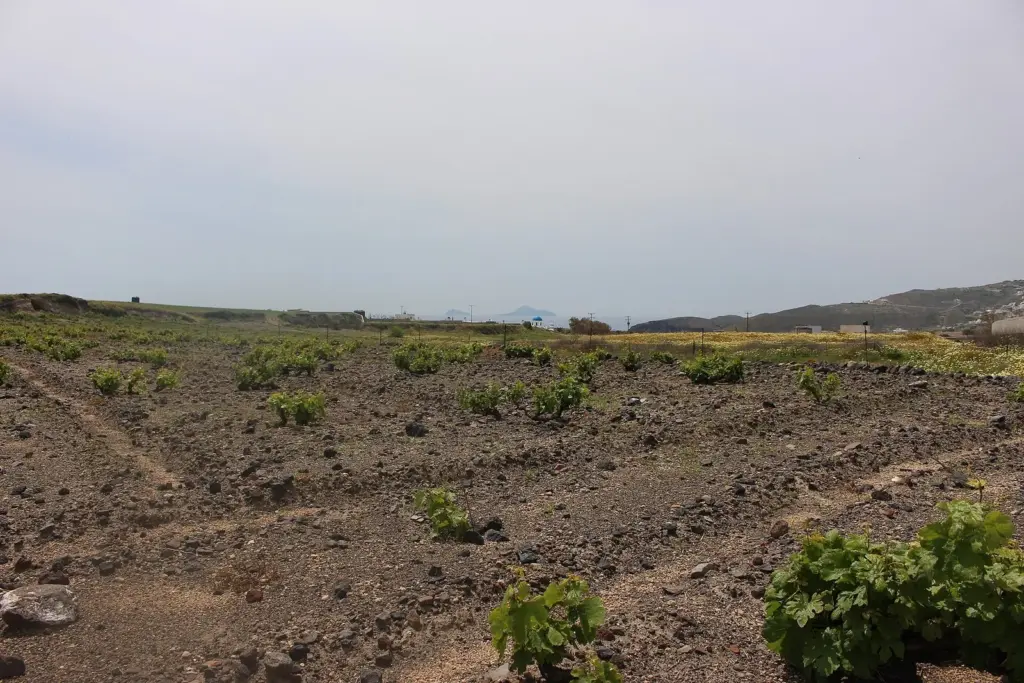
39. Taste Assyrtiko at a caldera-edge winery
The island’s signature grape, where it grows. Assyrtiko, a crisp, mineral white, is the grape Santorini is known for, and a tasting flight on a terrace above the caldera is one of the island’s great pleasures. Most wineries pour three to six wines with a plate of local cheese, tomatoes or fava, and the good ones explain why the same grape tastes different from different villages.
Plan it: paid tastings; 1-1.5 hours; book a day or two ahead in summer; late afternoon, and don’t drive afterward. Best for: wine lovers and anyone who wants a sunset without the Oia crowd.
40. See how the vines are grown
Baskets, not rows. Walk past any vineyard and you’ll see vines trained into low round baskets on the ground, called kouloura, rather than on wires. The shape protects the grapes from the wind and the fierce sun and helps them catch moisture from the night air. It’s one of those details that, once you notice it, you see everywhere.
Plan it: free to look from the roads; a guided vineyard walk costs extra; 30 minutes to half a day; spring and summer, when the vines are green. Best for: curious travelers and wine tourists.
41. Try a glass of Vinsanto
Santorini’s sweet, sun-dried wine. Vinsanto is made from grapes dried in the sun after harvest and then aged for years, giving a deep amber wine with notes of dried fruit and caramel. It’s served in small glasses after dinner, and even people who don’t like sweet wine often change their mind with the first sip.
Plan it: by the glass at wineries and restaurants; no booking; after dinner. Best for: dessert-wine converts and anyone buying a bottle to take home.
42. Eat the island’s own produce
Small, sweet, dry-farmed. Santorini’s cherry tomatoes, white eggplant, capers and yellow split peas (fava) grow with almost no rain, which concentrates the flavor. Order tomatokeftedes (tomato fritters), a plate of fava with onions and capers, and whatever the taverna says came from its own garden. Prices in a village taverna run well below a caldera-edge restaurant for food that’s often better.
Plan it: lunch or dinner in a village taverna; no booking at lunch, usually needed for dinner in summer. Best for: everyone.
43. Have a long seafood lunch by the water
Grilled fish with your feet near the sea. The tavernas on the south and east coasts, at Vlychada, Perissa, Kamari and the Akrotiri harbor, serve fish, octopus and simple salads a few steps from the water. Ammoudi below Oia is the famous one, but in 2026 its road is closed to general traffic under Civil Protection measures (municipal shuttles excepted) and the path along the shore to Agios Nikolaos is closed, so check access before you plan around it.
Plan it: fish is usually priced by the kilo, so ask before you order; 2 hours; no booking at lunch outside August. Best for: slow afternoons between a morning sight and a beach.
44. Book a dinner with a caldera view
The table everyone wants. A dinner on a terrace above the caldera at sunset is the most requested booking on the island, and the best tables in Oia, Imerovigli and Fira go days or weeks ahead in summer. It’s expensive, and the food doesn’t always match the view, so choose on the menu as well as the terrace.
Plan it: book as early as possible for sunset slots between June and September; 2-3 hours. Best for: special occasions and honeymooners.
45. Shop for local food and wine to take home
The souvenirs that taste of the island. Fava, capers, caper leaves, tomato paste, Vinsanto and a bottle of Assyrtiko are the things most visitors wish they’d bought more of. Knowing what to buy in Santorini is mostly a matter of reading labels: look for products from the island’s cooperatives and producers rather than generic Greek goods.
Plan it: delis and wineries across the island; wrap bottles well or ship them from the winery. Best for: food lovers and gift shoppers.
46. Time your trip for the grape harvest
Late summer in wine country. The harvest runs in late summer, when wineries are busiest and the island’s harvest celebrations take place. In 2026 the Vedema festival at Santo Wines was held on August 2 with free admission; check Santo Wines’ site for the 2027 date. Even without a festival, a winery visit in harvest season comes with the smell of fermenting grapes and a lot more activity in the cellar.
Plan it: August and early September; watch the wineries’ announcements for festival dates. Best for: wine lovers who don’t mind summer heat.
Active Santorini
Santorini isn’t only a place to sit and look. The trails, the sea and the roads give you plenty to do with your legs, and a few of these are the most memorable days visitors have.
47. Walk the island’s inland trails
Old mule paths between villages. Beyond the famous caldera path, Santorini hiking means old paths linking Pyrgos, Profitis Ilias, the ridge above Kamari and the southern villages, through vineyards, chapels and terraced hills. They’re quieter than the caldera route and show you the island’s working side.
Plan it: free; 1-4 hours; no booking; start early in summer, and bring water and sun protection, since shade is rare. Some paths are rough and poorly signposted, so use an offline map. Best for: walkers who want to escape the crowds.
48. Rent an ATV or a car for a day
Freedom, with a few rules. A day on four wheels lets you string together beaches, villages and wineries at your own pace, which is why a Santorini ATV tour or rental is so popular. Wear a helmet: under Greece’s 2025 Road Traffic Code, as reported in the Greek press, riding without one costs a EUR 350 fine and a 30-day license removal, and far more for repeat offenses. Rental firms set their own age and license rules, and local reports say many still ask for an International Driving Permit, so check before you book. The roads are narrow and busy in summer, and a car is safer for anyone not used to quads.
Plan it: rental prices vary by season; book a day ahead in summer; full day; start in the morning to avoid the worst of the heat. Best for: confident drivers exploring the south and east.
49. Ride a horse through the countryside
Vineyards and volcanic beaches from the saddle. Santorini horse riding stables offer guided rides through the countryside and along the black-sand beaches of the south coast, usually in small groups with beginners welcome. It’s a slower, quieter way to see the island’s inland side, and sunset rides are popular.
Plan it: paid, prices set by each stable; 1-2 hours; book a few days ahead; early morning or late afternoon in summer. Check age and weight limits with the stable. Best for: families with older children and couples.
50. See the caldera from a helicopter
The whole volcano in one frame. From the air, the caldera makes sense in a way it can’t from the rim: the ring of cliffs, the volcanic islands in the middle and the scale of the ancient eruption. A Santorini helicopter tour is short and expensive, but for a special occasion it’s hard to beat.
Plan it: paid, from operators licensed for tourist flights; 15-30 minutes in the air; book ahead and expect weather cancellations. Best for: milestone trips and photographers.
51. Snorkel or dive the volcanic coast
Lava formations and clear water. Santorini’s underwater landscape is volcanic rock, caves and drop-offs rather than coral, and dive centers on the south coast run introductory dives and guided trips in the warmer months. Snorkeling off the rocks at the quieter beaches is free and surprisingly good.
Plan it: dive prices vary by center; half a day; book a day ahead; June to October, when the water is warmest. Best for: divers and confident swimmers.
52. Join the Santorini Experience in October
Swim the caldera, run the island. The Santorini Experience is an annual sports weekend with an open-water swim in the caldera and trail races across the island. In 2026 it runs October 16-18, with a 5K at Ancient Thera on the Friday, the caldera swim on Saturday and the trail races on Sunday. Spectators get the island at its most energetic in the quiet season.
Plan it: register on the organizers’ site and check there for the 2027 dates. Best for: swimmers, runners and their supporters.
53. Take a guided tour with a local
History, wine and geology, explained. Santorini tours come in every shape: small-group wine tours, island-wide sightseeing by minibus, a Santorini private tour with your own driver-guide, or a Santorini walking tour of Fira or Oia with someone who grew up there. A good guide turns the island from a backdrop into a story, and it solves the parking problem.
Plan it: prices vary; half or full day; book a few days ahead in summer. Look for licensed guides and small groups. Best for: first-time visitors, families and anyone without a car.
Evenings
Santorini after dark is more relaxed than its reputation. Beyond the sunset, the good nights are long dinners, a few quiet bars and, in summer, films and concerts under the sky. The best things to do in Santorini at night have little to do with the club strip in Fira.
54. Watch a film at the open-air cinema in Kamari
A movie under the sky, the Greek summer way. The Santorini open air cinema everyone mentions is Cine Kamari, on the edge of the beach village, and a film night there is one of the island’s small pleasures: the sky going dark overhead, a cold drink from the bar and crickets competing with the soundtrack. Its own site lists nightly screenings with doors at 20:30 and the film at 21:30, in English with Greek subtitles, and it doesn’t take reservations; in late September 2026 its program ran at least to October 11.
Plan it: check its site for the ticket price; no booking; arrive at 20:30 for a good seat and bring a sweater late in the season. Best for: couples, families and anyone who wants a night off from sunset-watching.
55. Have a drink on Fira’s caldera edge
Cocktails with the lights across the water. Fira’s caldera-side bars are where the island goes after sunset: terraces stepping down the cliff, the cruise ships lit up below and, later, the lights of Oia and Imerovigli across the curve of the caldera. Prices are high and the music loud in some; pick a terrace, not a club, if you want to talk.
Plan it: no booking at most bars; after 21:00; summer is liveliest. Best for: couples and groups of friends.
56. Catch a summer festival or concert
Music, fireworks and village feasts. Santorini’s summer calendar includes classical concerts in Fira, the Ifestia festival, which re-creates the volcano’s eruption with fireworks (held on September 19, 2026, with the 2027 date not yet announced), and village church feasts with food, music and dancing. The feasts are the least touristy nights out on the island.
Plan it: check local listings when you arrive; many events are free. Best for: travelers who want the island’s own culture, not the one staged for visitors.
57. End the day with a swim and a promenade dinner
The east coast’s easy evening. Kamari and Perissa on the east coast have long beachfront promenades lined with tavernas and bars, and a late swim in the calm water followed by dinner on the promenade is the cheapest good evening on the island. With the cliffs of Mesa Vouno above you and the sea turning dark, it feels far from the caldera crowds.
Plan it: free swim; dinner prices well below the caldera; no booking outside August. Best for: families and anyone staying on the east coast.
Slow Days
Santorini is expensive and intense in high summer, and the best trips build in a few slow days. These three fill them well.
58. Spend an afternoon at a spa
Heat, stone and silence. Hotel spas are the main option, some take bookings from non-guests, and a few are genuinely unusual: Vedema’s Elios Spa sits in a 100-year-old wine cellar in Megalochori, and the Notos spa, built into volcanic rock, uses its own natural hot-spring water. A Santorini spa afternoon is the island’s best antidote to a long day of stairs.
Plan it: book treatments ahead; ask whether non-guests can use the facilities. Best for: couples, and anyone recovering from the Fira-to-Oia hike.
59. Browse the shops in Oia and Fira
Jewelry, ceramics, art and wine. Santorini shopping runs from galleries and designer jewelry in Oia to the busy lanes of Fira, with ceramics, linen, local food products and wine everywhere. Prices in the caldera villages are high; the same things often cost less in Pyrgos or Megalochori.
Plan it: free to browse; most shops open late in summer; mornings are quietest. Best for: gift buyers and art lovers.
60. Plan a rainy or off-season day
Museums, wineries and long lunches. Santorini gets little rain, but when it does, or when winter wind makes the caldera path miserable, the island’s museums, wine cellars and village tavernas carry the day. There are plenty of things to do in Santorini on a rainy day: start with the Museum of Prehistoric Thera or a winery tour, then a long lunch in Pyrgos.
Plan it: check winter opening hours, which are shorter; many shops and restaurants close from November to March. Best for: off-season visitors.
Things to Do in Santorini by Village
Santorini sightseeing is easier than it looks on a map: the island is small enough to cross in under an hour by car, but in summer traffic, lines and heat make it sensible to group your days by area. Use the numbers to find each experience above.
| Area | Best for | Experiences |
|---|---|---|
| Oia and Finikia | Sunsets, blue domes, early-morning lanes | 1, 11, 33, 36 |
| Fira | Museums, the cable car and steps, bars, the start of the caldera walk | 5, 6, 9, 10, 23, 25, 26, 28, 29, 55 |
| Firostefani and Imerovigli | Quieter sunsets, Skaros Rock, caldera views | 2, 5, 7, 34 |
| Pyrgos and Profitis Ilias | Village walks, the highest viewpoint, dinner | 2, 8, 30 |
| Megalochori and the wine villages | Wine, lanes, spa | 31, 39-41, 58 |
| Kamari and Mesa Vouno | Beach promenade, Ancient Thera, the open-air cinema, sunrise | 4, 18, 24, 54, 57 |
| Perissa, Perivolos and Emporio | The long black beach, the fortified village, the path to Ancient Thera | 17, 24, 32, 57 |
| Akrotiri and the southwest | Prehistoric Akrotiri, Red Beach, the lighthouse | 3, 16, 20, 22, 35 |
| Vlychada and the south coast | Sculpted cliffs, the tomato museum, fish tavernas | 19, 27, 43 |
| Inland: Vothonas and Mesa Gonia | Cave houses, a Byzantine church | 37, 38 |
| The caldera islands | Volcano, hot springs, Thirasia, sunset cruises | 12-15, 21 |
How to Fit It All In
Nobody fits all 60 Santorini activities into one trip. Three or four days covers the caldera, a boat day, Akrotiri and a village evening; five days adds beaches, wine and Ancient Thera at a sane pace; a week lets you slow down and see the inland villages properly. A few principles make any length work:
- Do outdoor sights early. Hikes, Ancient Thera and the Red Beach boats are best before 11 a.m. in summer. Save museums and wineries for the hot middle of the day.
- Group by area. Akrotiri, Red Beach and the lighthouse make one day; Kamari, Ancient Thera and Pyrgos another; Oia, Finikia and the northern rim a third.
- Book the few things that sell out. Boat tours, sunset dinners and wine tastings in July and August; everything else can wait until you arrive.
- Leave evenings open. Sunset is an event every night, and the villages are at their best after dark.
Money-wise, many of the best experiences cost nothing. Most free things to do in Santorini are walks, villages, beaches and sunsets, and the Ministry sites are free on set days such as the last weekend of September. Many of the more unique things to do in Santorini involve the volcano itself: walking on it, swimming in its springs, seeing a town it buried. And if you’re looking for the island’s overlooked corners, they’re mostly in plain sight inland, in places like Vothonas, Mesa Gonia and Emporio, where tour buses rarely stop.
What’s Changed in 2026
| What | Where it stands | Source and date |
|---|---|---|
| Akrotiri archaeological site | Open, EUR 20; shorter hours on Mondays and Thursdays | Ministry of Culture, September 2026 |
| Archaeological Museum of Thera | Listing summer opening hours again after works | Ministry of Culture, September 2026 |
| Ancient Thera | EUR 10; closed Wednesdays in summer; by appointment December-February | Ministry of Culture, September 2026 |
| Karavolades steps | Open; closed July 27-August 3, 2026 after a wall collapse | Municipality of Thira order |
| Ammoudi road and shore path | Road closed to general traffic (municipal shuttles excepted); Ammoudi-Agios Nikolaos path closed | Civil Protection measures to March 31, 2027 |
| Fira’s Old Port | Restricted zone; cable car and path not restricted | Civil Protection measures to March 31, 2027 |
| Red Beach | Boat access only; more rockfalls after the 2025 earthquakes | Closed by land since 2013 |
| Cable car | EUR 10 adult, EUR 5 reduced, EUR 5 luggage | 2026 price list |
What to Skip
Knowing what not to do in Santorini saves as much time as knowing what to do. Our list:
- Riding the donkeys up the steps. Walk down, take the cable car up, and leave the animals out of it.
- Trying to reach Red Beach on foot. The path is closed for rockfalls, and the barriers aren’t decoration. Take the boat.
- Driving to Oia for sunset in summer. Parking is scarce and the road jams afterward. Take the bus early, a taxi booked in advance, or skip Oia for Imerovigli.
- Paying top price for a view and forgetting the food. The caldera-edge restaurants vary hugely; choose on the menu and reviews, not the terrace alone.
- Cramming Akrotiri, Ancient Thera and a boat tour into one summer day. The heat will win. Spread them out.
- Staying only in Oia and Fira. You’ll miss the half of the island that still feels like an island.
- An ATV if you’ve never ridden one. Narrow, busy roads and steep bends are not the place to learn. Rent a small car.
Things to Do in Santorini: FAQ
What is Santorini best known for?
The caldera: a flooded volcanic crater ringed by cliffs, with white villages such as Oia, Fira and Imerovigli along the rim. Add sunsets, the Bronze Age town at Akrotiri, black-sand beaches, boat trips to the volcano and hot springs, and wines made from Assyrtiko grapes grown in volcanic soil, and you have the island’s reputation in a sentence.
How many days do you need in Santorini?
Three or four days covers the essentials: a sunset, the caldera walk, a boat day, Akrotiri and a village evening. Five days lets you add beaches, wineries and Ancient Thera without rushing. A week is ideal if you want slow days and the inland villages. Fewer than two days means choosing between the caldera and everything else.
Is Akrotiri worth visiting?
Yes. It’s a Bronze Age town preserved under volcanic ash, with multi-story houses and streets you walk above under a protective roof, and it’s shaded on hot days. Tickets cost EUR 20 on the Ministry of Culture’s 2026 list. Pair it with the Museum of Prehistoric Thera in Fira, where the finds and wall paintings are shown.
Can you walk from Fira to Oia?
Yes, along the caldera rim. Blue Star Ferries’ island guide puts it at 9.5 km and about three hours; allow three to five hours with stops. The first stretch to Imerovigli is paved and easy; after that, the trail is rough and exposed. Start early in summer, bring water and sun protection, and take the bus back.
Can you still go to Red Beach?
Only by boat. The cliff path has been officially closed since 2013 because of rockfalls, and the February 2025 earthquakes caused more. Small boats from Akrotiri harbor charge roughly EUR 5-8 for the short ride, and south-coast cruises often stop nearby. Don’t climb the barriers; the closure exists for safety.
What should you book in advance in Santorini?
In July and August, book boat tours, sunset dinners, wine tastings, rental cars and any helicopter or horse-riding trips a few days ahead. The archaeological sites, beaches, villages, cable car and buses don’t need booking. Outside summer, most things can be arranged a day or two before, but many businesses close from November to March.
Is Santorini worth visiting in winter?
For the right traveler, yes: no crowds, low prices and the caldera to yourself. But hours are shorter, many hotels, restaurants and boat trips close, and some sites cut back; Ancient Thera opens by appointment only from December to February. It suits walkers, photographers and wine lovers more than beachgoers.
Sources and How We Checked
We checked the official pages below between September 24 and 27, 2026, and dated each price and opening time to its source; we did not visit these places for this guide.
- Hellenic Ministry of Culture: Akrotiri, Ancient Thera, Museum of Prehistoric Thera and Archaeological Museum of Thera
- Santorini Cable Car price list (2026)
- KTEL Santorini price table (updated May 19, 2026)
- Municipality of Thira: the Karavolades steps order and local notices
- Tomato Industrial Museum, Megaron Gyzi and Cine Kamari: hours, prices and programs
- Blue Star Ferries’ Santorini guide: the Fira-Oia path distance
Santorini Tourism Guide is an independent publication. We are not affiliated with the Municipality of Thira, the Greek National Tourism Organisation, the Hellenic Ministry of Culture, the Santorini Cable Car, KTEL Santorini or any business listed here, and no one paid to be included.
Photo Credits
- The three blue domes of Oia: photo by Giles Laurent, via Wikimedia Commons (CC BY-SA 4.0)
- Imerovigli and Skaros Rock: photo by Rebexho, via Wikimedia Commons (CC BY-SA 3.0)
- Nea Kameni volcano path: photo by Norbert Nagel, via Wikimedia Commons (CC BY-SA 3.0)
- Vlychada beach: photo by Olaf Tausch, via Wikimedia Commons (CC BY 3.0)
- Akrotiri excavation: photo by Norbert Nagel, via Wikimedia Commons (CC BY-SA 3.0)
- Ancient Thera ruins: photo by Norbert Nagel, via Wikimedia Commons (CC BY-SA 3.0)
- Doorway in Pyrgos: photo by Dietmar Rabich, via Wikimedia Commons (CC BY-SA 4.0)
- Emporio old quarter: photo by Norbert Nagel, via Wikimedia Commons (CC BY-SA 3.0)
- Santorini vineyard: photo by ArticCynda, via Wikimedia Commons (CC BY-SA 4.0)