This Santorini travel guide covers the practical side of a trip: what it costs, what you need to enter Greece, how money and tipping work, whether it’s safe after the earthquakes of 2025, what to pack, how to cope with the stairs, and the small things that make the difference between a smooth trip and a frustrating one. Santorini is easy to visit and hard to do well. It’s small, well connected and used to visitors, but it’s also expensive, crowded in summer and built on a cliff, and a little planning goes a long way.
Quick answer: Plan four or five days, split between a caldera village (Firostefani or Imerovigli for a first trip) and the beach side or a wine village. Fly in via Athens or directly from Europe in season. Budget high in summer, far less in spring and fall. You need a passport and, from April 10, 2026, EU entry registration at your first Schengen airport; the currency is the euro; and the island is safe, with the usual cautions about cliffs, heat and scooters.
Last updated October 2, 2026. We checked entry rules against the European Commission, fees and fares against official price lists and trade sources, hotel prices on the hotels’ own booking engines, and the hospital’s details on its official site, all in September 2026. Prices are dated; they change by season and year.
- Entry: the EU Entry/Exit System has been live at all Schengen borders since April 10, 2026. The EU’s April 28, 2026 note said ETIAS would start in the “last quarter of 2026”, without an exact date; check the EU’s official ETIAS site before you travel.
- Money: the euro. Bus fares are EUR 2.20-2.70 (KTEL table updated May 19, 2026), the cable car EUR 10 one way, Akrotiri EUR 20.
- Tourist fee: the Climate Crisis Resilience Fee adds EUR 2-15 per room per night from April to October, depending on the hotel’s category.
- Safety: after the 2025 earthquake swarm, Civil Protection measures in force until March 31, 2027 restrict the Ammoudi road below Oia, a zone at Fira’s Old Port and traffic at Athinios port. The rest of the island operates normally.
- Health: the General Hospital of Thira in Karterados has a 24-hour emergency unit; 112 reaches all emergency services.
On this page: Essentials at a glance | The big decisions | Getting around | Costs | Entry requirements | Money and tipping | Tourist fees | Safety | Health | Stairs and accessibility | What to wear and pack | Time, plugs and phones | Solo, LGBTQ+ and family travel | Is it worth it? | A five-day plan | What to book | Travel tips | Map | FAQ
Santorini Travel Guide: The Essentials at a Glance
| Topic | What to know |
|---|---|
| Currency | Euro (EUR); cards widely accepted, but carry some cash |
| Language | Greek; English is widely spoken in tourism |
| Time zone | Eastern European Time (UTC+2), summer time UTC+3; in 2026 clocks go back on October 25 |
| Electricity | 230 V, European two-pin plugs (types C and F) |
| Emergencies | 112 for all services; hospital in Karterados with a 24-hour emergency unit |
| Entry | Schengen rules; EES registration at your first Schengen airport; ETIAS not yet running |
| Getting there | Direct flights from Europe in season, or via Athens by air or sea |
| Getting around | KTEL buses from the Fira hub (EUR 2.20-2.70), taxis (few), rental cars and scooters |
| Best time | Late April to June and September to mid-October |
| Where to stay | Firostefani or Imerovigli for a first trip; beach side for value and families |
| Tourist fee | EUR 2-15 per room per night (April-October), lower in winter |
| Tap water | Much of it is desalinated; most visitors drink bottled water |
Planning Your Santorini Trip: The Big Decisions
When to go. Santorini’s season runs from spring to fall, with most hotels open from April to late October. July and August are hot, crowded and expensive; late April to June and September to mid-October are the sweet spots, with warm weather, open businesses and fewer people. Winter is quiet and cheap but many hotels and restaurants close. The detail belongs in a guide of its own, but the short version on the best time to visit Santorini is: shoulder season, if you can.
How long to stay. Three days covers the essentials: the caldera, a sunset in Oia, a boat day and the prehistoric town at Akrotiri. Four or five days lets you add beaches, wineries and the inland villages at a sane pace. A week is ideal if you want slow days. Fewer than two nights means seeing Santorini through a bus window.
Where to stay. The biggest decision of the trip: caldera villages for the views, the beach side for sand and value, or a wine village for quiet. For a first visit, we’d pick Firostefani or Imerovigli, and split longer stays between the caldera and the coast. Our guide to where to stay in Santorini compares every area, with hotels and dated prices.
How to get there. There are no nonstop flights from North America; you’ll connect in Athens or another European hub, and in summer many European cities fly direct. From Athens, you choose between a short domestic flight and a ferry that takes most of a day. Our guide to how to get to Santorini compares the routes, with dated fares.
How to get around. KTEL buses run from the hub in Fira to the villages and beaches, at EUR 2.20 to most places and EUR 2.70 to Perissa and Athinios on the 2026 table, but most cross-island trips change in Fira. Taxis are few. A rental car or scooter gives you freedom, but roads are narrow and parking in Oia and Fira is hard in summer.
Getting Around Santorini
The island is small, about 18 km from north to south, but its roads are narrow and busy, and in summer getting around takes longer than the map suggests.
- KTEL buses are the backbone: cheap (EUR 2.20 to most villages, EUR 2.70 to Perissa and Athinios on the table updated May 19, 2026), frequent in summer and routed through the hub at Fira. They run to a timetable rather than to demand, fill up before and after sunset, and thin out at night and in winter.
- Taxis are scarce for the number of visitors, especially when ferries arrive, when several flights land together and around sunset. Book ahead for airport and port transfers.
- Rental cars give you the most freedom for villages, wineries and beaches. Parking in Oia and Fira is difficult in summer, and the caldera villages are car-free in their centers. Ask the rental company in advance whether your license needs an International Driving Permit; rules and company policies vary.
- Scooters and ATVs are popular but not for beginners on these roads. Wear a helmet and check your insurance.
- On foot, the caldera path links Fira, Firostefani, Imerovigli and Oia, one of the best walks in Greece, but distances between most other villages are too long for summer walking.
How Much Does a Santorini Trip Cost?
Is Santorini expensive? Yes, by Greek standards, especially on the caldera and in July and August. But the range is wide, and the same island can cost EUR 100 a day or EUR 1,000. Here are dated reference prices from official lists and the businesses’ own sites.
| Item | Price | Source and date |
|---|---|---|
| Bus, Fira to Oia or Kamari | EUR 2.20 (EUR 2.80 at night) | KTEL table updated May 19, 2026 |
| Bus, Fira to Perissa or Athinios port | EUR 2.70 | KTEL table updated May 19, 2026 |
| Cable car, one way | EUR 10 adult, EUR 5 reduced | 2026 price list |
| Akrotiri archaeological site | EUR 20 | Ministry of Culture, 2026 |
| Ancient Thera or the Museum of Prehistoric Thera | EUR 10 each | Ministry of Culture, 2026 |
| Athens-Santorini flight, one way | From EUR 49-50 (late Sept/Oct 2026 dates) | Airline sites, checked September 24, 2026 |
| Ferry from Piraeus | From EUR 20 on limited Super Economy seats | Blue Star, September 2026 |
| Campsite or dorm bed in Fira | EUR 10-15 camping, EUR 12.50-30 dorm (by season) | Santorini Camping’s price list |
| Budget hotel room for two, Perissa | EUR 50-55 a night (early October 2026) | Hotel’s own site, September 24, 2026 |
| Caldera-view room for two, Fira | From EUR 185 a night (late October 2026) | Hotel’s own site, September 24, 2026 |
| Luxury suite for two, Oia | From about EUR 600 a night (October 2026) | Hotels’ own sites, September 24, 2026 |
Food and drink follow the same pattern as rooms: a gyro or a village taverna meal costs a fraction of a caldera-edge dinner, and a sunset cocktail with a view costs several times the same drink on the beach side. The biggest variables in any budget are where you sleep, how often you eat with a view, and whether you rent a car or take the bus.
Santorini on a budget is possible: stay in Perissa, Karterados or the Fira campsite, use the buses, eat in village tavernas and at bakeries, picnic the sunset, and come in May, June, September or October. Many of the best experiences, from the caldera walk to the sunsets and the villages, cost nothing. On the other end, a caldera suite, private transfers, a catamaran cruise and sunset dinners add up very fast.
Long-haul travelers should add the flight to Europe, which is usually the biggest single cost. For example, anyone researching a Santorini trip cost from India should also budget for a Schengen visa, since Indian passport holders need one, and for the connection via a European or Gulf hub.
Santorini Entry Requirements
Santorini is in Greece, which is in the EU and the Schengen area, so Santorini entry requirements are Greece’s and Schengen’s.
- Passport. Bring a valid passport (EU and EEA citizens can use a national ID card). Check its validity against Schengen rules before you book.
- Visas. Visitors from the US, UK, Canada and Australia, among others, don’t need a visa for short stays and can stay up to 90 days in any rolling 180-day period across the whole Schengen area, not per country. Travelers from countries that need a visa apply for a Schengen visa before they travel.
- EES. The EU Entry/Exit System has been fully live at all Schengen borders since April 10, 2026, after a rollout that began on October 12, 2025. Non-EU visitors register their passport details, fingerprints and a facial image on first entry, at the first Schengen airport they land in; the system then records every entry and exit instead of stamping passports. Allow extra time at that first border.
- ETIAS. The EU’s April 28, 2026 statement said the travel authorization for visa-exempt visitors would start in the last quarter of 2026, without an exact date. Check the EU’s official ETIAS site before you travel, and ignore any site charging for “ETIAS approval” before the system exists.
Money, Cards and Tipping
The Santorini currency is the euro, like the rest of Greece. ATMs are easy to find in Fira, Oia, Kamari and Perissa, and the airport terminal has ATMs and currency exchange. Cards are accepted in most hotels, restaurants and shops, but carry some cash for small tavernas, kiosks, beach canteens, the small boats to Red Beach and anywhere you’re not sure; check with KTEL whether its buses take cards on board.
Tipping in Greece is appreciated rather than required. Many visitors round up in cafes and taxis, and leave around 5-10% in restaurants for good service, in cash if possible so it reaches the staff. Check your bill first: some places add a cover charge for bread and water, which isn’t a tip. Hotel porters and housekeeping appreciate a small tip too, especially where bags have been carried down long flights of steps.
Tourist Taxes and Fees
The main Santorini tourist tax is Greece’s Climate Crisis Resilience Fee, charged per room per night and paid when you check out. From April to October it’s EUR 2 for one- and two-star hotels, EUR 5 for three-star, EUR 10 for four-star and EUR 15 for five-star, EUR 2 for furnished rooms and apartments, EUR 8 for short-term rentals (EUR 15 for a detached house over 80 square meters) and EUR 15 for villas. From November to March the rates fall to EUR 0.50, 1.50, 3 and 4 by hotel category, EUR 2 for short-term rentals and EUR 4 for villas. These are the rates in force since January 1, 2025; there is no extra Santorini-specific surcharge.
Cruise passengers pay a separate fee, charged at Santorini and Mykonos since July 21, 2025: EUR 20 per passenger from June to September, EUR 12 in April, May and October and EUR 4 from November to March. Check whether your cruise fare already includes it.
Is Santorini Safe?
Is Santorini safe? Yes. Crime against visitors is low, and the real risks are the ones that come with a crowded island on a volcanic cliff: traffic, heat, the sea and the cliffs themselves. The question most people are really asking now, though, is about earthquakes.
The earthquakes of 2025 and 2026. In late January 2025, an intense swarm of earthquakes began between Santorini and Amorgos and continued for roughly six weeks. Greece declared a state of emergency for Santorini on February 5, 2025, schools closed and more than 10,000 people left the island for a time; counts of the number of tremors vary enormously between sources, and there was no eruption. After a new sequence in 2026, a Joint Ministerial Decision put Civil Protection measures in force until March 31, 2027: traffic control at Athinios port, a ban on general traffic on the road down to Ammoudi below Oia (with municipal shuttles excepted) and the closure of the shore path from Ammoudi to Agios Nikolaos, and a restricted zone at Fira’s Old Port. The cable car and the path between Fira and the Old Port were not restricted, and the rest of the island operates normally.
What that means in practice: follow signs and barriers, don’t cross closures for a photo, keep away from the base of cliffs on beaches, and pay attention to any emergency alerts on your phone, which Greece sends through the 112 system. The volcano that makes Santorini so dramatic is also why these rules exist, and it’s worth reading up on its history before you go.
Everyday safety.
- Roads. Narrow, winding and busy in summer, with inexperienced drivers on ATVs and scooters. Wear a helmet, and rent a car if you’re not a confident rider.
- Cliffs and walls. Many viewpoints and terraces have low walls or no railings. Keep children close.
- Heat. Summer afternoons are hot and shade is scarce. Carry water, plan hikes for the morning and wear sun protection.
- The sea. Some beaches get deep quickly, and the north wind can make the sea rough. Swim at organized beaches when in doubt.
- Crowds. Pickpocketing isn’t common, but keep valuables secure in the sunset crowds in Oia and on crowded buses.
Health, Hospitals and Pharmacies
The Santorini hospital is the General Hospital of Thira, in Karterados just outside Fira. It opened in July 2016, its Emergency Unit runs 24 hours a day all year, and it has 44 beds, with departments including general medicine, surgery, orthopedics, pediatrics, gynecology and cardiology, plus a dialysis unit and diagnostic labs. Its official numbers include (+30) 22860 35300. For anything life-threatening, call 112, the free EU-wide emergency number, which connects to all services and has English-speaking operators.
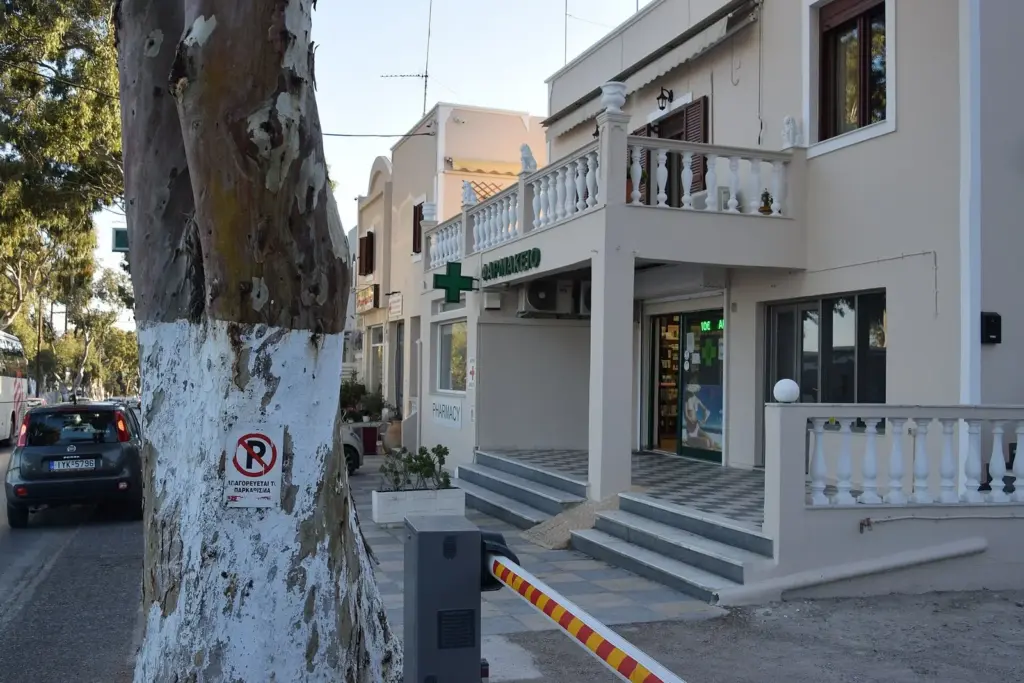
- Pharmacies are marked by a green cross and are the first stop for minor problems; pharmacists in Greece can advise on and sell many medicines that need a prescription elsewhere.
- Insurance. EU travelers should carry their European Health Insurance Card; everyone should have travel insurance that covers medical care and evacuation, since serious cases may be transferred to hospitals on the mainland or Crete.
- Direct numbers. Besides 112, Greece has direct lines for the police (100), ambulance (166), fire service (199), coastguard (108) and the tourist police (171).
- Water. Much of the island’s tap water comes from desalination, and most visitors drink bottled water.
- Sun. The Cycladic sun is strong from May to September, and the white walls and water reflect it. High-factor sunscreen, a hat and water are essentials.
Santorini Stairs, Accessibility and Mobility
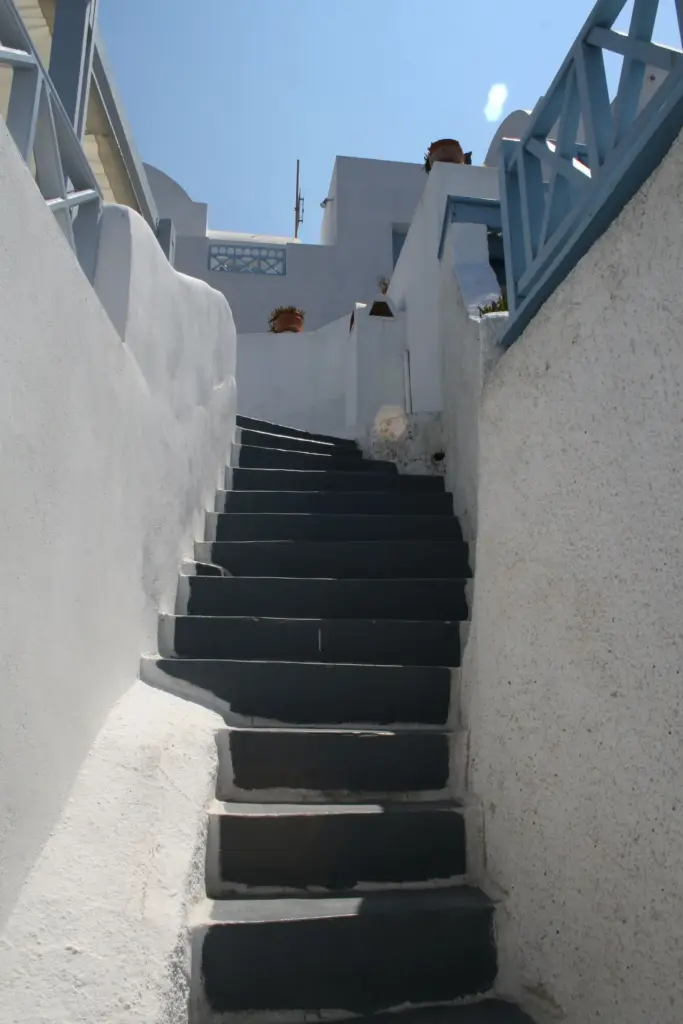
Santorini stairs are the thing most first-timers underestimate. The caldera villages are built down a cliff, so almost everything below the main paths of Oia, Imerovigli, Firostefani and Fira involves steps, often dozens and sometimes hundreds, and many hotels can only be reached on foot from the nearest road. Some cliff hotels set minimum ages partly because of the drops and the stairs.
- Ask before you book. How many steps lie between the road and your room, and whether a porter carries luggage.
- Choose the right area. The beach side (Kamari, Perissa, Perivolos) and inland villages such as Karterados are flat and easier.
- Look for exceptions on the caldera. Some caldera hotels are reached by road, and a few advertise accessibility: in Oia, Canaves Epitome says it isn’t built into the cliff, and Santo Pure has accessible suites and parking.
- Use the cable car. Between Fira and the Old Port, the cable car (EUR 10 one way for adults in 2026) replaces some 600 steps.
- Plan for the heat. Stairs in the midday sun are much harder than stairs in the morning.
Travelers who use a wheelchair will find the main paths of the caldera villages narrow and uneven, and most sights off them inaccessible, so the beach side is usually the better base. Contact hotels and tour operators directly about specific needs; many are helpful when asked in advance.
What to Wear and What to Pack
What to wear in Santorini is mostly about three things: your feet, the sun and the wind. Summer days are hot and bright; evenings on the caldera can be breezy, especially at the northern tip; and spring, fall and winter bring cooler nights and the occasional rain.
- Shoes with grip. The marble paths are polished and slippery, and there are steps everywhere. Leave the smooth-soled sandals for the pool.
- Beach or water shoes. Black sand gets extremely hot, and many beaches have pebbly entries.
- A light layer. For windy sunset viewpoints and boat trips, even in summer.
- Modest clothes for churches. Shoulders and knees covered if you go inside.
- A cover-up. Swimwear is for the beach and the pool; cover up in villages and restaurants.
- Sun protection. Hat, sunglasses and high-factor sunscreen.
- A small daypack and a water bottle. For hikes, boat days and long walks between villages.
- A plug adapter. European two-pin plugs, 230 V.
Pack light if you’re staying on the caldera: every bag has to go up or down the steps, and a bag you can carry makes arrival much easier than a big rolling suitcase.
Time Zone, Plugs, Phones and Wi-Fi
- Time. The Santorini time zone is Eastern European Time, UTC+2, with summer time (UTC+3) from the last Sunday of March to the last Sunday of October. In 2026, the clocks go back one hour on October 25. That puts the island seven hours ahead of New York and two hours ahead of London for most of the year.
- Electricity. 230 V, 50 Hz, with European two-pin plugs (types C and F). Most phone and laptop chargers work with a simple adapter.
- Phones. Travelers with EU phone plans can generally use them in Greece at home rates under EU roaming rules; everyone else should check their plan or buy a local or eSIM data plan.
- Wi-Fi. Available in almost every hotel and many cafes; the airport terminal has Wi-Fi too.
- Language. Greek is the language of the island, and English is widely spoken wherever visitors go. A few words of Greek, such as kalimera (good morning) and efcharistó (thank you), are always appreciated.
Solo, LGBTQ+ and Family Travel
Solo travel. Santorini solo travel is easy and safe, though the island is priced and marketed for couples. Stay in Fira or Perissa for hostels, company and transport, join a boat trip or a wine tour to meet people, and use the buses to get around. The caldera path and the villages are great for walking alone.
LGBTQ+ travelers. Is Santorini gay friendly? Broadly, yes: it’s a mainstream, international destination where same-sex couples are common and generally welcomed, especially in the tourist areas. Greece legalized same-sex civil marriage in February 2024, becoming the first Orthodox-majority country to do so. As anywhere, public displays of affection draw more attention in small, traditional villages than in Fira or Oia.
Families. Santorini works well for families with some planning. Choose a beach-side base or a family hotel, since many caldera hotels set minimum ages of 13 or older, and plan around the heat and the stairs. Beaches such as Monolithos, with shallow water, and Kamari, with everything on hand, are good for younger children, and a caldera boat trip, the volcano and the prehistoric town at Akrotiri appeal to older ones.
Is Santorini Worth It?
Is Santorini worth it? For most people, yes, with the right expectations. The caldera is one of the great sights of the Mediterranean, the prehistoric town at Akrotiri is extraordinary, the wine is excellent and the villages away from the rim are lovely. What disappoints people is usually the crowds in Oia and Fira in high summer, the prices on the caldera, and beaches that aren’t white sand. Go in spring or fall, stay at least three or four nights, sleep at least a night or two on the caldera, explore beyond Oia and Fira, and it will very likely live up to the photos.
It’s less worth it if you only have a day from a cruise ship in August, if you’re looking mainly for a beach holiday, or if the budget only stretches to a room far from everything in peak season. In those cases, consider shoulder season, or pair a shorter Santorini stay with a beach island like Naxos or Paros.
A Sample Five-Day Plan for a First Trip
This is the shape of a first trip we’d recommend, based in Firostefani or Imerovigli for the first three nights and on the beach side or in a wine village for the last two. Swap days around the weather and the boat schedules.
- Day 1: arrive, settle in, walk the caldera path between Fira, Firostefani and Imerovigli in the late afternoon, and watch your first sunset from Imerovigli.
- Day 2: Oia early in the morning for the lanes and the blue domes, down toward Ammoudi (check the 2026 access rules), and back to your hotel for the heat of the afternoon. Sunset from a terrace or dinner with a view.
- Day 3: a caldera boat day: the volcano, the hot springs and Thirasia, or a sunset catamaran.
- Day 4: move to the beach side or a wine village. Visit prehistoric Akrotiri in the morning, take the boat to Red Beach, and watch the sunset from the Akrotiri lighthouse.
- Day 5: Pyrgos in the morning, a winery tasting, a swim at Perissa or Kamari, and dinner in a village square.
With three days, keep days 1 to 3 and fit Akrotiri into one of the mornings. With a week, add Ancient Thera, a day of village-hopping and a lazy beach day or two.
What to Book, and When
- Months ahead: flights, and hotels on the caldera for June to September, when the best rooms go early. The same goes for anything around Greek Orthodox Easter.
- A few weeks ahead: ferries in July and August, rental cars in peak season, sunset dinner reservations at popular restaurants.
- A few days ahead: caldera boat trips, wine tastings, horse riding and other activities in summer; airport and port transfers.
- On the day: buses, the cable car, the archaeological sites and museums, beaches and village walks, none of which need booking.
Outside the peak months, most things can be arranged a day or two ahead, but check opening dates: many hotels, restaurants and boat operators close from November to March.
Santorini Travel Tips: 15 Things Worth Knowing
These are the Santorini travel tips we’d give a friend before a first trip.
1. Go in the shoulder season
Late April to June and September to mid-October give you warm weather, open businesses and far fewer people than July and August, often at much lower prices.
2. Split your stay
Two nights on the caldera for the views and two or three on the beach side or in a wine village is the combination most visitors wish they’d booked.
3. See Oia early
Before 10:00, Oia’s lanes are nearly empty. By late afternoon, they’re packed for the sunset. Do the morning walk even if you come back for the evening.
4. Watch at least one sunset away from Oia
Imerovigli, Firostefani, the Akrotiri lighthouse or a boat give you the same sunset with a fraction of the crowd.
5. Plan your ride home after sunset
Buses and taxis are overwhelmed when the sun goes down. Leave a little early, stay for dinner, or book a transfer.
6. Use the bus, but know it runs through Fira
At EUR 2.20-2.70 a ride on the 2026 table, the KTEL buses are the cheapest way around, but most trips between villages change in Fira.
7. Ask about steps before you book
A caldera room can mean hundreds of steps with luggage. Ask how many and whether a porter helps.
8. Check hotel age limits
Many cliff hotels don’t accept children under 13 or 14, and a few set the limit at 18.
9. Book the few things that sell out
In summer, reserve boat tours, sunset dinners, wine tastings and rental cars a few days ahead; most other things can wait.
10. Visit Akrotiri, then the museum
See the Bronze Age town at Akrotiri (EUR 20 in 2026), then the finds at the Museum of Prehistoric Thera in Fira (EUR 10, closed Tuesdays).
11. Take the boat to Red Beach
The cliff path has been officially closed since 2013 because of rockfalls. Small boats from Akrotiri harbor are the way in.
12. Respect closures
The 2026 Civil Protection measures and rockfall barriers exist for safety. Don’t cross them for a photo.
13. Pack shoes with grip
Polished marble, steps and steep paths are everywhere. Your feet will thank you.
14. Carry some cash
Cards work in most places, but small tavernas, kiosks, beach canteens and boat trips often prefer cash.
15. Leave the caldera
Pyrgos, Megalochori, Emporio and the beaches show you the half of the island that most visitors miss.
Eating and Drinking Basics
Greeks eat late: lunch from about 13:00 to 15:00, dinner from around 21:00, later in summer. Restaurants in the tourist areas serve earlier, but village tavernas fill up late. The island’s own specialties are worth seeking out: fava (a yellow split-pea puree), tomato fritters made with Santorini’s small, intense tomatoes, white eggplant, capers and fresh fish. Santorini’s wines, especially the white Assyrtiko and the sweet Vinsanto, are some of the best in Greece.
Prices follow the view. A caldera-edge dinner costs far more than a meal in a village taverna or on the beach side, and the food isn’t always better. Fish is often priced by the kilo, so ask before you order. Bread and water may come with a small cover charge, and bottled water is what most visitors drink.
Santorini Map: How the Island Fits Together
A Santorini map makes the island easy to understand. It’s a crescent of land around the flooded caldera, about 18 km from north to south. The caldera villages line the western rim: Oia at the northern tip, then Imerovigli, Firostefani and Fira, the capital, in the middle. Athinios, the ferry port, is on the caldera side south of Fira. The airport is on the flat east coast near Kamari and Monolithos, the black-sand beaches run down the east and south coasts to Perissa, Perivolos and Vlychada, and the Akrotiri peninsula stretches west at the southern end, with the prehistoric site, Red Beach and the lighthouse.
What’s Changed for 2026
| What | Now | Source and date |
|---|---|---|
| EU Entry/Exit System | Live at all Schengen borders | Since April 10, 2026 |
| ETIAS | Not running; no confirmed start date | EU statement, April 28, 2026 |
| Civil Protection measures | Athinios traffic control, Ammoudi road and path, Fira Old Port zone | In force until March 31, 2027 |
| Bus fares | EUR 2.20-2.70 from Fira | KTEL table updated May 19, 2026 |
| Akrotiri | Open, EUR 20 | Ministry of Culture, 2026 |
| Tourist fee | EUR 2-15 per room per night, April-October | Rates since January 1, 2025 |
| Summer time ends | October 25, 2026 | EU summer-time rules |
Santorini Travel Guide FAQ
How many days do you need in Santorini?
Three days covers the essentials: the caldera, an Oia sunset, a boat day and Akrotiri. Four or five days lets you add beaches, wineries and the inland villages without rushing, and a week allows slow days. Fewer than two nights means seeing the island in a hurry, which is how most people end up disappointed.
Is Santorini expensive?
By Greek standards, yes, especially on the caldera and in July and August, when caldera rooms can run to several hundred euros a night. But buses cost EUR 2.20-2.70, budget rooms on the beach side started around EUR 50-55 for two in October 2026, and many of the best experiences, from sunsets to village walks, are free.
Is it safe to travel to Santorini after the earthquakes?
Yes. After the 2025 earthquake swarm and a new sequence in 2026, Civil Protection measures in force until March 31, 2027 restrict a few specific areas: the Ammoudi road and shore path below Oia, a zone at Fira’s Old Port and traffic at Athinios. The rest of the island operates normally. Follow signs and any 112 alerts.
Do I need a visa to visit Santorini?
Visitors from the US, UK, Canada, Australia and other visa-exempt countries don’t need a visa for stays of up to 90 days in any 180-day period across Schengen. They register in the EU Entry/Exit System on first entry, and should check the EU’s official ETIAS site for whether they also need an ETIAS authorization. Travelers from countries that need visas apply for a Schengen visa.
What currency is used in Santorini?
The euro. ATMs are easy to find in Fira, Oia and the beach towns, and at the airport. Cards are accepted in most hotels, restaurants and shops, but carry some cash for small tavernas, kiosks, beach canteens and boats. Tipping is appreciated rather than required; around 5-10% in restaurants is common.
Is there a hospital on Santorini?
Yes. The General Hospital of Thira, in Karterados just outside Fira, opened in July 2016 and has a 24-hour emergency unit, 44 beds and departments including surgery, orthopedics and pediatrics. Call 112 in an emergency. Pharmacies, marked with a green cross, handle minor problems, and serious cases may be transferred off the island.
Do I need to rent a car in Santorini?
No, if you stay in or near Fira: buses reach most villages and beaches for EUR 2.20-2.70, though routes run through Fira. A car helps if you’re staying in the south or on the beach side, or want to explore villages and wineries at your own pace. Parking in Oia and Fira is difficult in summer.
What is the time zone in Santorini?
Eastern European Time, UTC+2, with summer time (UTC+3) from the last Sunday of March to the last Sunday of October; in 2026 the clocks go back on October 25. That’s seven hours ahead of New York and two hours ahead of London for most of the year.
Sources and How We Checked
We checked the pages below between September 24 and October 2, 2026, and dated every price and rule; we did not travel for this guide.
- European Commission: EES and ETIAS (April 28, 2026)
- General Hospital of Thira: profile, departments and contacts
- KTEL Santorini price table (updated May 19, 2026)
- Ministry of Culture: Akrotiri and its linked site and museum pages
- GTP: Climate Crisis Resilience Fee rates (January 2025)
- Euronews: the 2026 Civil Protection measures (April 28, 2026)
Santorini Tourism Guide is an independent publication. We are not affiliated with the Municipality of Thira, the Greek National Tourism Organisation, the European Commission, KTEL Santorini or any business listed here, and no one paid to be included.
Photo Credits
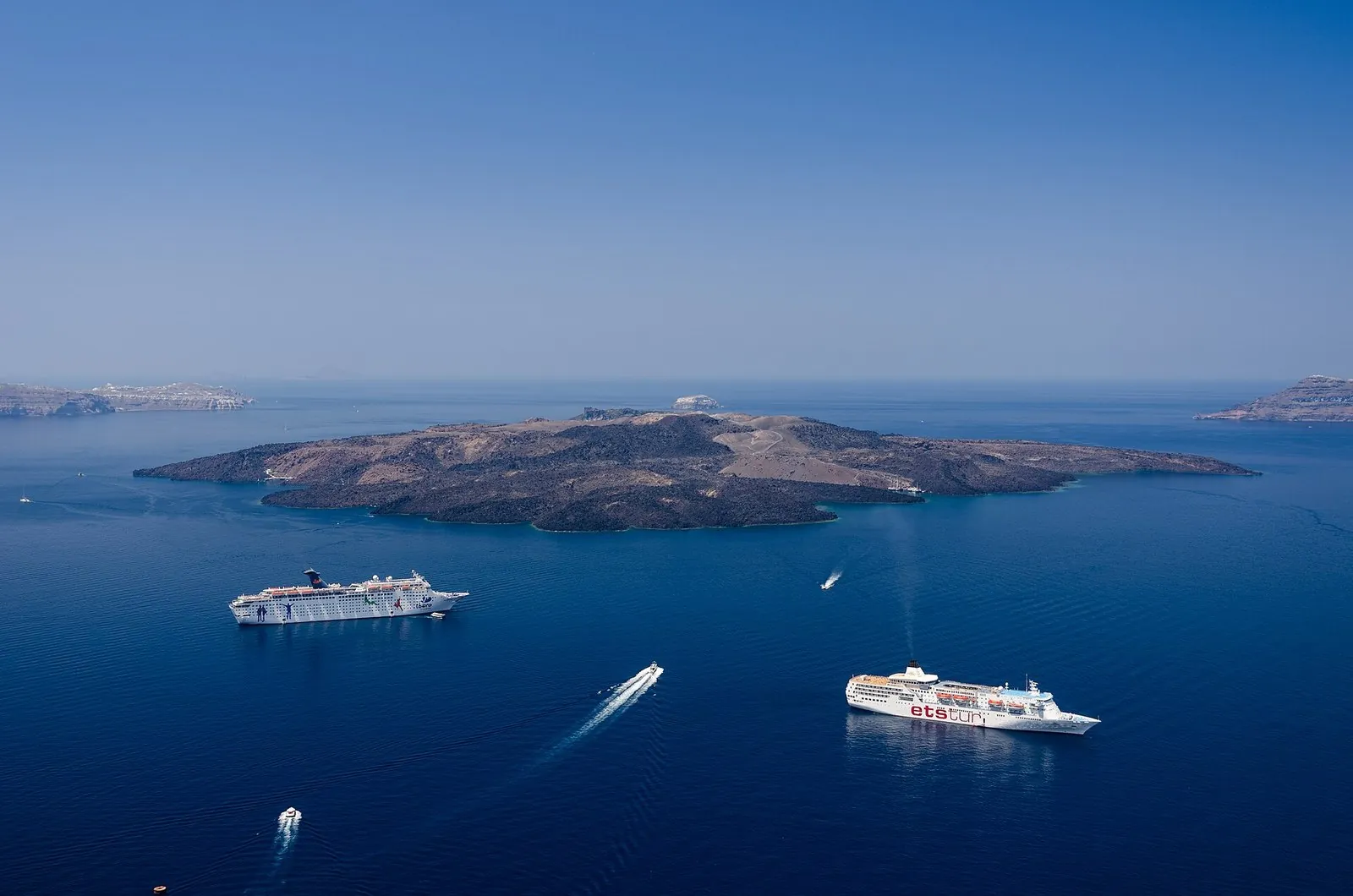
- The caldera from Fira: photo by Norbert Nagel, via Wikimedia Commons (CC BY-SA 3.0)
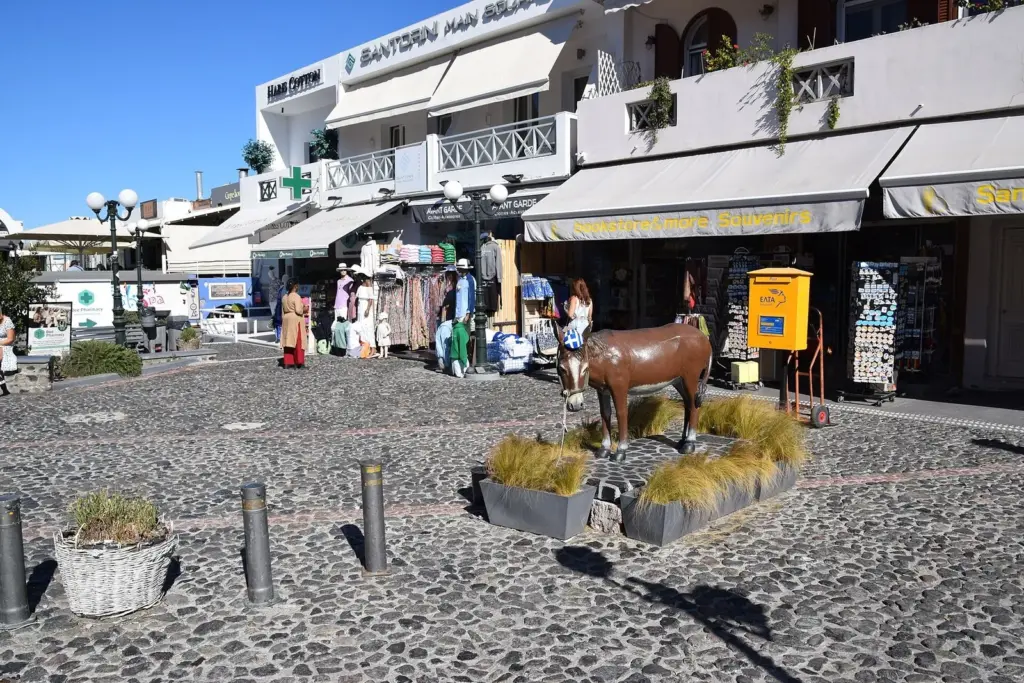
- A square in Fira: photo by Jean Housen, via Wikimedia Commons (CC BY-SA 4.0)
- Pharmacy near Fira: photo by Jean Housen, via Wikimedia Commons (CC BY-SA 4.0)
- Steps in Fira: photo by bongo vongo, via Wikimedia Commons (CC BY-SA 2.0)
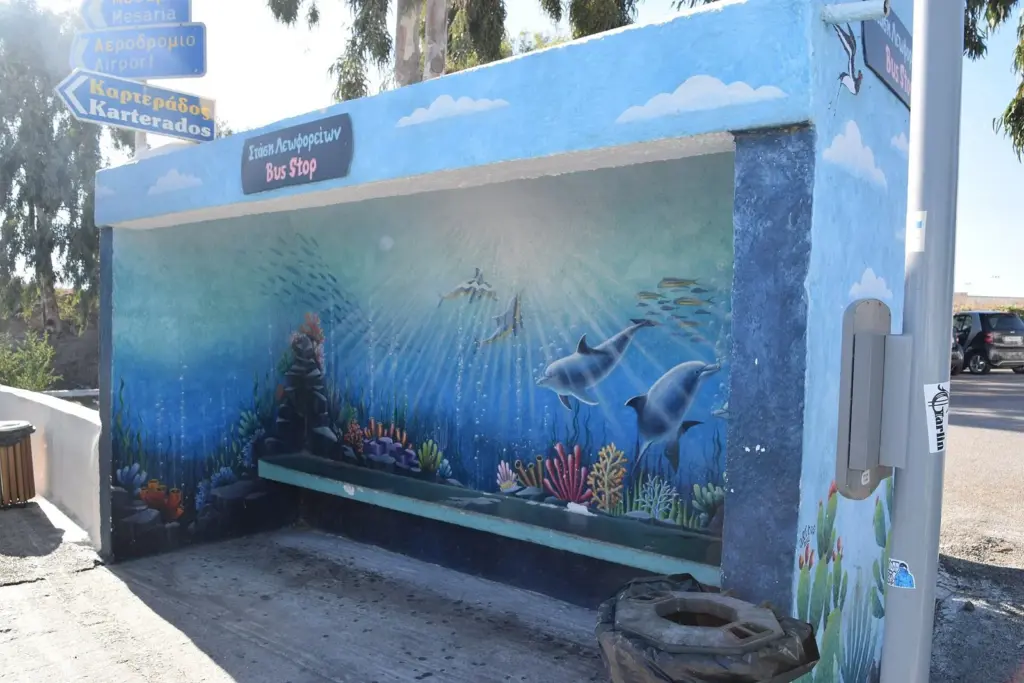
- Bus stop in Karterados: photo by Jean Housen, via Wikimedia Commons (CC BY-SA 4.0)
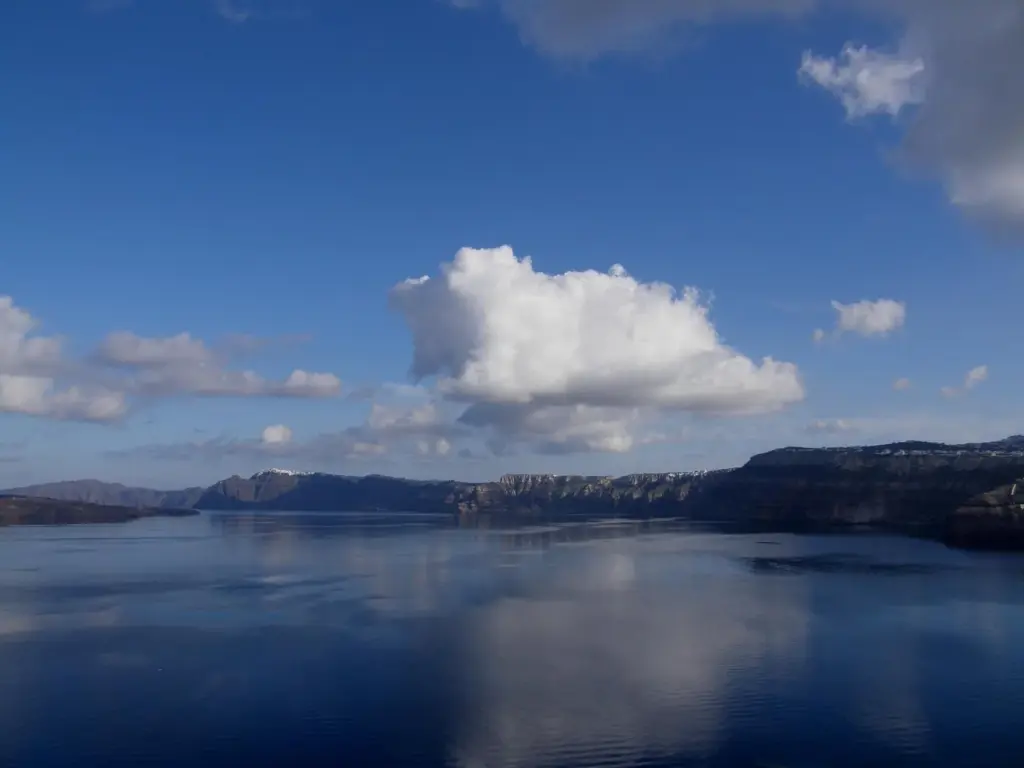
- The caldera in winter: photo by Klearchos Kapoutsis from Santorini, Greece, via Wikimedia Commons (CC BY 2.0)