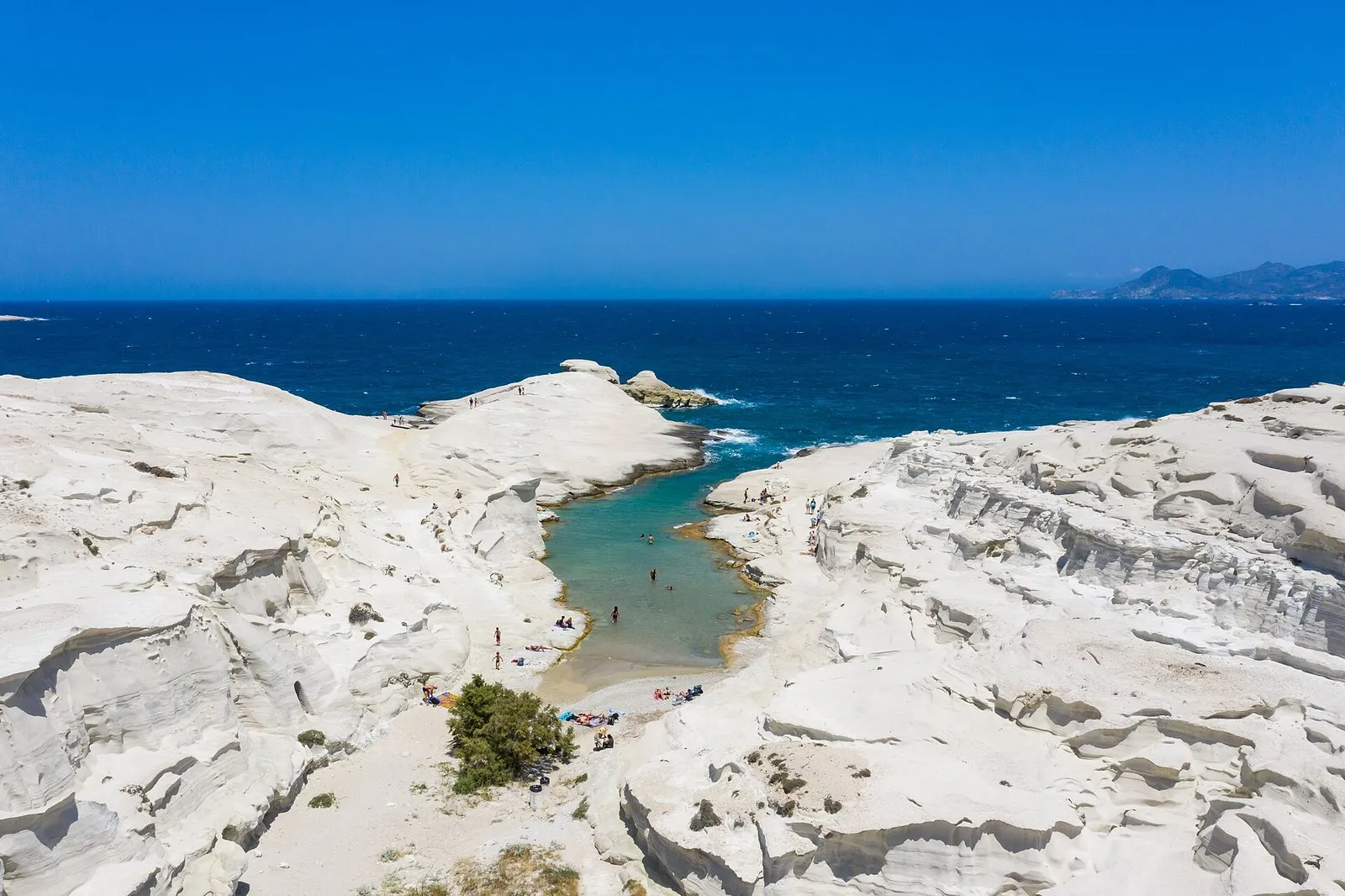
Ask ten people to name the best Greek islands and you’ll get ten lists, because “best” depends on what you want from a trip. Santorini wins for views, sunsets, romance and a sense of drama no other island quite matches. It does less well on sandy beaches, quiet and value, and that’s where the others come in. This guide compares Santorini, island by island, with fourteen of its rivals, so you can choose the right one for your trip, or the right two or three to combine.
Quick answer: For a first trip to the Greek islands, Santorini plus one other island is the classic choice. Pick Naxos or Paros for beaches and value, Mykonos for nightlife, Milos for coves and boat trips, Crete for variety and history, Folegandros or Amorgos for quiet, and Rhodes or Corfu for medieval and Venetian old towns, both UNESCO World Heritage sites.
Last updated October 13, 2026. We checked UNESCO’s list, airport and ferry information and current access restrictions in October 2026; island characters come from long-standing, widely documented facts. Ferry times vary by vessel and season, so check your exact sailing.
- What changed: Navagio, Zakynthos’ famous Shipwreck Beach, was closed to all access, including swimming and boats within 50 meters, for the 2026 season until October 31 because of landslide risk, according to Greek press reports. On Crete, the Minoan palace sites, including Knossos, joined UNESCO’s World Heritage List in 2025.
- Cruise fee: since July 21, 2025, Greece has charged cruise passengers a fee at both Santorini and Mykonos, EUR 20 a person from June to September, which reflects how crowded both get on ship days.
- Getting between islands: booking sites listed Santorini-Ios crossings from 35 minutes, Santorini-Paros about two hours, Santorini-Mykonos about two hours 50 minutes, and Santorini-Milos from about two hours 10 minutes.
- The trap: summer wind. The meltemi can cancel ferries for a day or more in July and August, so don’t plan an island hop for the day before your flight home.
On this page: Best island by traveler type | Is Santorini the best? | Which island should I visit? | 14 islands compared | Island groups | Best combinations | Comparison table | Santorini alternatives | Island hopping | When to go | FAQ
Best Greek Islands at a Glance: By Traveler Type
| If you want | Best island | Also consider | How Santorini compares |
|---|---|---|---|
| Views, sunsets and romance | Santorini | Folegandros, Amorgos | Unbeatable, but crowded in summer |
| Sandy beaches | Naxos | Milos, Paros, Crete | Black volcanic sand, few sandy bays |
| Nightlife | Mykonos | Ios, Paros | Lively in Fira, but no match for Mykonos |
| Value for money | Naxos | Crete, Paros | One of the most expensive islands |
| Families | Naxos | Crete, Paros | Good on the beach side; cliffs and steps on the caldera |
| History and archaeology | Crete | Rhodes, Mykonos (for Delos) | Strong: Akrotiri and Ancient Thera |
| Quiet and authenticity | Folegandros | Amorgos, Patmos | Quiet only in villages away from the caldera, and in winter |
| Boat trips and coves | Milos | Paros with Antiparos, Kefalonia | Excellent caldera cruises, fewer secluded coves |
| Green landscapes | Corfu | Kefalonia | Dry and volcanic |
| No cars at all | Hydra | None quite like it | Car-free only in Oia’s and Fira’s centers |
Is Santorini the Best Greek Island?
For one thing, yes: no other island has a setting like the caldera. Standing on the rim in Imerovigli or Oia, looking across a flooded volcano to the islands in the middle, is one of the great views in Europe, and the cliff-top villages, cave suites and sunsets built on it are unique to Santorini. Add a 3,600-year-old Bronze Age town at Akrotiri, a Greek and Roman city on a mountain at Ancient Thera, distinctive wines from volcanic soil and easy flights from Athens, and it’s easy to see why it’s the island most first-time visitors choose.
Its weaknesses are just as clear. Santorini’s beaches are dark volcanic sand and pebbles, beautiful in their way but nothing like the white-sand bays of Naxos or Milos. It’s one of the most expensive islands, especially for a room with a caldera view. In summer the caldera villages are crowded, above all when cruise ships are in, which is why Greece now charges cruise passengers EUR 20 a head there from June to September and the island caps cruise arrivals. And outside Fira and the beach towns, the nightlife is mostly sunset cocktails.
So is it the best Greek island for a first time? It’s the best single island for the “wow” moment, and for couples it’s hard to beat. For a longer first trip, though, the smartest answer is Santorini plus one contrasting island: a beach island like Naxos or Paros, a lively one like Mykonos, or Crete for depth. You get the caldera and the sand.
Which Greek Island Should I Visit? A Quick Decision Guide
- Is this your first Greek island trip and you want the famous views? Santorini, with three or four nights.
- Do you mostly want to lie on golden sand and swim? Naxos, Milos or Paros; add Santorini for two nights of views.
- Are you going for nightlife and beach clubs? Mykonos, or Ios if you’re younger and on a budget.
- Do you want a big island with mountains, gorges, history and food? Crete, for at least a week.
- Are you traveling with young kids? Naxos or Crete, with shallow sandy beaches and plenty of space.
- Do you want quiet, character and cliff-top villages without the crowds? Folegandros or Amorgos.
- Is history your thing? Crete for the Minoans, Rhodes for the medieval knights, Mykonos for a day on Delos, Patmos for Byzantine monasteries.
- Short on time and starting in Athens? Hydra, a car-free island reachable by ferry from Piraeus, or a short flight to Santorini.
The Best Greek Islands to Visit, Compared With Santorini
These fourteen islands are the ones most often weighed against Santorini. For each, we say what it does best, how it differs from Santorini, and how to get there or combine it. The order roughly follows how often travelers pair them with Santorini, not a ranking.
1. Mykonos
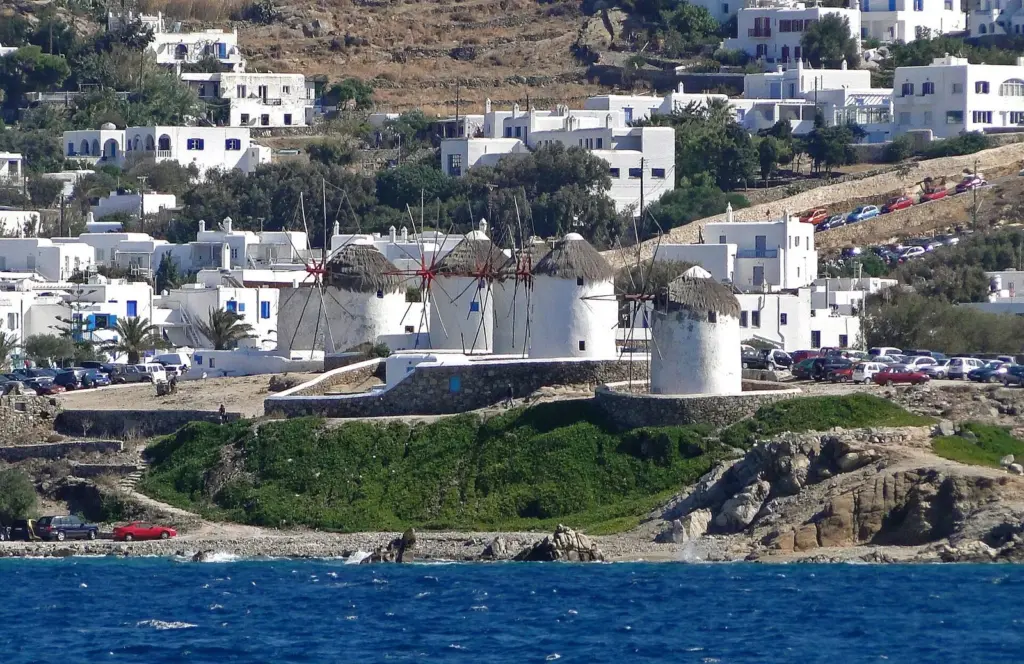
Best for beaches, beach clubs and nightlife. Mykonos is Santorini’s glamorous neighbor: a whitewashed harbor town with Little Venice, the famous windmills, a long list of beaches and the liveliest nightlife in the Cyclades. It has no caldera and no cliff-top sunsets to match Santorini’s, but more sand and more parties. From Mykonos you can take a boat to Delos, the sacred island of Apollo and a UNESCO World Heritage site since 1990, one of the most important archaeological sites in Greece. Compared with Santorini: similar prices and similar cruise-day crowds; both islands charge cruise passengers the EUR 20 summer fee. Getting there: Mykonos has its own international airport, and booking sites listed about four ferries a day to Santorini in September 2026, taking roughly two hours 50 minutes. Best for: groups of friends, beach lovers, party seekers.
Pair it with Santorini: Spend two or three nights on each, starting on Mykonos for the beaches and ending on Santorini for the sunsets; you can fly home from either island or via Athens.
2. Naxos
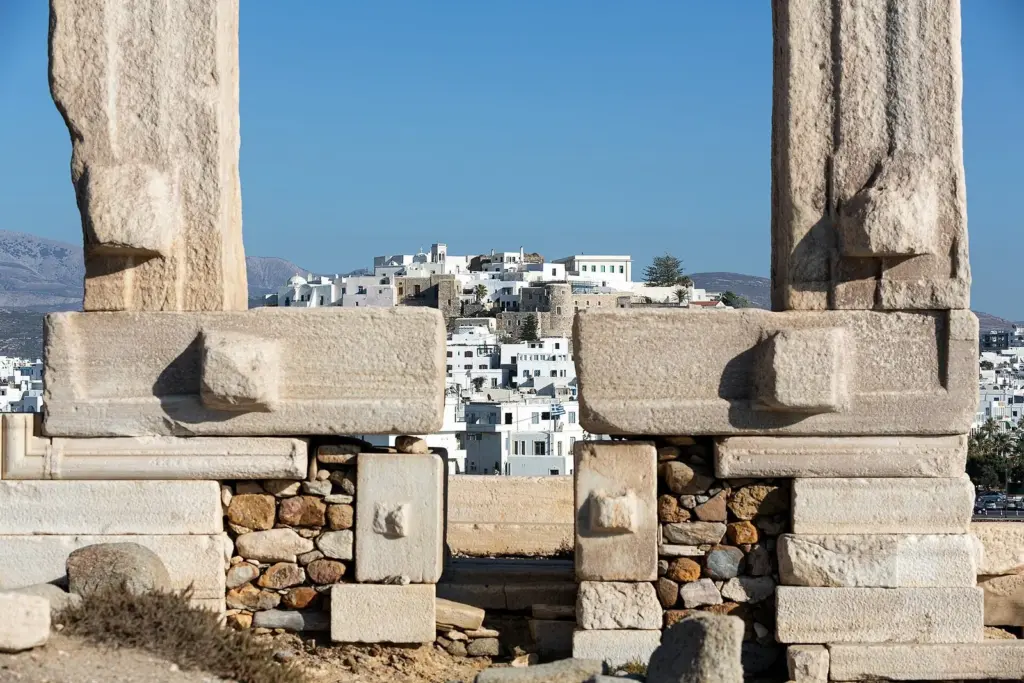
Best for sandy beaches, families and value. The largest island in the Cyclades, Naxos has long sandy beaches on its west coast, green valleys and mountain villages inland, a Venetian old town, and the Portara, the marble gateway of an unfinished temple that frames the harbor. It’s a working island with farms and cheese-makers, so it feels more Greek and less staged than Santorini, and prices are noticeably lower. Compared with Santorini: far better beaches and value, far less drama. Getting there: crossings to Santorini take roughly one to three hours, and Blue Star lists Naxos among its onward connections from Santorini; Naxos also has a small domestic airport. Best for: families, beach lovers and anyone combining Santorini with a cheaper, slower island.
Pair it with Santorini: The easiest pairing in the Cyclades: three or four nights on Santorini for the caldera, then four on Naxos for the beaches, with a short ferry between them.
3. Paros
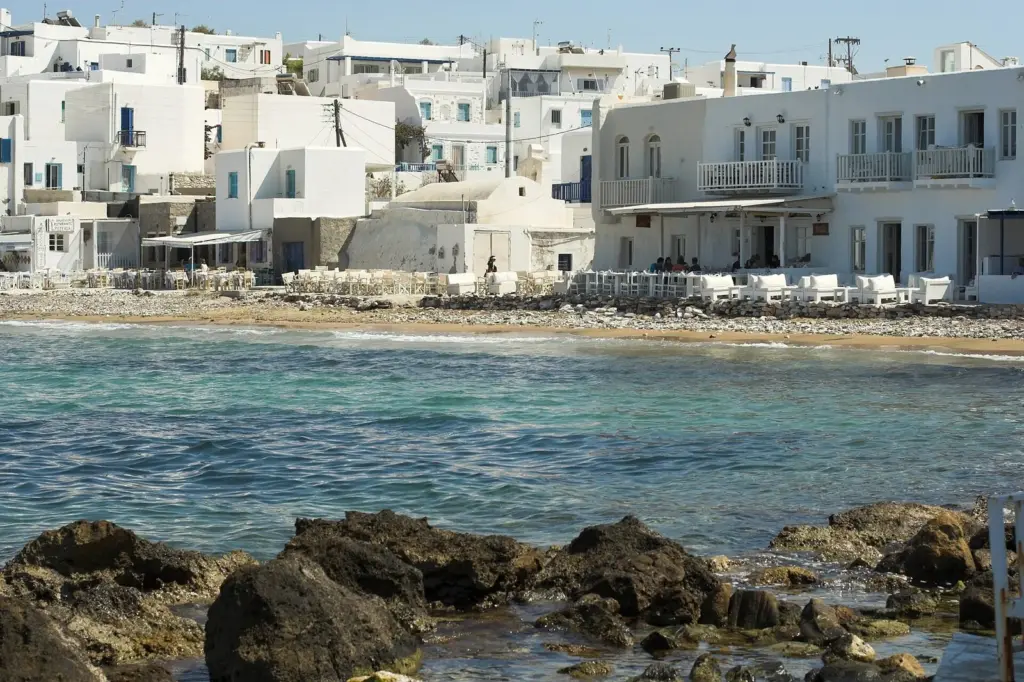
Best for a balance of everything. Paros sits in the middle of the Cyclades and in the middle of the spectrum: good beaches, pretty villages like Naoussa and Lefkes, lively but not wild nightlife, and the tiny island of Antiparos a short boat ride away. It’s a ferry hub, which makes it an easy base for island hopping. Compared with Santorini: more sand, more relaxed, cheaper, with no caldera. Getting there: booking sites listed about four daily crossings to Santorini in September 2026, averaging about one hour 55 minutes; Paros also has a domestic airport. Best for: first-time island hoppers who want one easygoing base.
Pair it with Santorini: Use Paros as the relaxed base and Santorini as the highlight; Paros’ ferry connections also make it easy to add Antiparos, Naxos or Mykonos.
4. Milos
Best for coves, boat trips and volcanic landscapes. Milos is Santorini’s volcanic cousin, with a horseshoe-shaped bay and some of the most unusual coastline in Greece: the white, wave-carved rock of Sarakiniko, sea caves and coves reached only by boat, and colorful fishing villages with boat garages at the water’s edge. The famous statue of Venus de Milo was found here in 1820. Compared with Santorini: better beaches and swimming, quieter villages and lower prices, but no cliff-top towns over a caldera. Getting there: booking sites listed Santorini-Milos crossings from about two hours 10 minutes on the fastest boats to about five hours on slower routes; Milos has a small domestic airport. Best for: couples and swimmers who want boat days and dramatic coastline.
Pair it with Santorini: Two volcanic islands with opposite strengths: Santorini’s cliff-top villages and sunsets, Milos’ coves and boat days. Give Milos at least three nights; its best beaches are spread out.
5. Crete
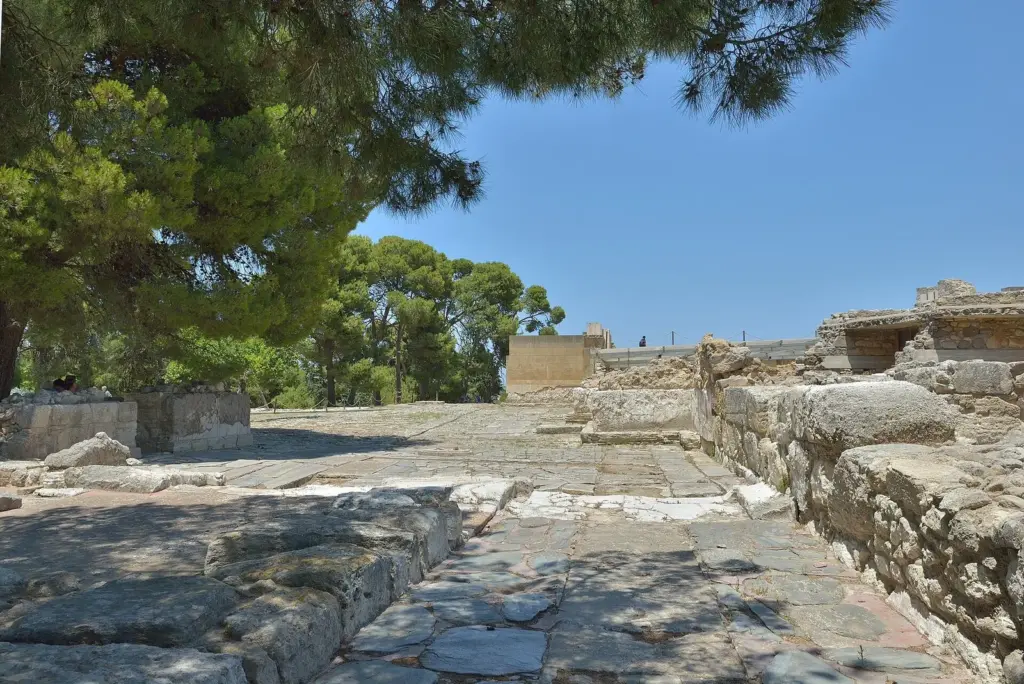
Best for variety, history and food. Greece’s largest island is almost a country of its own: mountains and gorges, including the Samaria Gorge, beaches from busy resorts to remote coves, Venetian harbor towns such as Chania and Rethymno, and the Minoan palaces, which UNESCO inscribed in 2025 as the Minoan Palatial Centres, including Knossos. Santorini’s Bronze Age town at Akrotiri was in close contact with Minoan Crete, so the two islands tell one story. Compared with Santorini: much bigger and more varied, better value, but you’ll need a car and more time. Getting there: fast ferries between Santorini and Heraklion take roughly two hours, and Seajets sells day trips from Heraklion and Rethymno to Santorini; Crete has airports at Heraklion and Chania. Best for: travelers with a week or more, families and food lovers.
Pair it with Santorini: Fly into Crete, spend a week, and take the fast ferry to Santorini for three nights at the end, or the reverse; Seajets’ Crete-Santorini day trips are a rushed alternative.
6. Rhodes
Best for history plus beaches, and a long season. Rhodes’ walled old town, the Medieval City of Rhodes, has been a UNESCO World Heritage site since 1988, and the island adds the cliff-top acropolis at Lindos, long sandy beaches and a warm climate that stretches the season at both ends. Compared with Santorini: more beaches and history, a bigger island, less romance and no caldera. Getting there: Rhodes has an international airport; ferries link it with Santorini via the Dodecanese, and in early 2026 Blue Star ran a Piraeus line calling at Santorini, Karpathos, Rhodes and Heraklion, though the crossing is long. Best for: history lovers and travelers in spring or late autumn.
Pair it with Santorini: Better combined with other Dodecanese islands such as Symi or Kos; if you want both Rhodes and Santorini, the simplest link is a flight via Athens.
7. Corfu
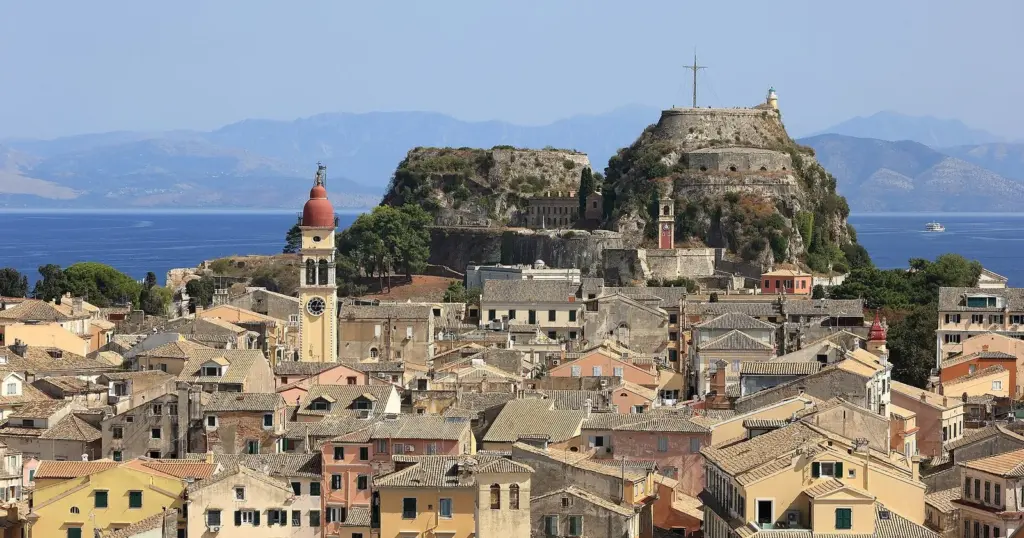
Best for green landscapes and a Venetian old town. In the Ionian Sea off the west coast, Corfu is everything Santorini isn’t: lush, wooded and green, with an elegant old town shaped by centuries of Venetian rule, inscribed by UNESCO in 2007. Its beaches range from busy resorts to quiet coves. Compared with Santorini: greener, larger and better for families and long stays, but in a different sea, so it doesn’t combine easily with the Cyclades. Getting there: Corfu has its own international airport; to combine it with Santorini, fly via Athens. Best for: families, walkers and travelers who prefer green to whitewash.
Pair it with Santorini: Treat Corfu and Santorini as two separate trips, or link them with flights via Athens; a ferry connection isn’t practical.
8. Ios
Best for young travelers and beach parties. Ios is famous for its party scene in the main village and at Mylopotas beach, but it also has a pretty hilltop Chora and quieter beaches in the south. Compared with Santorini: cheaper and younger, with better beaches and wilder nights, but none of Santorini’s views or sophistication. Getting there: it’s one of the closest islands to Santorini, with crossings from about 35 minutes to one hour 50 minutes, according to booking sites; Blue Star lists Ios among its onward connections. Best for: backpackers and groups on a budget.
Pair it with Santorini: Ios is a natural add-on for a few nights of beaches and nightlife, often combined with Santorini, Naxos and Paros on a budget route.
9. Folegandros
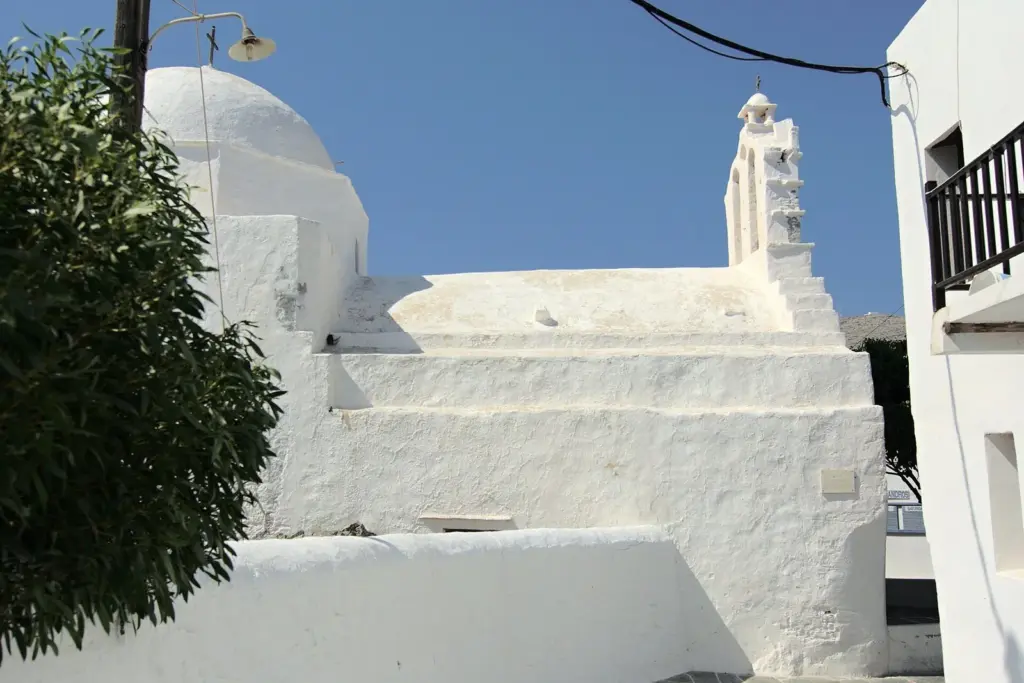
Best for quiet and a cliff-top village without the crowds. Folegandros’ Chora sits on a cliff edge high above the sea, with squares shaded by trees, a handful of tavernas and a path up to a white church on the hill. It has a hint of Santorini’s drama with a fraction of the visitors. Compared with Santorini: much quieter and simpler, with fewer facilities and limited transport. Getting there: booking sites listed a daily Santorini-Folegandros ferry of about two hours 38 minutes; there’s no airport. Best for: couples and walkers who want peace.
Pair it with Santorini: Pair three nights of Santorini’s drama with three of Folegandros’ quiet, and you’ll see both sides of the Cyclades.
10. Zakynthos
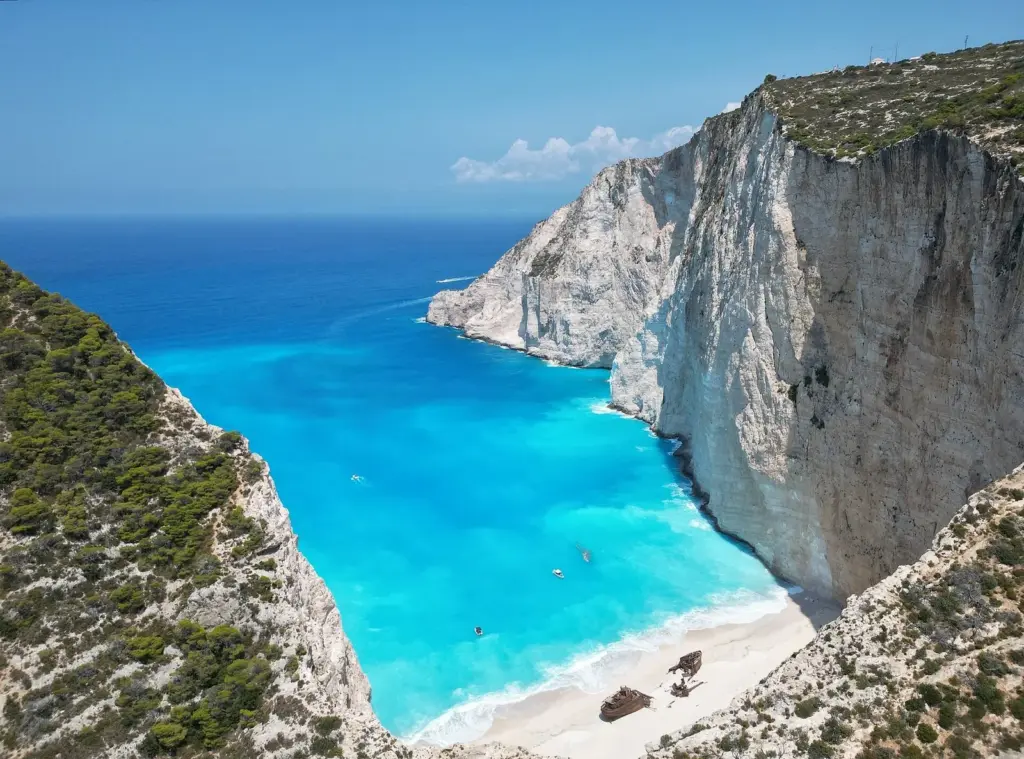
Best for dramatic coastline and sea caves. The Ionian island of Zakynthos is known for its limestone cliffs, blue caves and the Navagio cove with its beached shipwreck, one of the most photographed beaches in Greece. But check the rules before you plan around it: for the 2026 season, until October 31, authorities banned all access to the beach and its waters because of landslide risk, leaving the clifftop viewing platform and boats keeping their distance offshore. Compared with Santorini: greener and cheaper, with bigger beaches, but a busier resort scene in places and no caldera. Getting there: Zakynthos has an international airport; combine it with Santorini via Athens. Best for: coast and boat-trip lovers.
Pair it with Santorini: Combine it with Kefalonia or the mainland’s west coast rather than Santorini; if you want both, fly via Athens.
11. Kefalonia
Best for big landscapes and beaches. Kefalonia is the largest Ionian island, with mountains, vineyards, the brilliant white curve of Myrtos beach under steep cliffs, and the underground lake of Melissani. It’s spacious, green and relaxed, with a strong food and wine scene. Compared with Santorini: more nature and beaches, more driving, less nightlife and no caldera. Getting there: Kefalonia has its own airport; it combines well with Zakynthos or the mainland rather than the Cyclades. Best for: road-trippers and nature lovers.
Pair it with Santorini: A road-trip island for a separate Ionian holiday, often paired with Zakynthos or Ithaca rather than the Cyclades.
12. Hydra
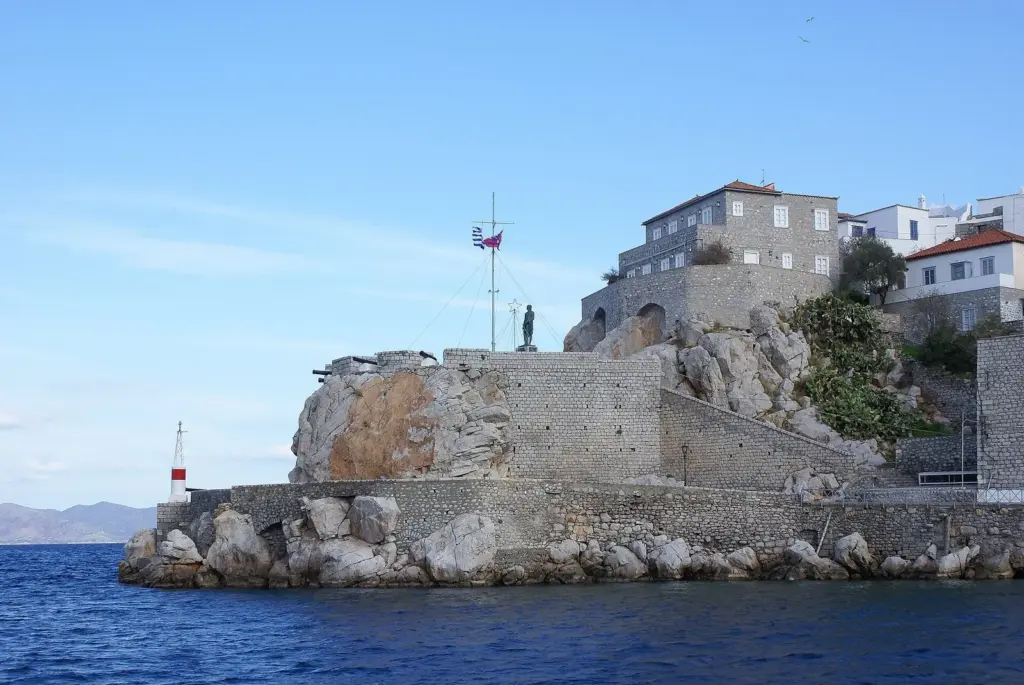
Best for a car-free escape close to Athens. Hydra has no cars at all; people and goods move on foot, by donkey or by water taxi. Its amphitheater harbor of stone mansions has drawn artists and writers for decades. Compared with Santorini: smaller, closer to Athens and more about atmosphere than sights, with rocky swimming spots rather than beaches. Getting there: ferries from Piraeus; there’s no airport. Best for: a short add-on to Athens, or a quiet weekend.
Pair it with Santorini: Add a night or two on Hydra before or after Athens, then fly or sail to Santorini for the second half of the trip.
13. Amorgos
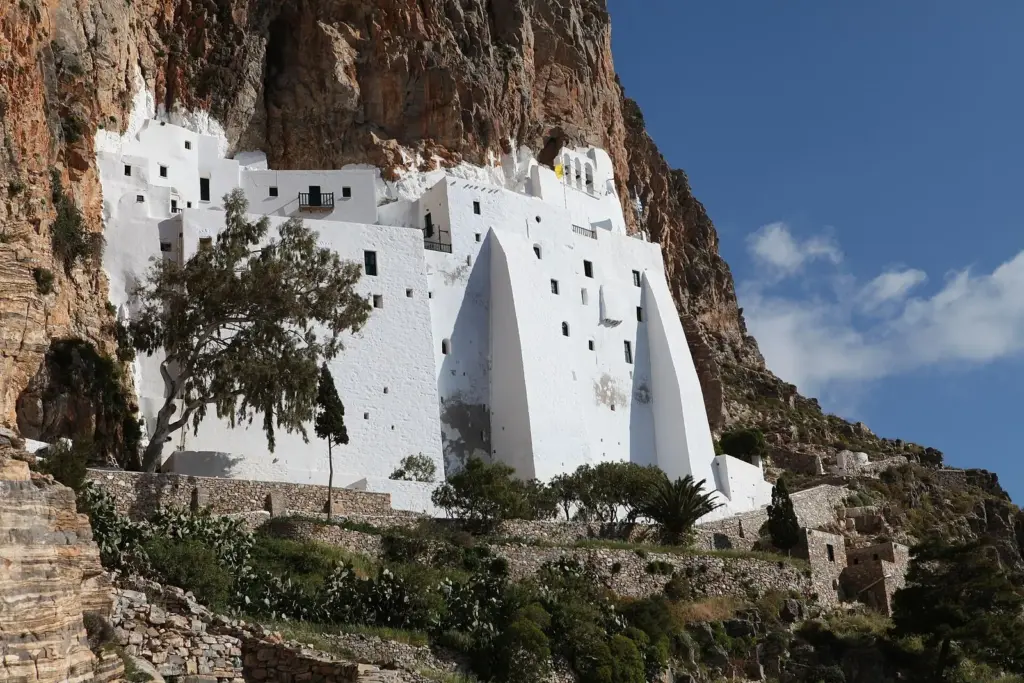
Best for hiking and wild coastline. Amorgos, at the eastern edge of the Cyclades, is a long, mountainous island with old footpaths between villages, deep blue water and the monastery of Hozoviotissa, built into a sheer cliff. Its seas starred in the 1988 film The Big Blue. Compared with Santorini: wilder, quieter and far less developed, with limited nightlife. Amorgos also sits on the fault zone where the 2025 earthquake swarm happened, though there was no eruption. Getting there: ferries only, with no airport. Best for: hikers and travelers who want to disconnect.
Pair it with Santorini: Amorgos works as the quiet finale of a Cyclades route that starts on Santorini and passes through Naxos.
14. Patmos
Best for a spiritual, quiet island. In the Dodecanese, Patmos is where, by tradition, Saint John wrote the Book of Revelation. Its hilltop Chora, the fortified Monastery of Saint John and the Cave of the Apocalypse have been a UNESCO World Heritage site since 1999. The island is calm, elegant and low-key. Compared with Santorini: much quieter and more contemplative, with smaller beaches and no caldera. Getting there: ferries only; combine it with other Dodecanese islands rather than the Cyclades. Best for: repeat visitors to Greece and anyone seeking calm.
Pair it with Santorini: Combine Patmos with other Dodecanese islands such as Leros or Kos; it suits a second or third trip to Greece more than a first one.
The Greek Island Groups, Explained
Greece has thousands of islands and islets, but most visitors choose among a few groups, and the group matters as much as the island, because it decides how easily you can combine them.
- The Cyclades: the classic whitewashed-and-blue islands in the middle of the Aegean, including Santorini, Mykonos, Naxos, Paros, Milos, Ios, Folegandros, Sifnos and Amorgos. They’re dry, windy in summer and closely linked by ferries, which makes them the best group for island hopping.
- Crete: Greece’s largest island, a destination in its own right, a couple of hours by fast ferry from Santorini.
- The Dodecanese: close to the Turkish coast, with Rhodes, Kos, Patmos, Symi and Karpathos. Medieval and Italian-era architecture, warm weather and a longer season.
- The Ionian Islands: off the west coast, including Corfu, Kefalonia, Zakynthos, Lefkada and Ithaca. Greener, with more rain in winter and less summer wind than the Cyclades, and a strong Venetian influence.
- The Saronic Islands: Hydra, Aegina, Poros and Spetses, a short ferry ride from Athens and ideal for a night or two before or after the city.
- The Sporades and the North Aegean: Skiathos and Skopelos in the Sporades, and Lesbos, Chios and Samos in the North Aegean, greener and less visited by first-timers, with long histories of their own.
The practical rule: combine islands within a group, and use flights via Athens to jump between groups. Santorini sits at the southern edge of the Cyclades, which is why it pairs so naturally with Ios, Naxos, Paros, Milos, Folegandros and Crete.
The Best Island Combinations With Santorini
Most visitors to Santorini add at least one other island. These are the combinations that work best, with the number of nights we’d suggest for each.
- Santorini and Naxos (7 nights: 3 and 4): the best all-round pairing, caldera views plus long sandy beaches and lower prices, joined by a short ferry. Ideal for first-timers and families.
- Santorini and Milos (7 nights: 3 and 4): two volcanic islands, one for cliff-top villages and sunsets, the other for coves and boat days. Ideal for couples who love the sea.
- Mykonos and Santorini (6 nights: 3 and 3): the famous pair, beaches and nightlife followed by views and romance. Ideal for groups of friends and honeymooners who want both moods.
- Santorini, Paros and Naxos (10 nights: 3, 3 and 4): a classic loop with short crossings, a mix of drama, villages and beaches. Ideal for a first Greek island-hopping trip.
- Santorini and Crete (10 nights or more: 3 and 7): the caldera plus Greece’s most varied island, linked by fast ferries of about two hours. Ideal for travelers who want history, food and space.
- Santorini and Folegandros (6 nights: 3 and 3): the busiest Cycladic island and one of the quietest. Ideal for couples who want both glamour and peace.
- Athens, Santorini and one more (8 to 10 nights): two nights in Athens, three or four on Santorini, three or four on Naxos, Paros or Milos. Ideal for a first trip to Greece.
Whatever you choose, end the trip on the island with the easiest route home, and leave a buffer day before an international flight. Santorini’s airport has direct flights to Athens of about 50 minutes, so finishing there is often the simplest option.
Who Should Skip Santorini (and Where to Go Instead)
We’re a Santorini guide, but we’d rather you choose the right island than the famous one. Santorini isn’t the best fit for:
- Beach-first travelers: if you want to spend most days on soft sand, choose Naxos, Milos or Crete, and visit Santorini for two nights at most.
- Tight budgets in high summer: caldera rooms and sunset dinners are among the most expensive in Greece. Naxos, Paros, Ios or Crete give you more for the money.
- Crowd-averse travelers in July and August: the caldera villages are busy, especially on cruise days. Go to Folegandros, Amorgos or Milos, or come to Santorini in May or October.
- Travelers with limited mobility on the caldera: the cliff villages are built on steps. Choose a beach-side hotel on Santorini, or a flatter island such as Naxos or Paros.
- Party seekers: Fira has bars and clubs, but Mykonos and Ios are the islands built for nightlife.
What Only Santorini Offers
And the other side of the ledger. These are the experiences no other Greek island can give you:
- The caldera: a flooded volcano you look down into from villages on its rim, with the volcano’s newest islands in the middle. You can walk the rim from Fira to Oia, roughly 10 km, and sail into the caldera on a volcano boat from EUR 30 (operator’s site, October 2026).
- A Bronze Age town under a roof: Akrotiri, a port town buried by an eruption in the 17th century BC and now excavated under a protective roof, reopened since April 11, 2025 (EUR 20 in 2026).
- Volcanic wine: Assyrtiko and Vinsanto from vines trained low in kouloura baskets in ash and pumice, both protected designations; Santo Wines, the island’s growers’ cooperative founded in 1947, represents about 1,200 growers.
- The sunset ritual: crowds in Oia, quieter terraces in Imerovigli and Firostefani, and lighthouses and wineries for those who want it alone.
- Cave suites with pools over a cliff: an architectural style born from cave houses dug into volcanic ash, and now the island’s signature way to stay.
If those are the things you want, no alternative quite replaces Santorini. The best way to enjoy them is to avoid the busiest weeks and give yourself at least three nights.
Getting Around: How the Islands Differ
How you move around shapes an island trip as much as where you stay, and the islands differ more than most visitors expect.
- Santorini: a compact island with a public bus network that starts in Fira; most rides cost EUR 2.20 on KTEL’s fare table updated May 19, 2026, and buses to Oia ran every 30 minutes on the summer timetable. A car for a day or two covers the south and the wineries. Taxis are scarce.
- Big islands (Crete, Rhodes, Kefalonia, Naxos, Corfu): plan on a rental car. Buses connect the main towns, but the beaches, villages and archaeological sites are spread out, and Crete in particular rewards a road trip.
- Medium Cyclades (Mykonos, Paros, Milos): buses link the main town with the popular beaches in summer, and boats reach the best coves, but a car, scooter or quad opens up the quieter corners.
- Small islands (Folegandros, Ios, Amorgos, Patmos): small bus networks, short distances and plenty of walking; on Amorgos and Folegandros, the footpaths are part of the point.
- Hydra: no cars at all; you walk, take a water taxi or, for luggage, use the donkeys and porters at the harbor.
Costs: Where Your Money Goes Further
Santorini and Mykonos are consistently the most expensive islands in the Cyclades, mainly because of accommodation. On Santorini, hotels’ own booking engines priced October 2026 nights for two from under EUR 100 in an inland village to more than EUR 2,000 in an Oia suite, with caldera-view suites typically several hundred euros a night. Ferry tickets, buses, museum entries and taverna meals are similar across the islands; what changes is the room and the view.
Naxos, Paros and Crete give you noticeably more for your money, especially on rooms and long lunches, and Ios is one of the cheapest islands for younger travelers. Everywhere in Greece, hotels add the national Climate Crisis Resilience Fee per room per night, from EUR 2 to 15 between April and October depending on the hotel’s category, so it’s not a reason to choose one island over another.
The cheapest way to see Santorini is to treat it as the splurge of a longer trip: three nights on the caldera, then a cheaper island for the rest. You’ll get the views without paying caldera prices for the whole holiday.
If We Had Two Weeks in the Greek Islands
Asked for one route that shows the best of the Greek islands, this is the one we’d suggest for a first trip of about two weeks:
- Athens, 2 nights: the Acropolis and the city’s food, then a ferry from Piraeus.
- Naxos, 4 nights: sandy beaches, mountain villages and an easy pace to recover from the flight.
- Santorini, 4 nights: the caldera walk, Oia, a volcano or catamaran day, Akrotiri and the wineries.
- Crete, 4 nights: a fast ferry to Heraklion, Knossos, a road trip west to Chania, and a flight home from Crete or via Athens.
Swap Naxos for Milos if you prefer coves and boat days, or for Folegandros if you want quiet. Add Mykonos instead of Crete if nightlife matters more than history. And if you only have a week, keep Athens and Santorini and add one beach island; that’s still the classic Greek island trip for a reason.
Santorini vs the Other Islands: Side-by-Side
Our assessment of how the most popular islands compare on the things travelers ask about most. “High” means the island is among the strongest in Greece on that measure; “low” means look elsewhere if it matters to you.
| Island | Views and drama | Sandy beaches | Nightlife | Quiet | Value | History |
|---|---|---|---|---|---|---|
| Santorini | High | Low | Medium | Low (summer) | Low | High |
| Mykonos | Medium | High | High | Low | Low | High (Delos) |
| Naxos | Medium | High | Medium | Medium | High | Medium |
| Paros | Medium | High | Medium | Medium | Medium | Medium |
| Milos | High | High | Low | High | Medium | Medium |
| Crete | High | High | Medium | Medium | High | High |
| Rhodes | Medium | High | Medium | Medium | Medium | High |
| Corfu | Medium | Medium | Medium | Medium | Medium | High |
| Folegandros | High | Low | Low | High | Medium | Low |
| Ios | Medium | High | High | Low (summer) | High | Low |
Read across the Santorini row and the pattern is clear: it’s the island to choose for scenery and history, and the one to pair with another island for beaches, quiet and value.
Santorini Alternatives Inside and Outside Greece
If Santorini’s prices or crowds put you off, these are the closest substitutes for what people love about it:
- For cliff-top villages over the sea: Folegandros and Amorgos in the Cyclades, both much quieter, with simpler hotels.
- For volcanic landscapes and boat trips: Milos, Santorini’s volcanic cousin, with better beaches and lower prices.
- For whitewashed Cycladic villages and sunsets: Paros, Naxos and Sifnos, with sandier beaches and a more relaxed pace.
- Outside Greece, the Amalfi Coast: Italy’s cliffside towns offer a similar “villages tumbling down to the sea” drama, with lemon groves, grand hotels and Italian food instead of a caldera, and very different summer traffic.
- Outside Greece, the Cinque Terre: five colorful fishing villages on the Italian Riviera, linked by trains and hiking trails; more walking, less luxury, smaller and busier than Santorini at peak times.
None of them replaces the caldera, and that’s the point: if the view is why you want Santorini, go in May or October rather than switching islands. If it’s the whitewash, the sunsets and the sea, there are plenty of quieter places to find them.
Santorini or Athens?
This is a different kind of choice, and most travelers make it a pairing rather than an either-or. Athens offers the Acropolis, the Acropolis Museum and the National Archaeological Museum, and a big-city food scene; Santorini offers the caldera, sunsets and slow days. If you have a week, two nights in Athens and four or five on Santorini is the classic balance, linked by a flight of about 50 minutes or a ferry from Piraeus of six hours or more. If you have only three or four days, choose based on what you want: culture and cities (Athens) or scenery and romance (Santorini).
Island Hopping From Santorini
Santorini is a good start or end point for island hopping, with direct ferries to many of the islands above. These are the typical crossing times listed by ferry booking sites and operators in September and October 2026; they vary a lot by vessel, and summer schedules are far busier than winter ones.
| From Santorini to | Typical crossing | Notes |
|---|---|---|
| Ios | 35 minutes to 1 hour 50 minutes | The closest major island |
| Naxos | About 1 to 3 hours | Frequent in summer |
| Paros | About 2 hours | About four sailings a day in September 2026 |
| Crete (Heraklion) | About 2 hours on fast ferries | Slower boats take longer |
| Milos | About 2 hours 10 minutes to 5 hours | Fastest on high-speed boats |
| Folegandros | About 2 hours 38 minutes | One daily ferry listed |
| Mykonos | About 2 hours 50 minutes | About four sailings a day in September 2026 |
| Piraeus (Athens) | From about 6 hours | Blue Star says from 6 hours 6 minutes |
Two pieces of advice from every island-hopper who’s been caught out: build in a buffer day before any flight, because summer winds can cancel or delay ferries, and book the popular fast boats early in July and August. Blue Star’s Super Economy fares, from EUR 20 for a limited number of Economy seats on some routes to and from Piraeus, can make the long way cheaper if you plan ahead. Our guide to Santorini ferry routes covers ports, operators and tickets, and our Santorini itinerary guide shows how to fit Santorini into a week or ten days in Greece.
When to Go: The Best Time for the Greek Islands
- May and June: warm days, fewer crowds and everything open; the sea is still cool in May. A great time for walking islands like Amorgos and Naxos.
- July and August: peak season everywhere, with the highest prices, the busiest ferries and the strongest meltemi winds in the Cyclades. The Ionian islands, such as Corfu and Kefalonia, are less windy.
- September and early October: the sweet spot, with warm seas, softer light and thinning crowds. Navagio on Zakynthos stayed closed for the 2026 season until October 31, so check its status for 2027.
- November to April: quiet and cheap, but many island hotels, restaurants and ferry routes shut or slow down. Large, lived-in islands like Crete and Rhodes, and Santorini’s capital Fira, stay the most alive.
What’s Changed in 2025 and 2026
| Island or rule | Before | Now (checked October 2026) |
|---|---|---|
| Navagio, Zakynthos | Boat trips landed on the beach | All access to the beach and its waters banned for the 2026 season until October 31; viewing platform only |
| Crete’s Minoan palaces | Not on UNESCO’s list | Inscribed as the Minoan Palatial Centres in 2025 |
| Cruise passengers at Santorini and Mykonos | No dedicated fee | EUR 20 a person from June to September (since July 21, 2025), lower in other months |
| Santorini | Open harbors and roads | 2026 Civil Protection measures at Athinios, Ammoudi and Fira’s Old Port until March 31, 2027 |
| Amorgos and Santorini | Rarely in the news | A strong earthquake swarm between them in early 2025, with no eruption |
What to Skip
- Trying to see five islands in a week. Two or three, with at least three nights each, is the sweet spot.
- A ferry on the day before your flight home. Wind cancels sailings; leave a buffer.
- Choosing Santorini for a beach holiday. Choose it for the views, and add a beach island.
- Planning a swim at Navagio in 2026. The beach and its waters were closed for the season.
- Mixing the Ionian and the Cyclades without a flight. They’re on opposite sides of Greece; connect via Athens.
Best Greek Islands FAQ
What is the best Greek island for a first time?
For the famous views, Santorini, ideally combined with a beach island such as Naxos or Paros. Santorini gives you the caldera, sunsets and history in three or four days; the second island adds sandy beaches, lower prices and a slower pace. Crete is the best single island for a longer first trip.
Which Greek island has the best beaches?
Naxos, Milos, Paros and Crete are the strongest for beaches, with long sandy bays and clear water. Mykonos has many good beaches too, but busier and pricier. Santorini’s beaches are dark volcanic sand and pebbles, distinctive but not the island’s main draw.
Is Santorini better than Mykonos?
For views, sunsets, romance and history, yes. For beaches, beach clubs and nightlife, Mykonos wins. Both are expensive and crowded on cruise days, and both charge cruise passengers the same summer fee. Many travelers visit both: booking sites listed crossings of about two hours 50 minutes between them.
What are the best alternatives to Santorini?
Milos for volcanic landscapes and coves, Folegandros and Amorgos for cliff-top villages without the crowds, and Naxos or Paros for whitewashed villages with better beaches and lower prices. Outside Greece, Italy’s Amalfi Coast and Cinque Terre offer similar cliffside drama.
Can you island hop from Santorini?
Yes. Ferries run from Santorini’s Athinios port to Ios, Naxos, Paros, Mykonos, Milos, Folegandros and Crete, with crossings from about 35 minutes to Ios to roughly three hours to Mykonos on booking sites’ listings. Schedules are busiest from June to September, and summer winds can cause cancellations.
Which Greek island is best for families?
Naxos and Crete are the easiest for families, with shallow sandy beaches, space and good value. Paros is also family-friendly. Santorini works for families who stay near the east or south coast beaches; the caldera villages mean steps and cliff edges, and many caldera hotels don’t accept young children.
Which Greek islands have airports?
Many do. Fraport Greece runs the airports on Mykonos, Santorini, Rhodes, Corfu, Zakynthos, Kefalonia, Kos, Lesbos, Skiathos, Samos and Chania on Crete, and Crete also has Heraklion airport. Naxos, Paros and Milos have smaller domestic airports, while Ios, Folegandros, Hydra and Amorgos are reached by ferry.
What is the most beautiful Greek island?
Santorini is the one most often called the most beautiful, for the caldera and its cliff-top villages. But beauty takes different forms: Milos for its coastline, Folegandros and Amorgos for wild cliffs, Corfu for green landscapes, Hydra for its car-free harbor. The best way to judge is to combine two very different islands.
Related Santorini Guides
- Santorini ferries: routes to the other islands and Athens
- Santorini itinerary: 1 to 7 days, and Greece itineraries with Santorini
Sources and How We Checked
We checked World Heritage status against UNESCO’s own list, and airport, ferry and access information against operators, news reports of official decisions and ferry booking sites, in September and October 2026.
- UNESCO World Heritage Centre: Greece (Delos, Rhodes, Corfu, Patmos, Samos, Minoan Palatial Centres)
- Blue Star Ferries: Santorini (Piraeus crossing time, onward connections)
- To Vima: Navagio access curbs for 2026
- GTP: Fraport Greece’s 14 regional airports
- Euronews: Santorini’s 2026 Civil Protection measures
Santorini Tourism Guide is an independent publication. We are not affiliated with the Municipality of Thira, the Greek National Tourism Organisation, UNESCO, any ferry company or airport operator, or any business listed here, and no one paid to be included.
Photo Credits
- Sarakiniko, Milos: photo by dronepicr, via Wikimedia Commons (CC BY 2.0)
- Mykonos windmills: photo by Bernard Gagnon, via Wikimedia Commons (CC BY-SA 3.0)
- Portara, Naxos: photo by Manfred Werner (Tsui), via Wikimedia Commons (CC BY-SA 4.0)
- Naoussa, Paros: photo by Zde, via Wikimedia Commons (CC BY-SA 4.0)
- Knossos, Crete: photo by This Photo was taken by Wolfgang Moroder. Feel free to use my photos, but please mention me as the author and send me a message. This image is not in the public domain. Please respect the copyright protection. It may only be used according to the rules mentioned here. This specifically excludes use in social media, if applicable terms of the licenses listed here not appropriate. Please do not upload an updated image here without consultation with the Author. The author would like to make corrections only at his own source. This ensures that the changes are preserved.Please if you think that any changes should be required, please inform the author.Otherwise you can upload a new image with a new name. Please use one of the templates derivative or extract., via Wikimedia Commons (CC BY-SA 3.0)
- Corfu old town: photo by Martin Falbisoner, via Wikimedia Commons (CC BY-SA 4.0)
- Navagio, Zakynthos: photo by Wilnel José Verdú Guerrero, via Wikimedia Commons (CC BY-SA 4.0)
- Hydra harbor: photo by Matti Blume (MB-one), via Wikimedia Commons (CC BY-SA 3.0)
- Chora, Folegandros: photo by Zde, via Wikimedia Commons (CC BY-SA 4.0)
- Hozoviotissa, Amorgos: photo by Apenauta at Italian Wikipedia, via Wikimedia Commons (Public domain)