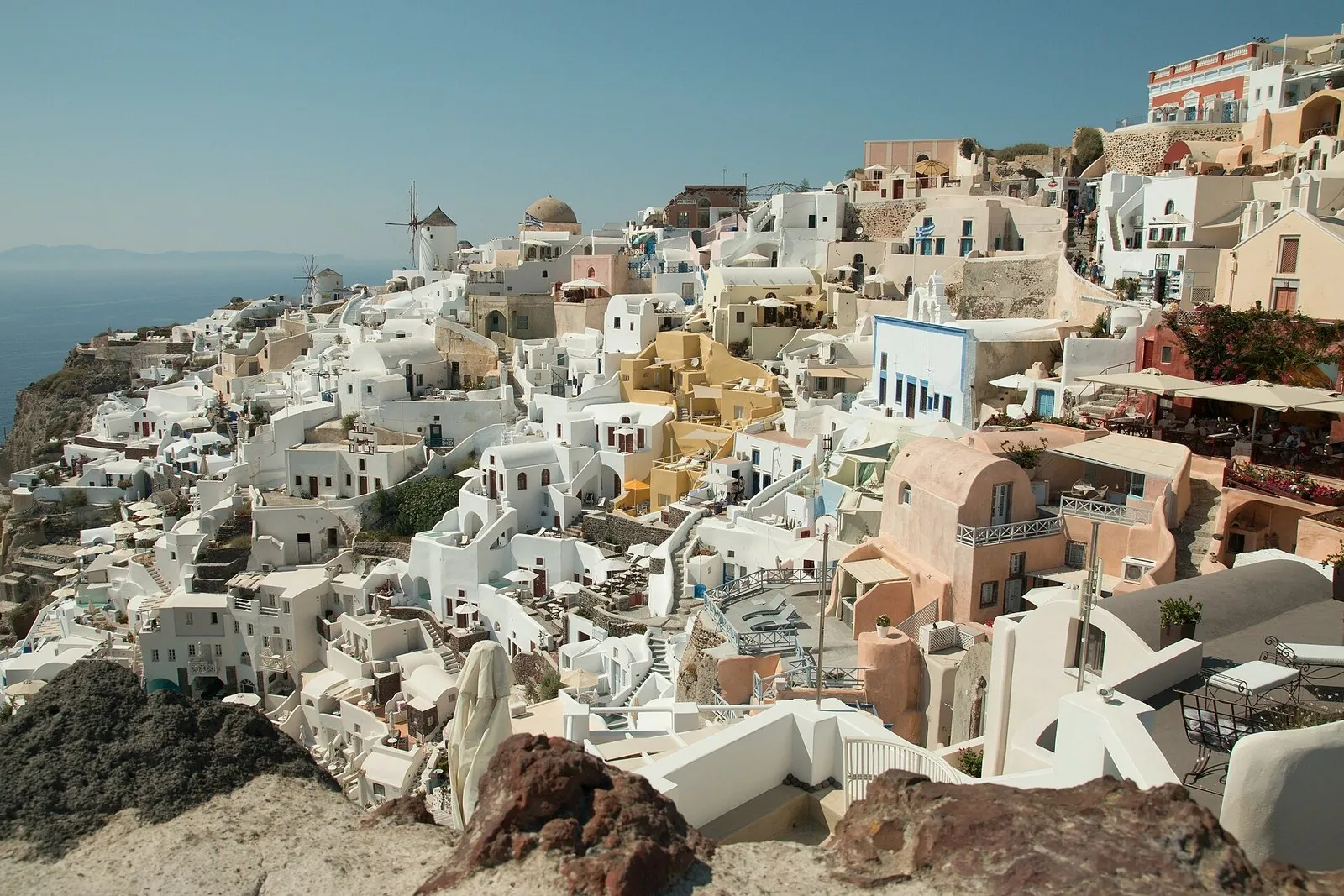
Say Oia Santorini to anyone who has seen a Greek travel poster and they’ll picture the same village: white cave houses and pastel captains’ mansions stacked down the caldera cliff, blue-domed churches, windmills on the ridge and, every evening, a sunset that pulls a crowd to the old castle walls. Oia sits at the northern tip of the island, about 11.8 km from Fira by the bus route, and it’s pronounced EE-ah. For many people it’s the reason to come to Santorini at all. The question isn’t whether to see it but how: as a day trip, an evening or a stay, and at what time of day, because Oia at 9 a.m. and Oia at sunset are two different places.
Quick answer: Come early in the morning for the lanes, the blue domes and the windmills without the crowds, walk down toward Ammoudi Bay, and either stay the night or come back for sunset with time to spare. In 2026 the sun sets around 20:37 in midsummer and 18:43 in mid-October. Budget at least half a day, and a full one if you can.
Last updated September 30, 2026. We checked the 2026 Civil Protection measures affecting Ammoudi, bus fares, the location and hours of Atlantis Books, the cruise-passenger rules and the village’s hotel seasons against official sources and the businesses’ own sites in September 2026, and calculated the sunset times for Oia’s coordinates.
- Ammoudi in 2026: the road down to the harbor is closed to general traffic under Civil Protection measures until March 31, 2027, with vehicles turned at the municipal car park; a limited number of municipal visitor minibuses run, people can still walk down and stay, and boats can land. The shore path from Ammoudi to Agios Nikolaos is closed.
- Atlantis Books has moved: the famous bookshop says on its own website that it has relocated to the cliffside of Firostefani, at the base of the Nomikos Cultural Centre. Older guides still send people to Oia.
- Sunset times: about 20:37 on June 15 and July 15, 19:27 on September 15 and 18:43 on October 15, 2026, calculated for Oia. Arrive an hour early in summer.
- By bus: Fira to Oia costs EUR 2.20, or EUR 2.80 at night from 00:30 to 05:00 (KTEL table updated May 19, 2026). The last buses back after sunset are packed.
- Crowds: Santorini caps cruise arrivals at 8,000 passengers a day, but Oia still fills from late afternoon. Mornings are the quiet window.
On this page: Oia at a glance | What Oia is famous for | History | Architecture | Map and layout | Things to do | A walking route | The sunset | A perfect day | Beating the crowds | Oia at night | Photography | Eating | On a budget | Getting there | Stay or visit? | How long to spend | From a cruise ship | Through the year | What to skip | FAQ
Oia Santorini at a Glance
| What you need to know | The short answer |
|---|---|
| Where it is | The northern tip of Santorini, on the caldera rim, 11.8 km from Fira by the bus route |
| Getting there | KTEL bus from Fira, EUR 2.20 (EUR 2.80 at night); taxi; car; or on foot along the caldera path from Fira or Imerovigli |
| Time needed | Half a day minimum; a full day, or a night, is far better |
| Best time of day | Early morning for the lanes, sunset for the spectacle |
| Crowds | Light in the morning, very heavy from late afternoon through sunset |
| Cost | Free to wander; everything else, from coffee to hotels, is the island’s most expensive |
| Stairs | The main path is mostly level; everything below it is steps, including the way down to Ammoudi |
| Good for | Couples, photographers, first-time visitors |
| Less good for | Beaches, nightlife, travelers with limited mobility |
What Is Oia Famous For?
Oia is famous for three things: the way it looks, the sunset, and the fact that it looks that way on purpose. The village spills down the northern end of the caldera cliff in layers of white and ochre, with cave houses cut into the soft volcanic rock, whitewashed churches with blue domes, and windmills along the ridge at its western end. Nowhere else on the island packs so much of what people picture as “Santorini” into so small a space.
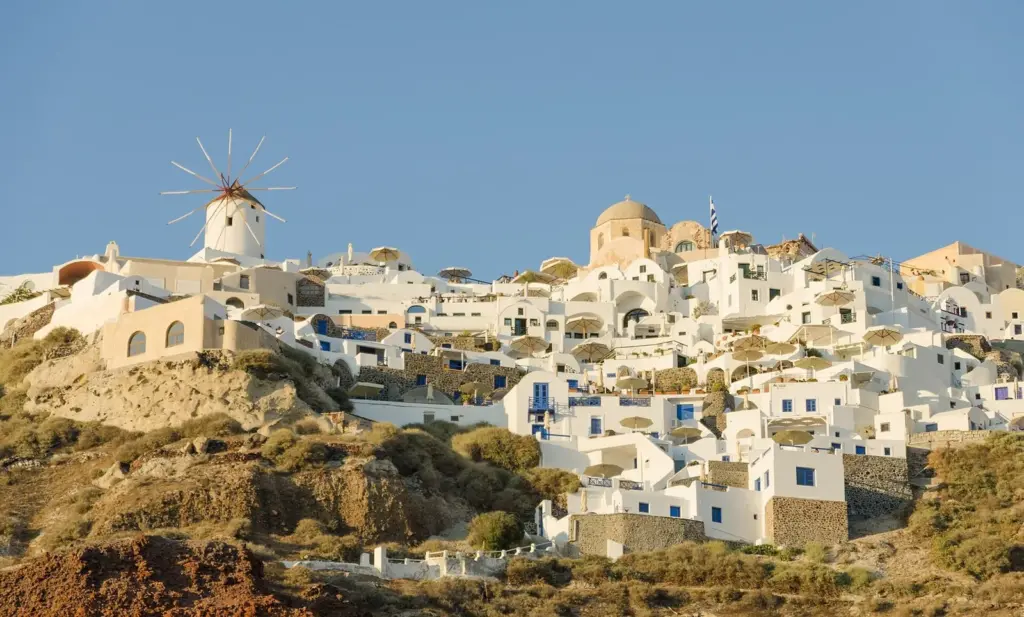
It wasn’t always a showpiece. Oia, known in the past as Apano Meria, the “upper side”, grew rich in the 19th century on shipping. Its sea captains built neoclassical mansions along the top of the village, while sailors and their families lived in the cave houses dug into the cliff below. The great earthquake of 1956 wrecked much of the village, and many families left. In the decades that followed, a national program to restore traditional settlements helped turn ruined cave houses into guesthouses, and Oia gradually became the carefully preserved, carefully whitewashed village you see today.
Then there’s the sunset. Oia faces west across the open end of the caldera, with nothing between the village and the horizon but the sea and the island of Thirasia, so the sun drops straight into the Aegean in summer. Watching it from the castle ruins at the western tip has become a ritual, complete with applause. It’s crowded and it’s touristy, and it’s still worth doing once.
A Short History of Oia
Oia’s story explains a lot of what you see on the cliff today, from the ruined castle to the mix of cave houses and grand mansions.
The castle years. After the Fourth Crusade, Santorini came under Venetian rule as part of the Duchy of the Archipelago in the early 13th century, and the islanders lived in fortified settlements called kastelia, built to keep out pirates. Oia’s was the castle of Agios Nikolaos, at the western tip of the village, and its ruins are what the sunset crowd stands on today. Like the other kastelia at Skaros, Pyrgos, Emporio and Akrotiri, it was a tight cluster of houses and towers rather than a single fortress. The Ottomans took the island in the late 16th century, but the old pattern of village life carried on for centuries.
The age of the captains. In the 18th and especially the 19th century, Oia grew wealthy on the sea. Its captains and ship owners ran merchant vessels across the Mediterranean and the Black Sea, and the money they brought home built the neoclassical mansions along the top of the village, with their tall windows, pediments and painted facades. Below them, sailors, fishermen and farmers lived in houses dug into the cliff. The social geography is still visible: the grand houses high up, the modest cave homes stepping down toward the sea.
Decline and disaster. Steamships and the shift of trade to bigger ports hurt Oia’s sailing fleet from the late 19th century, and many families left for Piraeus and beyond. Then, in July 1956, a powerful earthquake centered near Amorgos struck the Cyclades. Oia, built on and into the cliff, was badly damaged, and much of the population moved away. For a time, parts of the village stood half-empty and in ruins.
Restoration and fame. From the 1970s, a national program to preserve traditional settlements helped restore Oia’s damaged houses, some of them as guesthouses, and strict rules on building and color kept the village’s look intact. As tourism grew, Oia’s sunset and its postcard views made it the island’s star, and by the 21st century it was one of the most photographed villages in the world. The cave houses that sailors once lived in became some of the most expensive hotel rooms in Greece.
The recent chapter. The earthquake swarm of early 2025 and a new sequence in 2026 brought the geology back into daily life. The 2026 Civil Protection measures, in force until March 31, 2027, closed the road down to Ammoudi to general traffic and the shore path to Agios Nikolaos, while the village itself carries on as normal. It’s a reminder that Oia’s cliff is part of a living volcano.
Oia’s Architecture, Explained
Once you know what you’re looking at, Oia becomes much more interesting than a pretty backdrop.
- Cave houses. Many of the houses on the cliff are dug into the soft layers of volcanic ash and pumice that make up the caldera wall, with only a whitewashed facade showing. The rock keeps them cool in summer and holds warmth in winter, and digging was cheaper than building on an island with little timber. Many of Oia’s hotels are converted cave houses.
- Vaulted roofs. The rounded, barrel-vaulted roofs you see everywhere aren’t a style choice: without long timber beams, vaults were the practical way to roof a room, and they collect rainwater for the cisterns below.
- Cisterns and terraces. Santorini has always been short of water, so houses collected rain from their roofs and terraces into underground cisterns. The flat terraces and courtyards that now hold plunge pools and loungers were once water catchments and work spaces.
- Captains’ mansions. The 19th-century neoclassical houses of Oia’s wealthy seafarers stand out from the cave houses: two stories, tall windows, decorative pediments and facades painted in ochre, terracotta, pink and cream.
- Whitewash and color. The famous white walls are lime whitewash, renewed regularly, which reflects the heat. The blue of doors, shutters and domes, and the warm colors of the mansions, are part of what keeps Oia looking like Oia; new building and painting are controlled.
- Churches and bell towers. Oia has dozens of churches and chapels, many built by families or sea captains, from the large church on the main square to tiny chapels on the cliff. The open bell towers, with bells hung in arches, are one of the village’s signatures.
- Windmills. The windmills on the ridge once ground the island’s grain, using the steady wind that still blows across the northern tip.
Walk the lanes below the main path with this in mind and you’ll start to read the village: which houses were a captain’s, which were a sailor’s, where the water went and why every roof curves.
Oia Santorini Map: How the Village Is Laid Out
An Oia Santorini map makes the village simple to understand: it’s a long, narrow strip along the cliff edge, running roughly east to west for more than a kilometer, with one main pedestrian path along the top and everything else stepping down toward the water.
- The entrance (east). The bus stop, taxi rank and car parks are at the eastern end of the village, where the road ends. From here the marble-paved main path begins.
- The main path. A car-free, mostly level walkway runs west along the top of the village, lined with shops, galleries, cafes and restaurants. Side lanes and stairways drop off it toward the caldera, and that’s where the hotels, the cave houses and the best views are.
- The center. About halfway along, the path widens around the village’s main church and square, with the famous blue domes and many of the most photographed viewpoints nearby.
- The western tip. The path ends at the ruins of the old Venetian castle, the classic sunset spot, with the windmills on the ridge just beyond.
- Below the village. Ammoudi Bay, a tiny fishing harbor, sits at the foot of the cliff below the western end, reached by a long stepped path or a road. Armeni, a second small harbor, lies below the middle of the village.
- Around the edges. Finikia, a quieter village, sits just inland to the east; the Perivolas and Fanari areas, with several hotels, lie along the rim on either side of the center.
Because it’s a line, not a maze, it’s hard to get lost for long: every stairway eventually leads back up to the main path. The catch is that “back up” is the operative phrase. The lower you go, the more steps you’ll climb to return.
Things to Do in Oia
The best things to do in Oia village are free and on foot: walking, looking, eating and, at the end of the day, watching the sun go down. Here’s the list we’d work through, roughly in the order that makes sense over a long day.
1. Watch the sunset from the castle ruins
The ritual everyone comes for. The ruins of the old Venetian castle at Oia’s western tip are the most famous sunset viewpoint in Greece. From the crumbling walls you look west over the sea, with the windmills to one side and the whole village glowing to the other. When the sun touches the horizon, the crowd often breaks into applause. It’s packed and noisy, and it’s still worth seeing once.
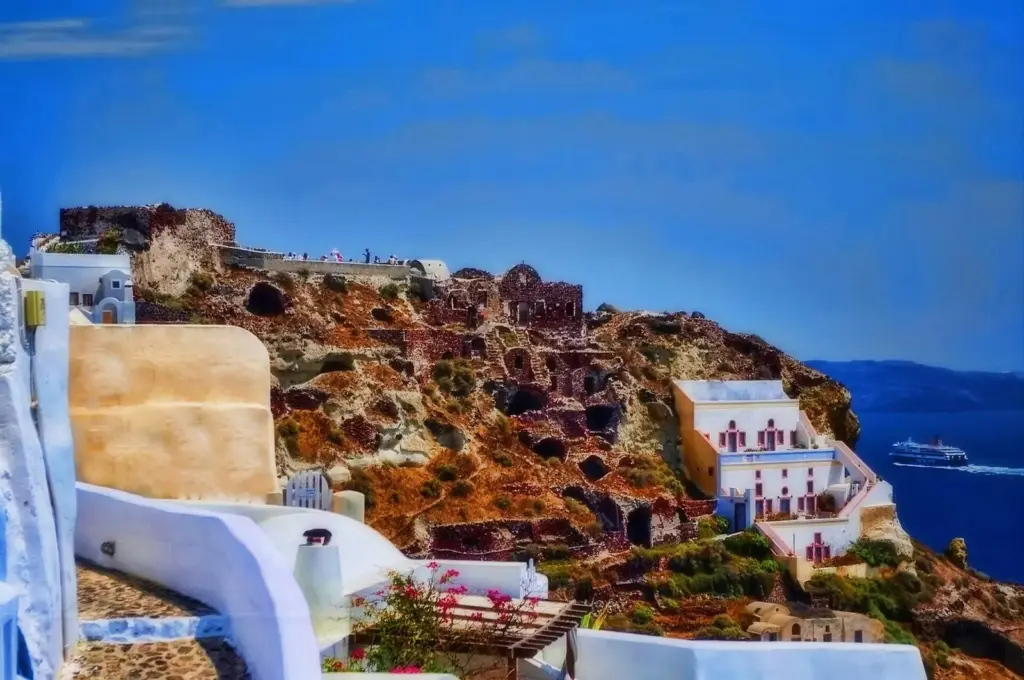
The walls are uneven and have real drops on the caldera side, so keep a close hand on children. If you can’t get a spot on top, the steps and terraces just below give nearly the same view. And stay put for 15 minutes after the sun disappears: the afterglow on the village is often the best light of the evening.
Plan it: free; arrive 60-90 minutes before sunset in summer to get a spot on the walls, less in spring and fall. Keep your belongings close in the crush. Best for: first-timers who want the classic experience.
2. Walk the marble main path end to end
The spine of the village. Oia’s main pedestrian path, paved in marble and flagstones, runs along the top of the village from the bus stop at the eastern entrance to the castle at the western tip. It’s lined with shops, galleries, cafes and restaurants, and every few steps a gap between buildings opens onto the caldera. Walk it slowly in both directions: the views change completely depending on which way you’re facing.
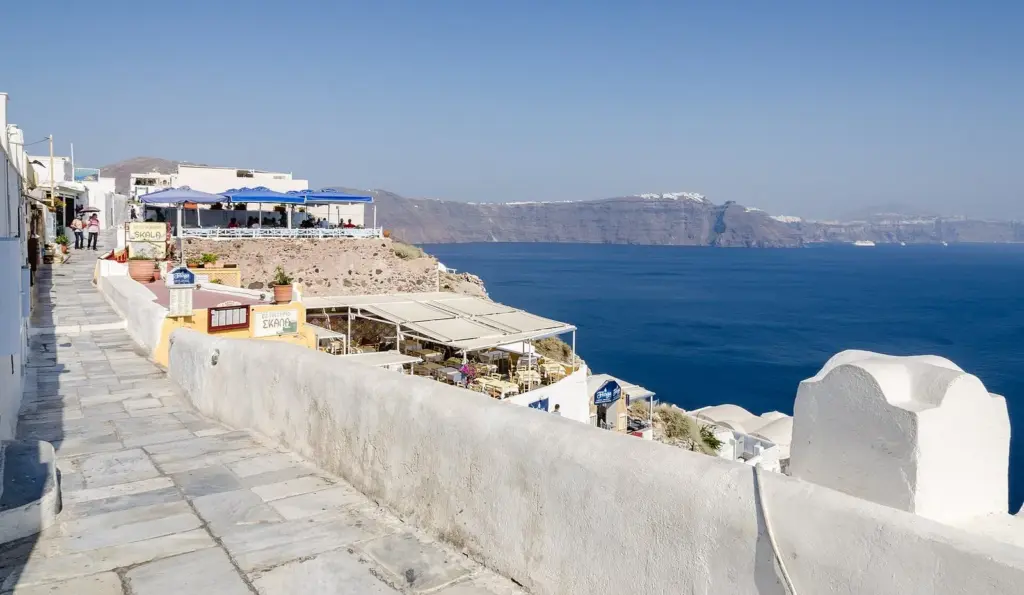
The marble is polished smooth by millions of feet and gets slippery, especially after rain or when it’s been freshly washed, so wear shoes with grip. Most shops open from late morning into the night in summer, which is another reason the early morning is so quiet.
Plan it: free; 1-2 hours with stops; early morning for empty lanes and soft light. Best for: everyone.
3. See the windmills on the ridge
The island’s most photographed windmills. Beyond the castle, a row of old windmills stands on the ridge at Oia’s western end. Once used to grind grain, they’re now homes and landmarks, and they’re some of the most recognizable Santorini windmills, framing the sunset from the castle and glowing white in the morning light. The path out to them gives you one of the best views back along the village.
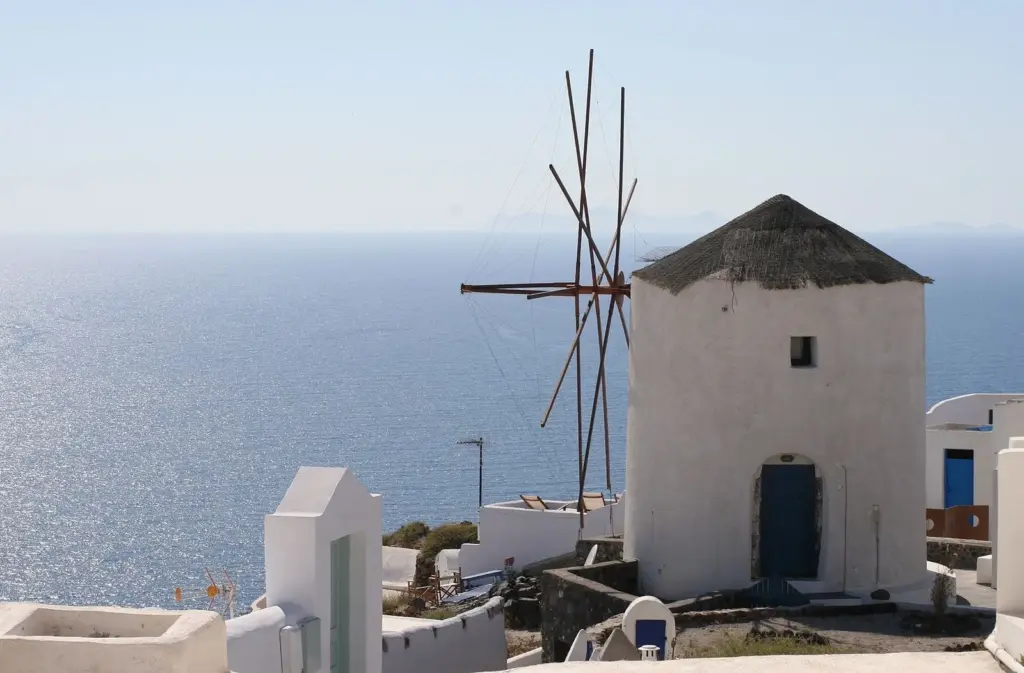
The classic sunset composition, with the windmills silhouetted against the sky, is taken from the castle looking west. For the reverse view, the whole village strung along the cliff, walk out past the windmills and look back east in the late afternoon.
Plan it: free; 30 minutes; morning or late afternoon. They’re private property, so admire them from the path. Best for: photographers.
4. Find the blue domes and bell towers
The postcard, in person. Oia’s blue-domed churches and whitewashed bell towers are its signature image, and the most famous viewpoints are just off the main path in the middle and western parts of the village. They’re best in the morning, when the light is soft and the lanes are empty; by late afternoon, you’ll share every angle with dozens of phones. Remember that these are working churches and that many viewpoints are private rooftops or hotel terraces.
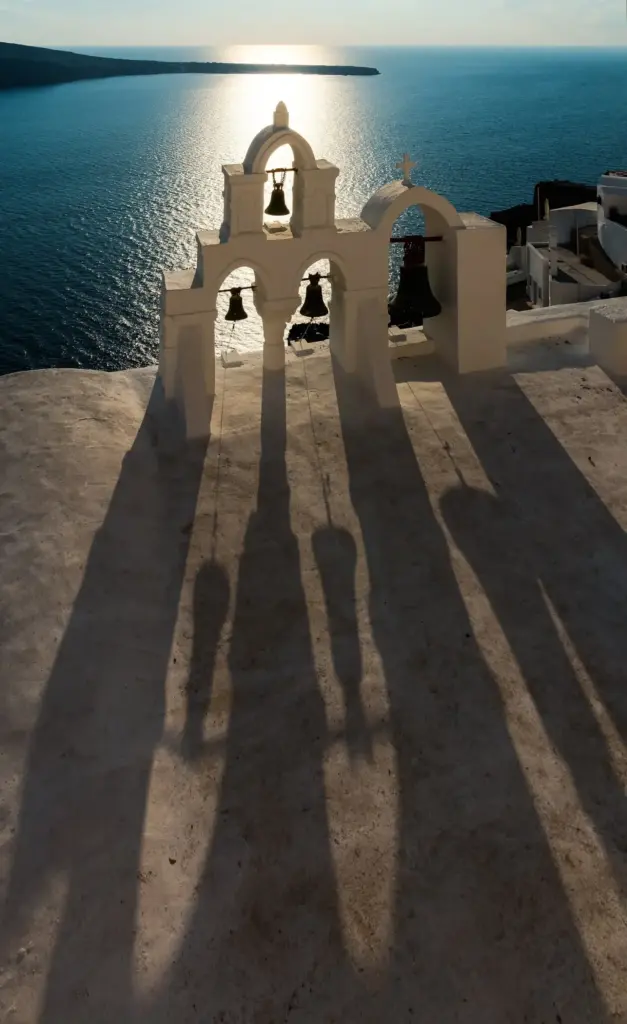
The most famous viewpoints attract photo shoots from dawn in summer, so if you want them to yourself, be there before 7:30. Midday light flattens the blues and whites; the domes look best in soft morning light or just after sunset.
Plan it: free; 30-60 minutes; early morning. Don’t climb walls or step onto private terraces for a photo. Best for: photographers and first-time visitors.
5. Get up for sunrise and the blue hour
Oia’s best-kept open secret. Oia faces west, so the sunrise happens behind you, but the soft light that follows washes the whole village pink and gold with almost nobody around. In the blue hour before sunrise, the lights of the hotels still glow, the lanes are silent and you’ll meet only photographers and early delivery carts.
The sun itself comes up over the Aegean behind the village, to the east, so for the sunrise proper, stand near the eastern entrance or in Finikia. For the glow on the cliff, stay on the caldera side and watch the light arrive.
Plan it: free; in 2026 sunrise comes around 06:00 in June and after 07:20 in mid-October, calculated for Oia; arrive half an hour before. Best for: photographers and anyone staying in or near Oia.
6. Walk down to Ammoudi Bay
A tiny harbor at the foot of the cliff. Ammoudi Bay, below Oia’s western end, is a small fishing harbor wedged between red volcanic cliffs and the sea, with a handful of fish tavernas along the water. A long stepped path zigzags down from the village, and the climb back up is a real workout. In 2026 the road down is closed to general traffic under the Civil Protection measures: vehicles are turned at the municipal car park, and a limited number of municipal minibuses carry visitors. People can still go down and stay in Ammoudi, and boats can land, but the path from Ammoudi along the shore to the rocks at Agios Nikolaos, a favorite swimming spot, is closed until March 31, 2027.
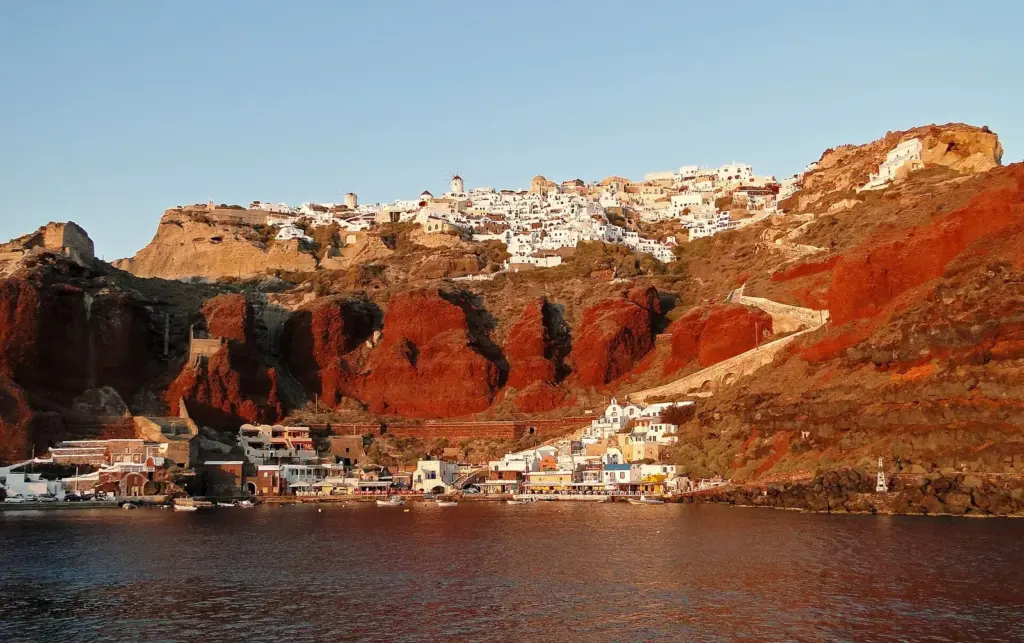
The steps down are broad and cobbled, but they’re long and exposed, with no shade, and you may share them with donkeys. Wear proper shoes, bring water, and don’t attempt the climb back up in the midday heat.
Plan it: free to walk; allow 20-30 minutes down and longer back up; go in the morning or late afternoon, not in the midday heat. Check locally for the municipal minibus if you don’t want to walk. Best for: fit walkers and anyone planning a seafood lunch.
7. Have a seafood lunch at the water’s edge
Fish with your feet almost in the sea. The tavernas at Ammoudi serve grilled fish, octopus and simple salads at tables right by the water, with the cliffs towering above. It’s one of the most atmospheric meals on the island, and a long lunch here is a better use of the middle of the day than shopping in the heat. Fish is usually priced by the kilo, so ask before you order. Santorini restaurants with caldera views are pricier up top; down here you’re paying for the setting and the catch.
Ammoudi faces the sunset, so an early dinner here is an alternative to the castle crowd, if access allows. On windy days, the tables nearest the water can catch the spray.
Plan it: 1.5-2 hours; book ahead for sunset tables in summer. Check access in 2026 before you go. Best for: couples and seafood lovers.
8. Explore the little harbor at Armeni
Oia’s other harbor. Armeni, below the middle of the village, is a smaller, quieter harbor than Ammoudi, reached by its own long stepped path. Small boats use it, and it’s a good spot to see the cliff and the village from below without the Ammoudi crowd. There’s no beach, and little to buy.
Treat it as a walk rather than a destination: the pleasure is the view of the cliff and the village from sea level, and the quiet compared with the main path above.
Plan it: free; allow an hour for the round trip on foot; bring water. Best for: walkers who want a quiet corner of Oia.
9. Admire the captains’ mansions
Oia’s seafaring wealth, in stone. Along the upper part of the village, look for the neoclassical mansions built by Oia’s 19th-century sea captains, with their tall windows, pediments and painted facades in ochre, pink and cream. They’re the reminder that Oia was a prosperous maritime village long before it was a tourist one, and several now house hotels, galleries and shops.
Several of the mansions now house hotels, galleries and shops, so you can often see inside. The lanes just above the main path, away from the caldera edge, have some of the least-visited examples.
Plan it: free; look up as you walk the main path and the lanes just above it. Best for: architecture and history lovers.
10. Step into the Naval Maritime Museum
The story behind the mansions. Oia’s small maritime museum, housed in a restored captain’s mansion, tells the story of the island’s seafaring past through ship models, figureheads, instruments and old photographs. Secondary sources say it was founded in 1956 and has opened in past seasons from spring to fall, so check its hours and prices locally before you go.
If it’s open when you pass, it’s a good way to spend half an hour in the shade in the heat of the afternoon, and it puts the captains’ mansions you’ve just walked past into context.
Plan it: check opening times locally before you go; allow 30-45 minutes. Best for: history lovers and families escaping the midday sun.
11. Browse the galleries and shops
Art, jewelry and a lot of linen. Oia shopping runs along the main path and the lanes around it: art galleries, jewelry designers, ceramics, linen clothes and plenty of souvenirs. It’s the most expensive shopping on the island, but also some of the most interesting, with small galleries showing local and Greek artists. The best time to browse is late morning, before the sunset crowd arrives.
Prices in Oia’s galleries and jewelry shops are the highest on the island, and bargaining isn’t the custom in galleries. For art and antiques, ask for documentation, and ask about shipping if you’re buying something large.
Beyond the galleries, look for jewelry inspired by the island’s ancient motifs, ceramics glazed in caldera blues, linen and cotton clothing, pieces made with volcanic stone, and the island’s own food products, such as capers, fava and a bottle of Vinsanto, the sweet wine made from sun-dried grapes. Buy food products in sealed packaging if you’re flying home, and wrap bottles well.
Plan it: free to browse; many shops open late into the evening in summer. Best for: art lovers and gift buyers.
12. Know where Atlantis Books went
The bookshop that made Oia famous among readers has moved. Atlantis Books, the tiny bookshop that became one of Oia’s best-known sights, says on its own website that it has relocated to the cliffside of Firostefani, at the base of the Nomikos Cultural Centre. It still sells new and used books in English, French, Italian, Spanish, German, Chinese and Greek, plus rare and first editions, and it says it’s open every day. If you went looking for it in Oia, that’s why you didn’t find it.
From Oia, take the bus to Fira, then walk north along the caldera path toward Firostefani; the shop’s new home at the base of the Nomikos Cultural Centre is on the cliffside where the two meet.
Plan it: combine a visit with a walk from Fira to Firostefani; check hours with the shop. Best for: readers and anyone with a soft spot for independent bookshops.
13. Wander into Finikia
Oia’s quiet neighbor. Finikia sits just inland from Oia’s eastern entrance, a small village of pastel houses, cave homes and chapels where daily life carries on largely untouched by the sunset crowds. Start here and walk into Oia through the back lanes, and you’ll arrive feeling like you found a side door.
Finikia is also a good place to look for a less expensive meal or room within walking distance of Oia, and its lanes are pleasant at any time of day.
Plan it: free; under an hour; morning. Best for: anyone who wants a glimpse of village life.
14. Hike the rim toward Imerovigli
The Oia end of the island’s great walk. The caldera path runs from Oia along the rim to Imerovigli, Firostefani and Fira, and the stretch nearest Oia is one of the wildest, crossing open hillsides with views back to the village. You can walk the whole way from Fira and finish in Oia for sunset, or do an out-and-back from Oia in the morning. Blue Star Ferries’ island guide puts the full Fira-Oia route at 9.5 km and about three hours; most people take longer.
The stretch between Imerovigli and Oia is the toughest part of the route, climbing over the highest point and crossing loose, gravelly ground, with few places to buy water. Start with at least a liter per person and a hat.
Plan it: free; start early in summer, bring water, sun protection and proper shoes; there’s almost no shade. Best for: fit walkers.
15. Swim at a beach nearby
Oia has no beach of its own, but the north coast does. Katharos, west of the village at the end of a dirt road, is a rocky shore with clear water, and Baxedes and Koloumbos on the north coast are longer, wilder beaches of dark sand. They depend on the wind: on calm days they’re lovely, on meltemi days rough. With the Ammoudi swimming rocks off limits in 2026, these are your nearest options.
These beaches have little or no shade and few facilities, so bring what you need. If the north wind is blowing hard, the south-coast beaches of the island are a better bet, though farther away.
Plan it: by car or scooter; bring water, shade and water shoes. Best for: swimmers staying in Oia.
16. See Oia from the water
The view from below the cliff. Caldera cruises pass beneath Oia, and sunset sailings time their return so you watch the sun go down from the water with the village lit up above you. It’s the best way to escape the castle crowd and to understand how the village clings to the cliff.
Ask the operator where the boat departs from and how you get there, since many caldera cruises start away from Oia and include a transfer.
Plan it: prices vary by boat and season; book a few days ahead in summer. Best for: couples and anyone who dislikes crowds.
17. Have dinner with a caldera view
The table everyone wants. Oia’s cliffside restaurants are some of the most sought-after on the island, especially for sunset tables. Book days or weeks ahead in summer, choose on the menu as well as the view, and consider an early dinner that starts before sunset and ends with the lights coming on across the caldera.
When you book, ask specifically for a table on the edge of the terrace. And consider lunch instead: the view is the same and the prices are often lower.
Plan it: expensive; book as early as possible for June to September. Best for: special occasions.
18. Stay the night
Oia after the crowds leave. The single best thing you can do in Oia is be there after the buses and tour groups have gone. By 10 p.m. the lanes empty, the village lights up across the cliff, and in the morning you’ll have the blue domes to yourself. It’s expensive, but even one night changes the experience. Our guide to where to stay in Santorini covers Oia’s hotels and the alternatives nearby.
Before you book, check two things: the minimum age, since many Oia hotels don’t take children under 13 or so, and how many steps lie between the path and your room.
Plan it: book early for summer; many Oia hotels close from November to March. Best for: couples and anyone who wants to see Oia at its best.
A Self-Guided Walk Through Oia
If you only have a morning, this route takes in the essentials in about two hours at an unhurried pace, without backtracking more than you have to. The times are our estimates for walking, not counting stops.
- Start at the bus stop and car parks at the eastern entrance, where the road ends and the marble main path begins. If you arrive early, detour a few minutes inland into Finikia first.
- Walk west along the main path (about 10 minutes to the center), stepping off at every gap between the buildings to look over the caldera.
- Pause at the main square and church in the middle of the village, where the path widens.
- Find the blue domes and bell towers just off the path in the middle and western parts of the village; allow 15-20 minutes to explore the side lanes.
- Continue to the castle ruins at the western tip (about 10 minutes) and climb onto the walls for the view back over the village.
- Walk out toward the windmills on the ridge beyond (5-10 minutes), then turn around for the classic view east along the cliff.
- Return through the lower lanes below the main path, which are quieter and full of cave houses, chapels and hotel terraces (about 20 minutes, with steps).
- Finish at the top of the Ammoudi steps, near the western end, for the view down over the red cliffs to the harbor. If you have the energy and the time, carry on down to Ammoudi for lunch.
Do the route in reverse in the late afternoon and it ends at the castle, just in time to find a spot for sunset.
The Oia Sunset: How to Do It Right
The Oia sunset is the most famous half hour on the island, and a little planning makes the difference between a magical evening and an hour of being elbowed. A Santorini sunset from Oia is best when you know exactly when the sun goes down, where you’ll stand, and how you’ll get home afterward.
When the sun sets. These are the calculated 2026 sunset and sunrise times for Oia on the 15th of each month, in local time. The sun disappears a few minutes earlier when it drops behind Thirasia or into haze on the horizon.
| Month (15th) | Sunrise | Sunset |
|---|---|---|
| January | 07:29 | 17:24 |
| February | 07:07 | 17:57 |
| March | 06:31 | 18:25 |
| April | 06:46 | 19:51 |
| May | 06:12 | 20:16 |
| June | 05:59 | 20:37 |
| July | 06:11 | 20:37 |
| August | 06:35 | 20:11 |
| September | 06:59 | 19:27 |
| October | 07:24 | 18:43 |
| November | 06:55 | 17:11 |
| December | 07:22 | 17:04 |
Where to stand. The castle ruins at the western tip are the classic spot and the most crowded; arrive 60-90 minutes early in summer. The path out toward the windmills gives a similar view with a little more room. Terraces along the main path, especially in the middle of the village, give you the sunset over the rooftops with the castle crowd in the distance. A restaurant or bar table with a sunset view is the most comfortable option, but those tables are booked days ahead in season.
How to get home. This is the part most people forget. When the sun goes down, thousands of people leave at once, and the buses back to Fira and the taxi rank are overwhelmed. Either leave a few minutes before the sun touches the horizon, stay for dinner and let the crowd clear, or book a transfer in advance.
Alternatives. If crowds aren’t your thing, watch the sunset from Imerovigli or Firostefani, where the view across the caldera is just as good and the crowd a fraction of the size, or from the water on a sunset cruise. The sunset looks the same; the experience is much calmer.
A Perfect Day in Oia, Hour by Hour
This is how we’d spend a full summer day in Oia if we were staying nearby. Adjust the times to the season using the sunset table above.
- 7:00 to 9:00: sunrise light and the blue hour. Walk the main path from end to end while it’s empty, find the blue domes and the bell towers, and walk out to the windmills.
- 9:00 to 10:30: breakfast with a view, then a wander through Finikia’s back lanes.
- 10:30 to 13:00: walk down the stepped path to Ammoudi Bay before the heat builds, or take the municipal minibus if it’s running, and settle in for an early seafood lunch by the water.
- 13:00 to 16:00: the hottest hours. Climb back up slowly (or ride), then retreat to your hotel pool, a shaded cafe or a gallery. This is also the best time for the maritime museum, if it’s open.
- 16:00 to 18:00: browse the shops along the main path before the crowds peak, and pick up anything you want to buy.
- 18:00 to sunset: head for your sunset spot, at least an hour ahead in July and August, or settle into a dinner reservation with a view.
- After sunset: let the crowd drain away, have dinner, then walk the lanes after 22:00, when Oia is quiet and lit up.
If you’re visiting for the day from elsewhere on the island, compress it: arrive by 9:00, do the morning walk and Ammoudi, leave in the early afternoon, and come back for sunset only if you have a plan for getting home.
Oia Without the Crowds
Oia without crowds is possible; it just takes timing. The village has two rhythms. From early morning until late morning it’s quiet, with residents, hotel guests and a few photographers. From late afternoon, the day-trippers, tour groups and cruise passengers arrive for the sunset, and the main path and the castle fill up until well after dark. Santorini caps cruise arrivals at 8,000 passengers a day, but on a summer evening that still means a lot of people heading for the same few hundred meters of wall.
- Go early. Before 10:00 in summer, you’ll have many viewpoints to yourself.
- Go in the shoulder season. April, May and late October are far calmer than July and August, with sunsets that are just as good.
- Skip the castle at sunset. Watch from a terrace, a restaurant, the windmills path or another village.
- Stay overnight. The late evening and early morning belong to people who sleep in Oia.
- Explore below the path. The lanes and stairways that drop toward the caldera are always quieter than the main path.
Oia at Night
Oia at night is quieter than Fira and far calmer than the sunset hour. After the day-trippers leave, the village becomes a place for long dinners, a glass of wine on a terrace and a stroll through lanes lit by warm lamps, with the lights of Imerovigli and Fira glittering across the caldera. There are a few bars, but no clubs; if you want to dance, you’ll be heading to Fira.
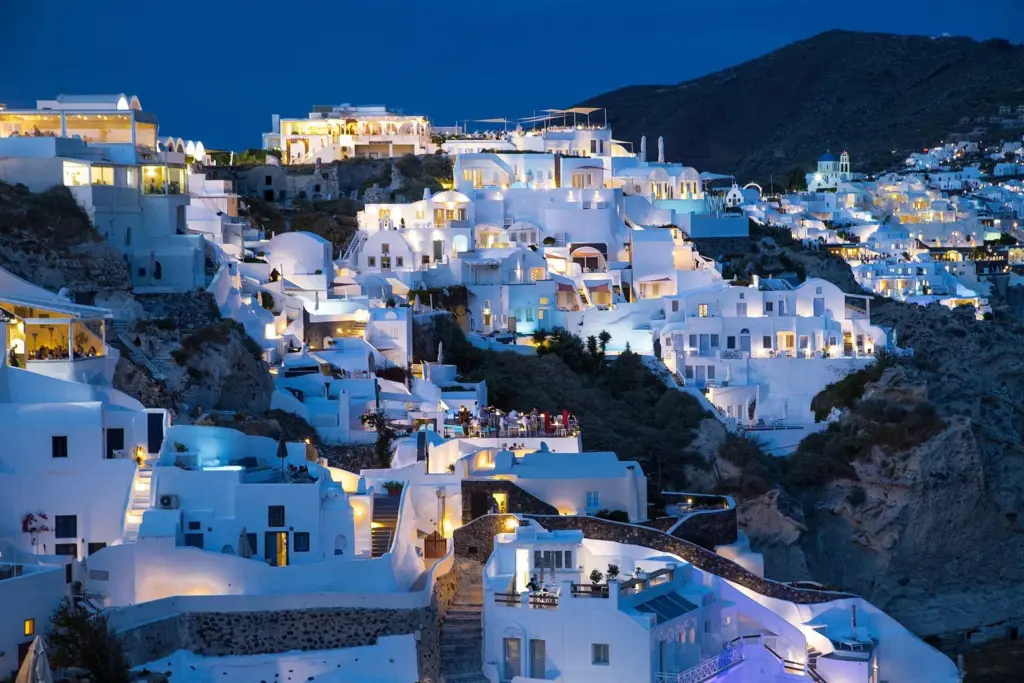
The late buses back to Fira run into the night in summer, with a higher night fare of EUR 2.80 between 00:30 and 05:00 on the KTEL table, but they fill quickly; taxis are scarce. If you’re not staying in Oia, plan your ride home before you order the second bottle.
Photographing Oia
Oia is one of the most photographed places in Europe, which means two things: the classic shots are easy to find, and you’ll be sharing them. A few tips help you come home with better pictures and without annoying anyone.
- Timing beats gear. The best light is the hour after sunrise and the hour before sunset. At midday the light is flat and harsh, the whites burn out and the lanes are packed.
- The classic spots. The castle ruins for the sunset and the view back along the village; the path toward the windmills; the viewpoints off the main path in the middle and western parts of the village for the blue domes; the top of the Ammoudi steps for the red cliffs and the harbor below.
- Look the other way. At sunset, turn around: the light on the village behind you is often better than the sun itself.
- Blue hour. Just after sunset and before sunrise, the lights of the hotels and restaurants glow against a deep blue sky. A small tripod or a steady wall helps.
- Private property. Many of the best angles are from hotel terraces, private rooftops and church roofs. Don’t climb on domes or walk onto terraces; some cafes and bars let you in for the price of a drink, which is the fair way to get the view.
- Photo shoots. Professional shoots, with flowing dresses and assistants, are common at the famous viewpoints in the morning. Give them space and wait your turn.
- Drones. Flying is restricted in many parts of Greece, and a crowded village is a bad place to try. Check the rules before you fly.
Where and How to Eat in Oia
Eating in Oia ranges from gyros on the main path to tasting menus on cliffside terraces, and the price of a table is closely tied to its view. A few principles help you eat well without overpaying for the scenery.
- Pay for the view once. Book one special caldera-view dinner, ideally starting just before sunset, and eat more simply the rest of the time.
- Look one lane back. Places a step away from the cliff edge, or in Finikia, are often cheaper and just as good.
- Go down to Ammoudi. The fish tavernas by the harbor are Oia’s most atmospheric lunch; check access in 2026 and ask the price of fish by the kilo before you order.
- Book sunset tables early. From June to September, the best tables at sunset go days or weeks ahead.
- Try the local specialties. Fava (yellow split pea puree), tomato fritters, white eggplant and the island’s Assyrtiko wine appear on most menus.
Oia on a Budget
Oia is expensive, but seeing it doesn’t have to be. The best things in the village cost nothing, and a few choices keep the rest reasonable.
- Come by bus. EUR 2.20 each way from Fira (EUR 2.80 at night) on the KTEL table, against a taxi fare many times that.
- Do the free things first. The main path, the castle, the windmills, the blue domes, Finikia and the walk down toward Ammoudi are all free.
- Picnic the sunset. A drink and a snack from a mini market, eaten on a wall near the windmills, costs a fraction of a sunset cocktail, and the view is the same.
- Stay elsewhere. Rooms in Finikia, Firostefani, Fira or the beach towns cost far less than Oia’s cliff hotels, and the bus makes Oia an easy evening trip.
- Come in the shoulder season. In April, May and late October, hotel prices drop and the village is calmer.
Oia With Kids or Limited Mobility
Oia is manageable with children and for people who find stairs hard, but it takes planning. The main path along the top of the village is mostly level, though its marble paving can be uneven and slippery, and it gets very crowded in the evening. Almost everything off the main path, including most hotels, the viewpoints below the path and the way down to Ammoudi, involves steps, sometimes a lot of them.
- Strollers: fine on the main path in the morning, hard work everywhere else. A baby carrier is easier.
- Heat: there’s little shade, and the midday sun reflects off the white walls. Plan outdoor time for mornings and evenings.
- Crowds: the sunset crush at the castle isn’t a good place for small children. A terrace table or a spot along the windmill path is calmer.
- Hotels: many cliff hotels set minimum ages and involve steep steps. A few are easier, such as Canaves Epitome, which says it isn’t built into the cliff, and Santo Pure, which has accessible suites and parking.
- Getting around: the bus stop and car parks are at the village entrance, at the start of the main path.
Oia Etiquette
Oia is a real village with residents, not a theme park, and a few courtesies go a long way.
- Stay off roofs and domes. Many flat roofs and terraces are private, and church domes are not photo platforms.
- Dress for churches. Cover shoulders and knees if you go inside, and keep your voice down.
- Keep the lanes moving. The main path is narrow in places; don’t block it for a long photo session at sunset.
- Mind the late hours. People live and sleep here. Keep it down in the lanes at night.
- Carry your litter out. Bins are few and fill quickly at sunset.
Weather and Wind in Oia
Oia’s position at the northern tip of the island makes it windier than much of Santorini. In July and August the meltemi, a strong, dry north wind, can blow for days, which keeps the heat bearable but makes the castle walls blustery at sunset; bring a light layer. Spring and fall are milder, with calm, clear evenings that many people find the best of the year. In winter, the wind can be cold and strong, rain is possible, and many businesses close, but clear winter days are beautiful and the village is almost empty.
Your Oia Checklist
- Check the sunset time for your date, and plan to arrive an hour early in summer.
- Walk the main path early in the morning, before 10:00.
- Wear good shoes: marble paving, steps and steep paths.
- Carry water, sun protection and a light layer for the evening wind.
- Book any sunset dinner well ahead in summer.
- Plan how you’ll get home after sunset: bus, booked transfer or dinner until the crowd clears.
- If you want to swim, head to Katharos or the north coast, not the Ammoudi rocks, in 2026.
- If you’re looking for Atlantis Books, go to Firostefani.
Arriving in Oia With Luggage
Cars and taxis can’t drive into Oia’s lanes, so everyone arriving with bags faces the same last stretch on foot, and it’s worth knowing what that involves before you book. The drop-off points are at the edges of the village, near the bus stop and car parks at the eastern entrance and along the road above the village. From there, you walk along the marble path and then, for most cliff hotels, down steps. Many hotels send a porter to meet you and carry bags, sometimes for a fee; ask when you book, and tell the hotel your arrival time.
Rolling suitcases are hard work on the polished marble and impossible on the steps, so a bag you can carry, or a porter, makes arrival much easier. Aim to arrive in daylight: the lanes are confusing after dark, and hotel signs are small. If your hotel is on the Ammoudi side of the village, check in 2026 exactly where your driver can stop, since the road down to the harbor is closed to general traffic.
Getting to Oia
- By bus: KTEL buses run from Fira to Oia (11.8 km) for EUR 2.20, or EUR 2.80 at night from 00:30 to 05:00, on the table updated May 19, 2026. Fira is the hub, so from most other villages you change there. Buses before and after sunset are packed.
- By taxi: possible, but the island has few taxis and demand peaks around sunset. Book ahead if you can.
- By car or scooter: there are car parks at the village entrance, but they fill up in the afternoon in summer. Arrive early or come by bus.
- On foot: the caldera path from Fira through Firostefani and Imerovigli ends in Oia; it’s a half-day hike in the heat, best started early.
- By boat: caldera cruises pass below the village, and in 2026 boats can still land at Ammoudi.
From the airport or the port. There’s no direct bus from Santorini’s airport or from Athinios port to Oia: take the bus to Fira (EUR 2.20 from the airport, EUR 2.70 from Athinios on the May 2026 table) and change there for Oia, or book a transfer or taxi straight through. With luggage, a pre-booked transfer is much easier, not least because cars can’t drive into the village, so you’ll walk from the drop-off point to your hotel, or a porter will. If you’re arriving late at night, book the transfer in advance; the buses may have stopped and taxis are scarce.
The Fira Santorini visitors pass through on the bus is a different world from Oia: bigger, busier and open later, with the island’s nightlife. Many people stay in one and visit the other, and the bus between them makes that easy.
Should You Stay in Oia or Visit for the Day?
Stay in Oia if you want the sunset outside your door, the quiet mornings and the evening lanes, and you’re happy to pay for it: Oia’s hotels are the most expensive on the island, many sit dozens of steps below the path, and several don’t accept young children. Visit for the day if you’re on a budget, traveling with small kids or heavy luggage, or want beaches and nightlife; Firostefani and Imerovigli give you similar caldera views for less, and Fira gives you the bus hub. A good compromise is one or two nights in Oia at the start or end of a longer stay.
| Staying in Oia | Visiting for the day | |
|---|---|---|
| Sunset | From your terrace or a short walk away, with no ride home to worry about | From the castle or a terrace, then a crowded bus or a booked transfer |
| Mornings | Empty lanes and the blue hour on your doorstep | Only if you catch an early bus |
| Cost | The island’s highest hotel prices | A EUR 2.20 bus fare each way |
| Access | Often many steps with luggage; cars can’t reach most hotels | Easy: bus stop and car parks at the entrance |
| Children | Many hotels set minimum ages | No restrictions |
| Beaches and nightlife | Far away | Your base can be near them |
Where Oia Fits in Your Santorini Trip
Oia deserves a slot of its own rather than being squeezed between other sights. On a three-day trip, give it one morning and one sunset, ideally on different days: the morning for the lanes and Ammoudi, the evening for the sunset, from the castle or a terrace. On a five-day trip, add a night in Oia or nearby, or spend a sunset on the water beneath the village. On a longer trip, Oia makes a good final base, when you’ve seen the rest of the island and want a couple of slow days with the famous view.
Try not to do Oia on the same day as a long boat trip or a day at the far end of the island, such as Akrotiri or the south-coast beaches. The bus connections run through Fira, the distances add up, and you’ll arrive for sunset tired and late. Pair Oia instead with the northern beaches, a walk along the rim toward Imerovigli, or a lazy afternoon at your hotel.
Oia, Imerovigli or Fira for a Day Visit?
If you’re staying elsewhere and can only visit one caldera village properly, here’s how they compare for a day out.
- Oia is the prettiest and the most famous, with the best lanes to wander, the windmills, the harbors below and the classic sunset. It’s also the most crowded and the farthest from everything else.
- Imerovigli has arguably the finest views on the island, looking at Skaros Rock and the whole curve of the caldera, but it’s small and mostly hotels, with little to do beyond walking and looking.
- Fira is the busiest and least postcard-perfect, but it has the museums, the cable car, the most restaurants and bars, and the bus hub.
For a first visit, most people should see all three: Fira as a base or a stop, the walk along the rim through Firostefani and Imerovigli, and Oia at the end. If you have to choose one for the sunset, Oia for the spectacle, Imerovigli for the peace.
Oia in an Hour, Half a Day or Two Days
How much time you give Oia changes what you can do, so here’s how we’d use each amount.
One hour. Walk the main path from the bus stop to the castle and back, stopping at the viewpoints for the blue domes and the windmills. It’s enough to say you’ve seen Oia, not enough to feel it. If this is all you have, come early in the morning or accept the crowds.
Half a day. Arrive by 9:00, walk the main path both ways, see the windmills, then walk down to Ammoudi Bay and have lunch by the water before climbing back up (or using the municipal minibus if it’s running). Leave in the early afternoon, when the day-trippers start arriving. This is the best day-trip plan for most visitors.
A full day. Do the half-day plan, then retreat somewhere shady in the heat of the afternoon, browse the galleries around 16:00, and take your sunset spot an hour ahead. Stay for dinner and let the crowd clear before heading home.
Two days or more. Stay in Oia or nearby. Use the first evening for the sunset from the castle, the second for a sunset from a terrace or a boat. Get up for the blue hour one morning, hike the rim toward Imerovigli another, and spend an afternoon at one of the north-coast beaches. Two nights is when Oia stops being a sight and starts feeling like a place.
Visiting Oia From a Cruise Ship
Cruise passengers usually come ashore by tender at Fira’s Old Port, well to the south, so getting to Oia and back is the whole puzzle of a cruise day. From the Old Port you ride the cable car up to Fira (EUR 10 one way for adults on the 2026 price list) or walk the old stepped path, then take the bus or a taxi to Oia, or join a ship excursion that handles the transport. The Old Port sits inside a 2026 Civil Protection restricted zone, though the cable car and the path weren’t restricted.
The trick is time. The bus from Fira to Oia takes you to the far northern tip of the island, and the lines for the cable car back down to the tenders can be long in the afternoon. Go to Oia first, early, see the village while it’s quiet, and head back to Fira with a big margin before your all-aboard time. Don’t plan to stay for sunset unless your ship sails late and you have a guaranteed ride. The island caps cruise arrivals at 8,000 passengers a day and charges a EUR 20 passenger fee from June to September, but on a busy day Oia still feels the cruise crowds from late morning.
Other Places to Watch the Sunset Near Oia
The castle isn’t the only way to see the sun go down, and the alternatives are often better experiences.
- The windmill path. A few minutes beyond the castle, the path toward the windmills gives a similar view with a little more room.
- A terrace in the village. Many cafes, bars and restaurants along the main path face the sunset. You’ll pay for the seat, but you’ll have one.
- Imerovigli. Farther south along the rim, Imerovigli looks across the caldera at the sunset with Skaros Rock in the foreground, and it’s far calmer.
- Firostefani and Fira. The caldera path between them has sunset views all along it and plenty of places to stop.
- From the water. Sunset cruises watch the sun set from inside the caldera, with Oia lit up on the cliff above.
Oia in Winter and the Shoulder Season
Oia changes character completely outside the summer. From late October the tour groups thin out, and by mid-November most of the big cliff hotels have closed: on their own booking engines, Perivolas and Santo Pure close on October 31, Esperas on November 2, and Canaves Oia Suites and Canaves Epitome on November 15, reopening between April 1 and late April. Many restaurants, bars and shops close too, and those that stay open keep shorter hours.
What you get in return is the village to yourself. The lanes are empty, the light is clear after the winter rain, and the sunset, at about 17:11 in mid-November, 17:04 in mid-December and 17:24 in mid-January on our calculated times, draws a handful of people instead of thousands. Cold, strong winds are common, and some days are gray and wet, so pack a warm layer and a rain jacket. If you visit in winter, base yourself in Fira, where more hotels stay open, and come to Oia for a morning walk and a sunset.
The shoulder months, April, May and late October, are the sweet spot for many visitors: the hotels and restaurants are open, the crowds are manageable, and the sunset comes early enough that a relaxed dinner afterward doesn’t run past midnight.
Oia Through the Year
- April and May: the hotels reopen, the lanes are calm and the light is clear. Sunsets move from about 19:51 in mid-April to 20:16 in mid-May.
- June to August: peak season, with the latest sunsets (about 20:37 in mid-June and mid-July) and the biggest crowds. Book everything early.
- September and October: our favorite time, with warm evenings, thinner crowds and earlier sunsets (about 19:27 in mid-September and 18:43 in mid-October).
- November to March: quiet, often windy and much cheaper, but many hotels, restaurants and shops close. Sunsets come around 17:04 to 18:25, and you may have the castle to yourself.
Staying Safe in Oia
- Cliff edges. Many terraces, walls and viewpoints have low walls or no railings at all, with long drops below. Keep children close, and don’t sit on the edge for a photo.
- Slippery marble. The main path’s polished marble can be slick, especially when wet. Shoes with grip are worth packing.
- Heat. Summer afternoons are hot, the white walls reflect the sun, and shade is scarce. Carry water and plan the steep walks, especially Ammoudi, for mornings or evenings.
- Crowds. The sunset crush at the castle is dense. Keep bags zipped and phones secure, and agree on a meeting point with your group.
- Steps at night. Lanes below the main path are dimly lit after dark. Use your phone’s torch on the steps.
- Donkeys. On the steps down to Ammoudi you may meet donkeys; step aside to the wall and let them pass.
What’s Changed in 2026
| What | Now | Source and date |
|---|---|---|
| Ammoudi road | Closed to general traffic from the Oia ring road; vehicles turned at the municipal car park; limited municipal visitor minibuses; people can still reach Ammoudi, including by sea | Joint Ministerial Decision, April 2026, in force to March 31, 2027 |
| Ammoudi to Agios Nikolaos path | Closed | Same decision |
| Atlantis Books | Relocated to Firostefani, at the base of the Nomikos Cultural Centre | The bookshop’s own website |
| Bus fare from Fira | EUR 2.20; EUR 2.80 at night | KTEL table updated May 19, 2026 |
| Cruise passengers | Capped at 8,000 a day island-wide; EUR 20 fee per passenger June-September | In force since 2025 |
What to Skip
- Arriving at the castle ten minutes before sunset in July. You’ll see the backs of heads.
- Driving to Oia for sunset in summer. The car parks fill early and the road jams afterward.
- Swimming at the Ammoudi rocks in 2026. The path to Agios Nikolaos is closed until March 31, 2027.
- Looking for Atlantis Books in Oia. It has moved to Firostefani.
- Climbing onto rooftops for photos. Many are private terraces or church roofs. Respect the signs.
- Doing Oia in two hours at midday. It’s hot, crowded and the light is flat. Come early or late.
Oia Santorini FAQ
What is Oia famous for?
Oia is famous for its sunsets, watched by crowds from the old castle ruins at the village’s western tip, and for its look: white cave houses, pastel captains’ mansions, blue-domed churches and windmills stacked along the northern end of the caldera cliff. It’s the most photographed village in Santorini and one of the best-known places in Greece.
How do you pronounce Oia?
Oia is pronounced “EE-ah”. You’ll also see it written Ia, especially on older maps and some signs, and it was once known as Apano Meria, the “upper side” of the island. Locals and bus drivers will understand “EE-ah” immediately; saying “OY-ah” marks you as a first-timer, which is fine.
What time is sunset in Oia?
It depends on the season. Calculated 2026 times for Oia on the 15th of each month range from about 17:04 in December to 20:37 in June and July; mid-September is about 19:27 and mid-October about 18:43. In summer, arrive at the castle 60-90 minutes early to get a spot on the walls.
Can you swim in Oia?
Not in the village itself, which sits on a cliff. The favorite swimming spot, the rocks near Agios Nikolaos beyond Ammoudi, is reached by a shore path that’s closed in 2026. The nearest beaches are Katharos, west of the village, and Baxedes and Koloumbos on the north coast, all best on calm days.
How do I get from Fira to Oia?
The KTEL bus runs from Fira’s bus station to Oia (11.8 km) for EUR 2.20, or EUR 2.80 at night from 00:30 to 05:00, on the May 2026 table. Taxis are scarce, especially around sunset. Fit walkers can hike the caldera path from Fira through Firostefani and Imerovigli, a half-day walk best started early.
Is it better to stay in Oia or Fira?
Stay in Oia for romance, quiet evenings and the famous sunset on your doorstep; stay in Fira for lower prices, nightlife, restaurants and the bus hub. Oia’s hotels are the most expensive on the island and often involve many steps. Firostefani and Imerovigli are good compromises, with caldera views and easier access to Fira.
What is the best time of day to visit Oia?
Early morning, before 10:00, when the lanes are empty, the light is soft and the blue domes are photographable without a crowd. Come back for sunset if you want the spectacle, but plan your ride home. The middle of the day is the hottest and busiest, and the least rewarding time to wander.
Is Oia worth visiting if it’s so crowded?
Yes, but time it. The crowds concentrate from late afternoon through sunset, especially in July and August. Come early in the morning, when the lanes are quiet and the light is soft, or stay overnight and see the village after the day-trippers leave. Spring and fall are calmer too, with sunsets that are just as good.
Sources and How We Checked
We checked the pages below between September 24 and 30, 2026, and calculated the sun times with NOAA’s solar algorithm for Oia’s coordinates; we did not visit Oia for this guide.
- To Pontiki: the 2026 Civil Protection measures, including the Ammoudi road rules (April 28, 2026), and Euronews
- KTEL Santorini price table (updated May 19, 2026)
- Atlantis Books: its new location and opening information
- NOAA Solar Calculator: the method behind our sunset table
- Blue Star Ferries’ Santorini guide: the Fira-Oia path distance
Santorini Tourism Guide is an independent publication. We are not affiliated with the Municipality of Thira, the Greek National Tourism Organisation, KTEL Santorini, Atlantis Books or any business listed here, and no one paid to be included.
Photo Credits
- Oia from the castle: photo by Zde, via Wikimedia Commons (CC BY-SA 4.0)
- Oia and its windmill: photo by Norbert Nagel, via Wikimedia Commons (CC BY-SA 3.0)
- Oia castle ruins: photo by Michael Nicht, via Wikimedia Commons (CC BY-SA 4.0)
- Oia's main path: photo by Norbert Nagel, via Wikimedia Commons (CC BY-SA 3.0)
- Oia windmill: photo by bongo vongo, via Wikimedia Commons (CC BY-SA 2.0)
- Bell tower in Oia: photo by Dietmar Rabich, via Wikimedia Commons (CC BY-SA 4.0)
- Oia and Armeni: photo by Bernard Gagnon, via Wikimedia Commons (CC BY-SA 3.0)
- Oia by night: photo by Piotr.Wassermann, via Wikimedia Commons (CC BY-SA 4.0)