Most visitors come for the caldera and leave thinking the island’s story starts with whitewash. It doesn’t. Santorini history runs from a Bronze Age port town that volcanic ash preserved almost whole, through a Greek city on a mountaintop, five Venetian castle villages and an Ottoman island that ran much of its own business, to the 1956 earthquake that emptied the villages tourism later refilled. The plain advice: give the past one full day. Start at the Museum of Prehistoric Thera in Fira, ride the bus to Akrotiri, and add Ancient Thera and a Venetian kasteli if you have a second morning.
Quick answer: Santorini was one of the Aegean’s main ports until earthquakes and a giant eruption ended its town at Akrotiri in the last quarter of the 17th century BC; you can now walk through that town under a roof (EUR 20 in 2026). Ancient Thera followed in the 9th century BC, then Roman and Byzantine rule, the Venetians from 1207, the Ottomans from 1537, union with Greece in 1830 and the 1956 earthquake.
Last updated October 5, 2026. We checked hours, tickets and reopening dates against the Hellenic Ministry of Culture’s site pages and the island’s museums in September and October 2026. Ancient dates follow the Ministry; later ones follow Megaron Gyzi, Fira’s history museum. Where historians still argue, we tell you.
- What changed: Akrotiri reopened on April 11, 2025 after a safety closure during that winter’s earthquake swarm, and the Archaeological Museum of Thera reopened on June 13, 2025 after works.
- What it costs (2026): Akrotiri EUR 20. Ancient Thera, the Museum of Prehistoric Thera and the Archaeological Museum of Thera EUR 10 each, EUR 5 reduced. KTEL buses from Fira to Akrotiri, Kamari or Pyrgos cost EUR 2.20 (fare table updated May 19, 2026).
- When: Akrotiri and the two Fira museums open all year, with shorter winter hours. Ancient Thera opens only Friday to Sunday in November and by appointment from December 1 to February 28.
- The trap: every site closes on a different day. The Museum of Prehistoric Thera shuts on Tuesdays, the Archaeological Museum on Mondays, Ancient Thera on Wednesdays in summer, and Akrotiri on Tuesdays in winter.
- Free entry: Akrotiri is free on October 28 and on the first Sunday of every month from November 1 to March 31.
On this page: Timeline | The names | Bronze Age Akrotiri | The eruption and Atlantis | Ancient Thera | Byzantine churches | Venetian kastelia | Ottomans to 1830 | The shipping boom | The 1956 earthquake | History and culture today | 10 history sites | Plan a history day | What’s changed | FAQ
Santorini History Timeline at a Glance
This is the history of Santorini, Greece in one table, with the place where you can still see each chapter. Read it once before you go and the ruins stop being piles of stone.
| When | What happened | Where to see it |
|---|---|---|
| At least the 4th millennium BC | The first people settle at Akrotiri on the south coast, in the Late Neolithic. | Neolithic pottery, Museum of Prehistoric Thera |
| 3rd millennium BC | A sizeable Early Bronze Age village grows at Akrotiri; islanders carve marble figurines in the Cycladic style. | Museum of Prehistoric Thera |
| About the 20th-17th centuries BC | Akrotiri becomes one of the Aegean’s main towns and ports, trading as far as Cyprus, Syria and Egypt. | Akrotiri site |
| Last quarter of the 17th century BC | Strong earthquakes drive the townspeople out; the eruption follows and buries the island in ash and pumice. | Akrotiri; the caldera itself |
| 9th century BC | Dorian colonists led by Theras found the city of Thera on the ridge of Mesa Vouno. | Ancient Thera |
| 7th century BC | Therans sail south and found Cyrene in North Africa, according to Herodotus. | Archaic finds, Archaeological Museum of Thera |
| Early to mid 3rd century BC | The Royal Stoa and the rock-cut shrine of Artemidoros go up on Mesa Vouno. | Ancient Thera |
| Roman era, to the 2nd century AD | The city keeps going; a citizen pays to repair the Royal Stoa in the mid-2nd century AD. | Ancient Thera; Roman sculpture in Fira |
| 6th-9th centuries AD | An Early Christian basilica rises among the ruins; the chapel of Agios Stefanos is later built on its remains. | Ancient Thera |
| 1204-1207 | After the Fourth Crusade the island joins the Venetian Duchy of the Archipelago; Giacomo Barozzi receives it as a fief in 1207 and rules from Skaros rock. | Skaros, below Imerovigli |
| 1537-1579 | Ottoman control arrives in stages and becomes permanent from 1579; in 1580 the sultan grants tax breaks, religious freedom and local courts. | The five kastelia |
| 1821-1830 | The island’s ships join the War of Independence; Santorini enters the free Greek state in 1830. | Megaron Gyzi, Fira |
| About 1850 to the early 1900s | Greece’s fifth-ranked naval power by 1850; wine, textiles and tomato paste pay for captains’ houses, and Santorini brandy wins an award in Paris in 1900. | Oia; Tomato Industrial Museum; Koutsoyannopoulos Wine Museum |
| 1895-1902 | German archaeologists excavate Ancient Thera; the island’s first museum opens in 1902. | Archaeological Museum of Thera (rebuilt 1960) |
| 1941-1944 | Axis occupation; a British Special Boat Service party raids the garrison in Fira on April 24, 1944. | Fira (we found no marked memorial) |
| July 9, 1956 | A magnitude 7.7 earthquake, Greece’s largest of the century, wrecks the villages; mass emigration follows. | The rebuilt caldera villages; the 1960 museum |
| 1967-1974 | Spyridon Marinatos excavates Akrotiri until he dies at the site; Christos Doumas takes over the dig. | Akrotiri, where Marinatos is buried |
| 2025-2026 | An earthquake swarm in early 2025 shuts Akrotiri until April 11, 2025; a new sequence in 2026 brings precautions that run to March 31, 2027. | Restrictions at Athinios, Ammoudi and Fira’s Old Port |
Two patterns run through that table. The first is the volcano: it built the island, buried its most famous town, shook down its villages in 1956 and still sets the rules for where you can drive in 2026. The second is the sea. Santorini has almost no fresh water and little flat farmland, so every good century on this island was a century of trade, from Bronze Age merchants with Egyptian goods in their storerooms to 19th-century captains with barrels of wine in their holds. When trade stopped, people left.
A few Santorini history facts that surprise most visitors: the Bronze Age town at Akrotiri had indoor toilets and multistory houses; the Venetians and their Latin successors held the island for longer than the modern Greek state has existed; and much of the “traditional” caldera skyline was rebuilt after 1956, which makes it younger than many of the people photographing it.
Why Is It Called Santorini? Strongyle, Kalliste and Thera
The island has gone by at least four names, and you’ll meet all of them on signs, ferry tickets and wine labels.
- Strongyle, “the round one”: the earliest name recorded by the Greek historian Herodotus, probably from a time when the island was rounder than the broken ring you see today.
- Kalliste, “the fairest”: Herodotus’ second name, and the reason Pyrgos still calls itself Pyrgos Kallistis.
- Thera: after Theras, the leader of the Dorian colonists who settled here in the 9th century BC. The modern Greek form, Thira, is the island’s official name and the name of its municipality.
- Santorini: from Santa Irini, Saint Irene, the name Latin sailors and rulers used from the 13th century. Sources disagree on which Saint Irene church gave it, with Perissa and Thirasia both put forward.
The double meaning trips people up. Thira (or Thera) means the whole island, but it is also an old name for the capital, which you’ll know as Fira; on Greek signs the capital is Φηρά and the island Θήρα. Ancient Thera is a third place again: the ruined city on the mountain above Kamari. So when a ferry ticket says Thira, it means the island, and when someone says they’re going “up to Thera”, ask which one.
What Was Bronze Age Akrotiri Like?
Akrotiri is the reason serious history travelers come to Santorini. The Ministry of Culture calls it one of the most important prehistoric settlements in the Aegean, and when you stand on its streets you can see why. People lived here from at least the 4th millennium BC. By the 20th to 17th centuries BC the village had grown into a town of about 20 hectares, roughly 50 acres, with streets, an elaborate drainage system and houses two and three stories high.
The houses tell you who lived in them. The building archaeologists call the West House had storerooms, workshops, a kitchen and a mill on the ground floor, and upstairs a weaving room, a store for clay vessels, a lavatory and two painted rooms. One of those rooms held two frescoes of fishermen carrying their catch, a young priestess and a miniature frieze of a fleet sailing between harbor towns. The Ministry identifies the fleet’s home port, the last town in the frieze, as Akrotiri itself, which makes it something close to a Bronze Age self-portrait. A much larger building known as Xeste 3, with fourteen rooms on each of at least two floors and a sunken “lustral basin” that probably served rituals, held the Saffron Gatherers: women collecting crocus flowers for a seated goddess guarded by a blue monkey and a griffin. Other buildings gave up the Spring fresco, with lilies and swallows over a rocky landscape, the Boxing Children, the Antelopes, the Monkeys and the Ladies with the papyrus plants.
The objects found inside are just as telling. Imported goods show the town traded with Crete, the Greek mainland, the Dodecanese, Cyprus, Syria and Egypt, and clay tablets in Linear A, the still-undeciphered script of Minoan Crete, turned up in one building complex. This was a merchant town plugged into the eastern Mediterranean, not an island backwater.
It ended in the last quarter of the 17th century BC. Severe earthquakes forced the people out, the Ministry says, and the eruption came after. That order matters. The Ministry itself reaches for the Pompeii comparison, but unlike Pompeii no crowd of victims has been found at Akrotiri. Whoever lived here appears to have had time to leave, and where they went is still one of the open questions of Aegean archaeology.
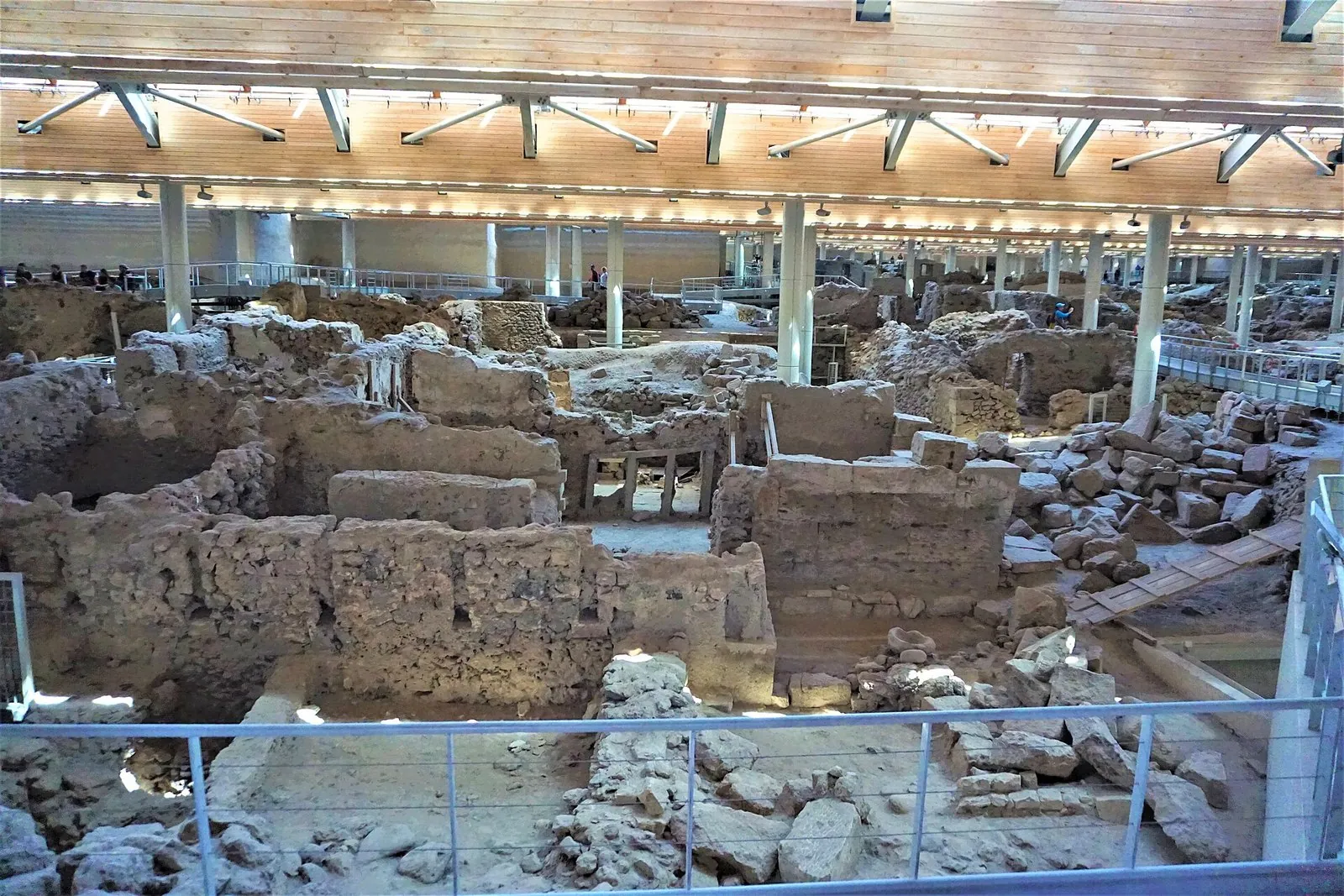
The modern story starts in 1967, when Spyridon Marinatos began excavating for the Archaeological Society at Athens. He died at the site on October 1, 1974 and is buried there, and Christos Doumas led the dig after him. Today a roof covers the excavated area, so you walk raised paths in the shade above streets people last used about 3,600 years ago. Ticket and hours details are in the Akrotiri entry below.
When Did the Volcano Erupt, and Was Santorini Atlantis?
You’ll see the eruption dated 1600 BC, 1500 BC and everything in between, and the spread is real. The Ministry of Culture’s wording, which we follow, puts the end of Akrotiri in the last quarter of the 17th century BC. Radiocarbon results have pulled the date earlier over the past few decades, while archaeologists working from Egyptian and Cretan pottery sequences long argued for a later one. The gap has narrowed but not closed, so treat anyone who quotes a single year with suspicion.
What isn’t in doubt is the scale. Ash and pumice buried the island, and the collapse of the volcano widened and deepened the flooded caldera that every hotel terrace now looks into. The Santorini volcano didn’t stop there: it built new islands in the middle of the bay over the following two thousand years, and its last eruption, on Nea Kameni, was in 1950. Older accounts also blamed the eruption for the fall of Minoan Crete, but the palaces on Crete kept running for generations afterward, which is why that tidy story has fallen out of favor. The geology and the boat trips to the crater are a subject of their own; this page sticks to people.
Then there’s Atlantis. Plato told the story in two dialogues, the Timaeus and the Critias, written in the 4th century BC: a rich sea power beyond the Pillars of Heracles, swallowed by the sea in a single day and night some 9,000 years before the Athenian lawmaker Solon. Nothing in Plato points to Santorini. The link is modern. In the 20th century some scholars, Marinatos among them, argued that memories of the Bronze Age eruption, and of the seagoing world it hit, could have fed the legend. It’s a fair hypothesis and an unprovable one.
Akrotiri doesn’t need it. A real town with indoor toilets and painted upstairs rooms, 3,600 years old, is more remarkable than any myth. If a boat tour sells you “the real Atlantis”, enjoy the boat.
Ancient Thera: The City on the Mountain
After the eruption, centuries pass before a town appears in the record again. The next city you can visit was founded in the 9th century BC by Dorian Greeks, led, the tradition says, by Theras, and it sits where no modern planner would put one: on Mesa Vouno, a limestone ridge 396 meters above the sea between Kamari and Perissa. The reason for building up there was the same everywhere in the Aegean at the time. From the top you could see anyone coming, and anyone coming had a long climb.
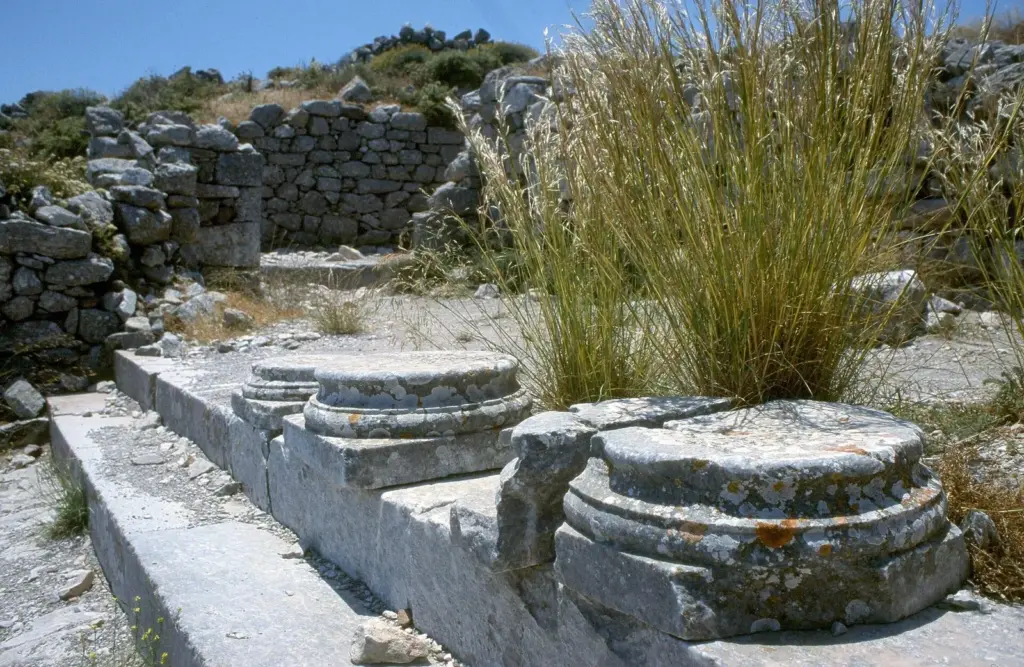
The city lasted a remarkably long time. The Ministry dates most of the surviving ruins to the Hellenistic and Roman periods, and people were still living here in the early Byzantine era. Walking the main street along the ridge, you pass the agora and the Basilike or Royal Stoa, a long hall with a Doric colonnade built in the early 3rd century BC as the city’s administrative center. In the mid-2nd century AD a citizen named T. Flavius Kleitosthenes Claudianus promised to pay for its repair, and the promise is still carved on a slab opposite the entrance.
Further along is the open-air shrine of Artemidoros of Perge, who settled here in old age after a dream and spent the mid-3rd century BC carving altars and symbols straight into the rock: an eagle for Zeus, a lion for Apollo, a dolphin for Poseidon, and his own portrait wearing a wreath, with an inscription hoping his name would last forever. It did, which is more than most of us can say. The town honored him twice with an olive wreath and made him a citizen.
From Thera, according to Herodotus, colonists sailed in the 7th century BC to found Cyrene, in today’s Libya, which grew far richer than its mother city. German archaeologists excavated Thera’s houses and most of its cemeteries between 1895 and 1902, and Greek excavations of the cemeteries on the slopes of the Sellada saddle followed from 1961 to 1982. If you want to see Greek and Roman Santorini, this ridge and the museum in Fira that holds its sculpture and inscriptions are the places.
Go in the morning. The site has little shade, it closes at 15:30, and the road up from the Kamari side is a long series of hairpins. Hours, tickets and the winter schedule are in the Ancient Thera entry below.
Byzantine Santorini and the Island’s Churches
Christianity reached the island early. On Mesa Vouno an Early Christian basilica, probably of the mid-6th century AD, stood among the old Greek buildings. After it fell, most likely in an earthquake, the islanders built the small two-aisled church of Agios Stefanos on its ruined middle aisle in the 8th or 9th century, reusing columns and blocks from the basilica. The Ministry notes that this was the era of Arab raids on the islands, when building was rough and modest, and you can see it in the stone: the older church was planned, the newer one improvised.
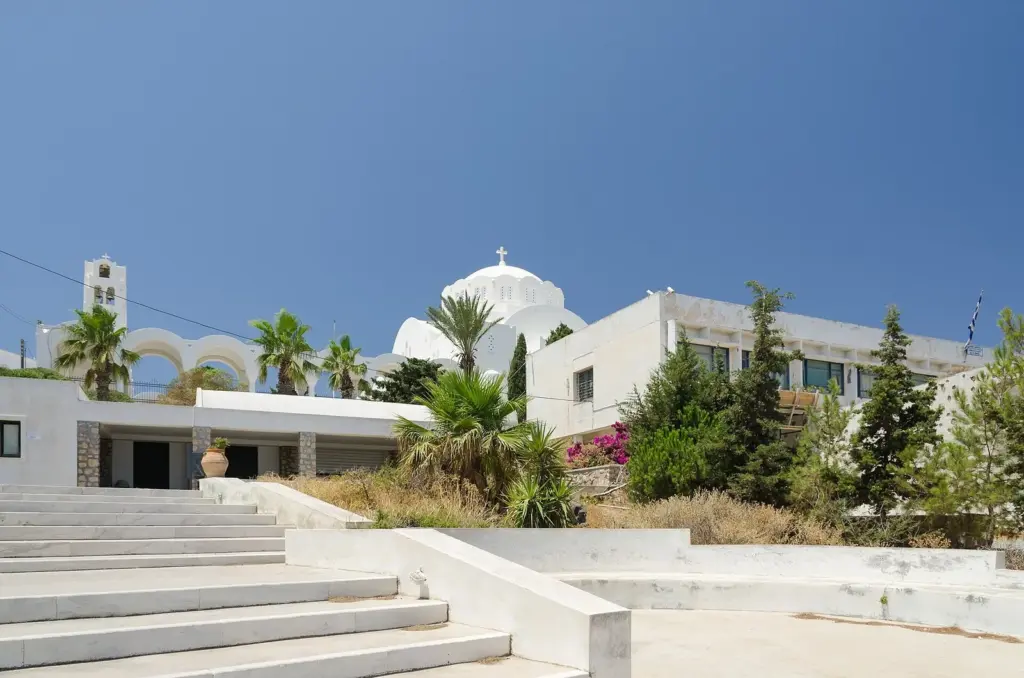
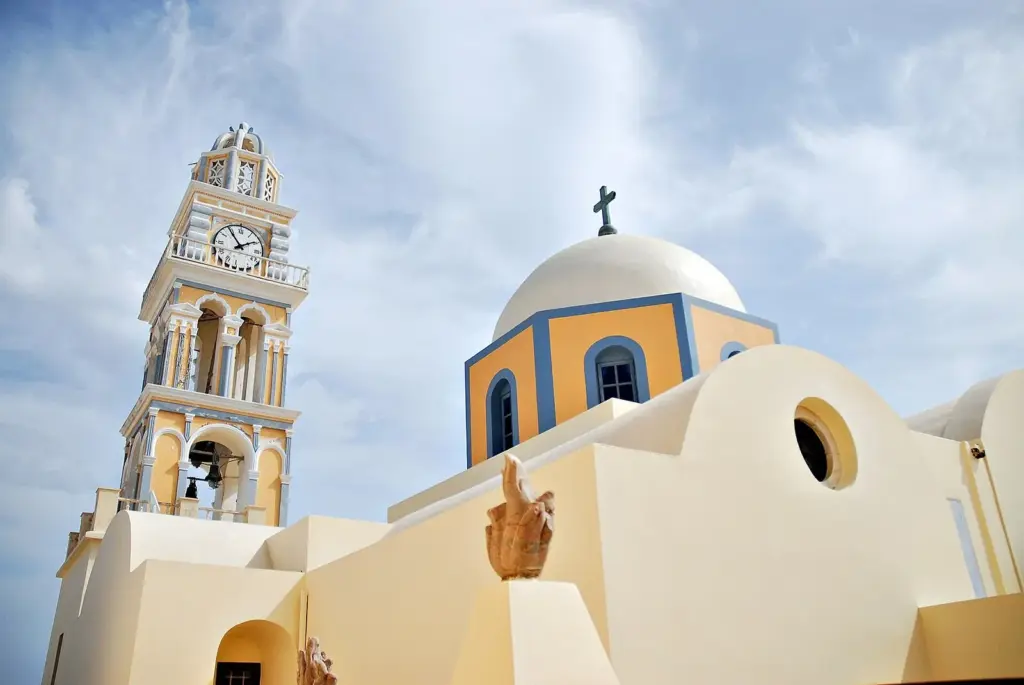
Most of what you’ll see in the villages is much later. Byzantine Santorini left a scatter of churches across the interior, the best known being Panagia Episkopi near Mesa Gonia, usually dated to around 1100. The two cathedrals in Fira, the Orthodox Ypapanti beside the Museum of Prehistoric Thera and the Catholic cathedral of Saint John the Baptist in the old Catholic quarter, belong to the modern capital that grew after the island’s government came down from Skaros. Then there are the hundreds of small chapels, many built by families or sailors to keep a vow, each with a feast day when the doors open and the village eats outside.
Two tips. Dress for churches as you would for any working place of worship: shoulders and knees covered, voices down, no photos during a service. And remember that the blue domes in the famous photos sit among homes and hotel terraces; take the shot from public paths, never from someone’s roof. Santorini churches reward more time than one section allows, from Byzantine wall paintings to the 18th-century monastery of Profitis Ilias on the island’s highest summit, where military installations around the summit can limit access, so check before you go.
The Venetian Centuries and the Five Kastelia
The Fourth Crusade’s sack of Constantinople in 1204 handed much of the Aegean to Western adventurers. Santorini became part of the Duchy of the Archipelago, a Venetian-run state based on Naxos, and in 1207 Giacomo Barozzi received the island as a fief. For more than three centuries Latin lords ruled it, a Catholic church took root alongside the Orthodox one, and everyone on the island planned their lives around pirates.
The answer to pirates was the kasteli, a fortified village whose outer houses were built wall to wall so their backs formed the defense, with narrow, turning lanes inside and a tower to retreat to. Megaron Gyzi counts five on Santorini, and you can still visit every one:
- Skaros: the capital, built on the rock that juts into the caldera below Imerovigli. Almost nothing stands now, and the slope was hit by landslides during the 2025 earthquake swarm; check locally whether the path out to the rock is open before you set out.
- Pyrgos: the best preserved, a hilltop village climbing to the walls of its Kasteli. The walk to the top is the island’s best short history stroll.
- Emporio (Emborio): the south’s old market village, with a kasteli of tight lanes, arches and blind corners built to confuse raiders. It still confuses visitors.
- Agios Nikolaos at Oia: the castle at the western tip of Oia, now the most crowded sunset viewpoint on the island.
- Akrotiri: the kasteli at the top of Akrotiri village, whose Venetian tower housed the La Ponta bagpipe exhibition until the lease ended in 2017.
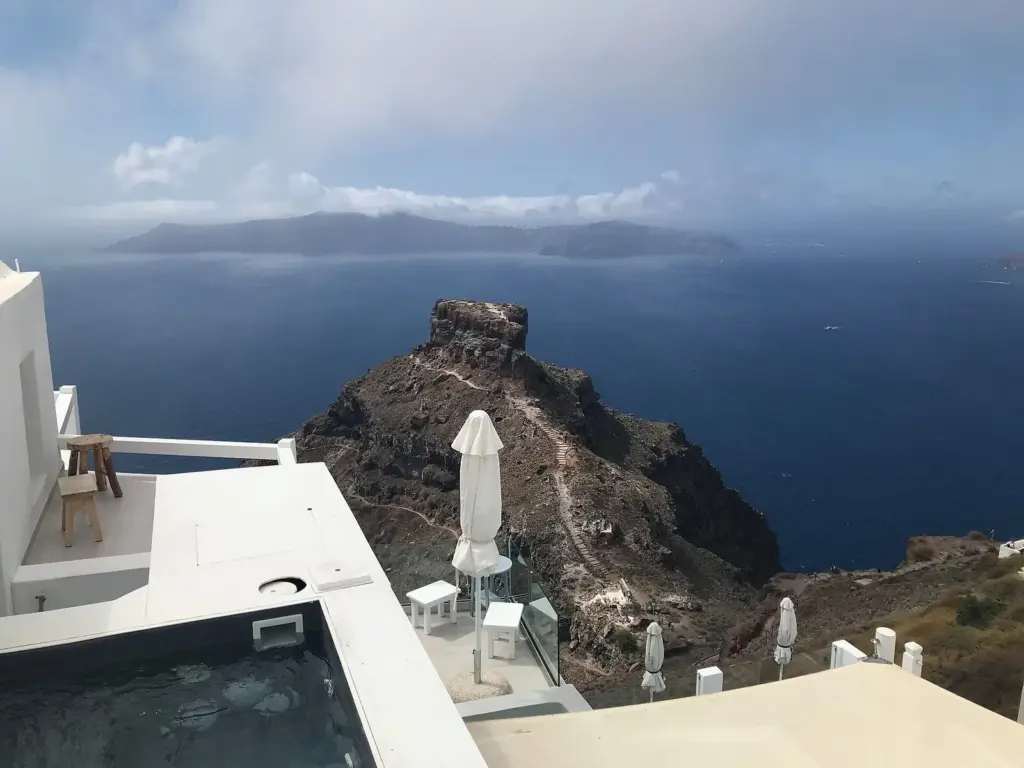
Skaros is worth understanding even if you only see it from the path. For centuries the island’s rulers and leading families lived on that rock, as close to the sea as defense allowed and as far from it as a pirate would want to climb. As the threat faded, people moved out to the cliff-top villages, and by the 19th century the capital’s role had passed to Fira. Look at the rock from Imerovigli in the late afternoon and you are looking at medieval Santorini’s seat of government.
The Venetian era also explains why Santorini still has a Catholic community and a Catholic cathedral, which is unusual outside a handful of Cycladic islands. Of all the Santorini castles, Pyrgos is the one to walk and Emporio the one to get lost in; both appear in the history sites list below with practical details.
Ottoman Santorini, 1821 and Union With Greece
Ottoman control came in stages, from 1537, and became permanent in 1579. Island life under the sultans was more self-governing than many visitors expect. In 1580, Megaron Gyzi notes, Sultan Murad III granted Santorini tax deductions, freedom of religion and judicial autonomy. Islanders ran their own communities, the five kastelia served as the administrative districts, and trade picked up.
When the War of Independence broke out in 1821, the island’s fleet joined it, and Megaron Gyzi describes Santorini as a major naval power in that war. It became part of the free Greek state in 1830. Independence changed the name on paper too: Thera came back as the official name, while everyone, then and now, kept saying Santorini.
If you’re short on time, this is the period you can safely skim on the ground. The Ottoman centuries left few monuments of their own here; what they left was the shape of the villages and a habit of local self-rule, which you’ll notice in how fiercely each village still guards its own saint’s day.
Ships, Wine and Tomato Paste: The 19th-Century Boom
The century after independence was the richest the island had known before tourism. By 1850, Megaron Gyzi says, Santorini ranked as Greece’s fifth naval power, and merchant shipping, wine, textiles and tomato paste kept it prosperous into the early 20th century. Santorini brandy even won an award at the Paris Exhibition of 1900.
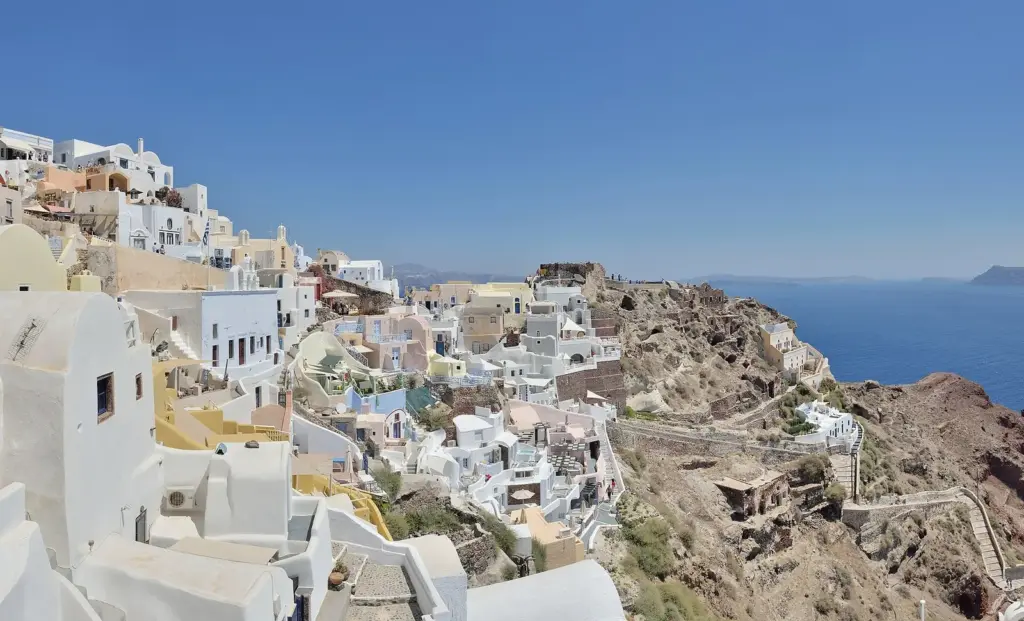
You can still read that money in the buildings. In Oia, ship captains built large houses along the ridge, while sailors and laborers lived in cave houses dug into the slope below them; walk the village from end to end and you’ll see the two side by side. The Naval Maritime Museum in Oia tells the seafaring story; check its hours before you go. In the interior, landowners built mansions such as the Argyros Mansion in Mesaria, which listings say was built in 1888 for a wine merchant and is partly shown as a museum, with its painted ceilings and original furniture.
Wine was the second engine. Vines trained low in the traditional kouloura, a basket shape that shelters the grapes from wind and drought, grew in volcanic soil that phylloxera never reached, and the sweet Vinsanto and dry whites traveled across the Mediterranean. The Koutsoyannopoulos Wine Museum in Vothonas tells that story in a cave the family dug 8 meters underground and 300 meters long, a project its website says took twenty-one years. The tomato is the third thread: the island’s small, intense tomatoes went into paste, and the D. Nomikos plant at Vlychada is now the Tomato Industrial Museum.
The boom faded in the 20th century as steam replaced sail, the wine trade shrank and young islanders left for Piraeus, Athens and the wider world. Then the war came, and then the earthquake.
War, the 1956 Earthquake and the Great Emptying
Like the rest of Greece, Santorini was occupied by Axis forces from 1941 to 1944. On April 24, 1944, a British Special Boat Service party led by the Danish officer Anders Lassen landed and attacked the German and Italian garrison, hitting a barracks in a former Bank of Athens branch in Fira and a wireless station near Imerovigli. The raid is a footnote in most histories of the war, but it’s worth knowing when you walk Fira’s main street that it once ended in a firefight.
The real catastrophe came on July 9, 1956. Before dawn, a magnitude 7.7 earthquake struck between Amorgos and Santorini, the largest in Greece in the 20th century, and a second shock of magnitude 7.2 hit near Santorini 13 minutes later. Together with the tsunami they set off, the quakes killed 53 people across the islands, the figure most sources give, and injured about 100. On Santorini, hundreds of houses were destroyed and the 1902 museum in Fira came down.
Megaron Gyzi calls the earthquake the final blow. The economy, already weak, collapsed, and families left in large numbers for Athens and abroad. For years afterward much of Oia and the caldera edge stood half-empty. One survivor you can still see is the old dwelling that became Kapari Natural Resort in Imerovigli, which its owners describe as one of the few houses to come through 1956.
The rebuilding shaped what you photograph today. A new Archaeological Museum was built in Fira in 1960, the excavation at Akrotiri began in 1967 and gave the island a new reason to be famous, and tourism slowly brought people and money back to the caldera. Much of the cliff-top skyline was rebuilt after 1956, so the “traditional” village in your photo is often younger than your parents. That isn’t a complaint. It’s a reminder that this island has rebuilt itself after disaster more than once, and the 2025 earthquake swarm, which closed Akrotiri until April 11 that year without an eruption, was only the latest test.
Santorini History and Culture Today: Cave Houses, Feasts and Wine
Santorini architecture grew out of scarcity. With little timber and a soft, easily cut layer of volcanic ash under the cliff tops, islanders dug their homes into the ground: the cave houses called yposkafa, with a vaulted front and rooms running back into the slope, cool in summer and sheltered in winter. Above ground, barrel-vaulted roofs needed no beams. The same logic gave the island its kanaves, wine cellars cut into the rock, and the stepped lanes that stitch each village to its slope.
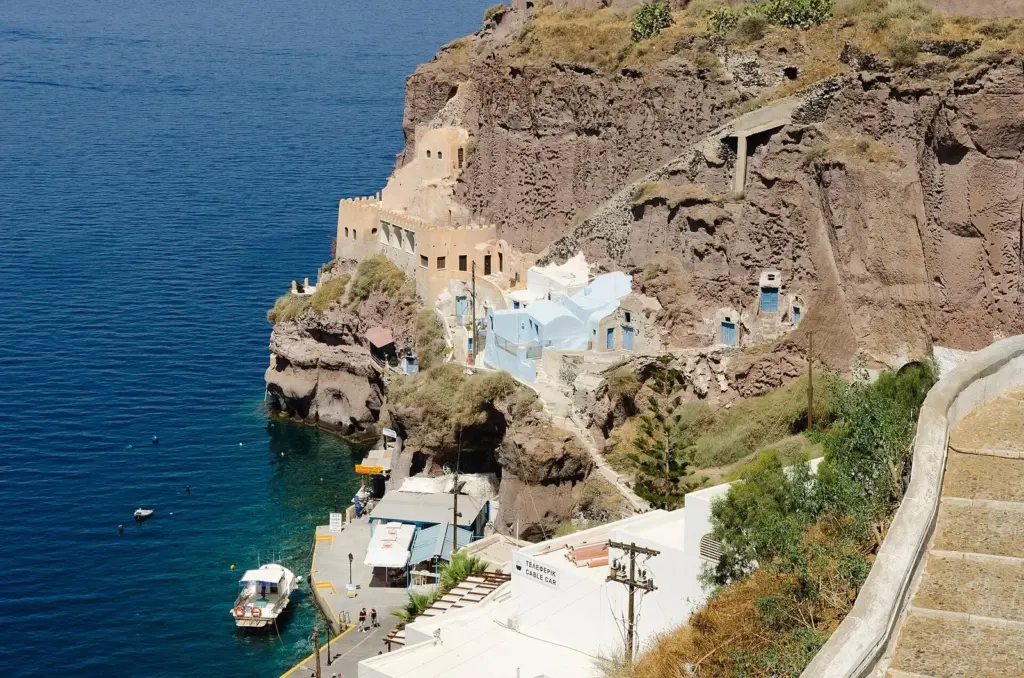
Many guides repeat that a 1930s law ordered every house whitewashed. Treat it as folklore. What you can see for yourself is how the periods sit side by side: sailors’ cave houses below captains’ mansions in Oia, Venetian lanes in Pyrgos and Emporio, and post-1956 rebuilds everywhere, all wearing the same white paint.
Santorini culture still runs on the church calendar and the harvest. Every village celebrates its saint’s day with a panigyri, a feast with music and food, and Orthodox Easter, which falls on May 2 in 2027, is the biggest week of the year; Pyrgos is known for its Good Friday illuminations. The Vedema grape-harvest festival at Santo Wines was held on August 2, 2026, and the Ifestia festival, which re-creates the eruption with fireworks over the caldera, took place on September 19, 2026. Neither has announced 2027 dates.
Food carries history too. Fava, a puree made from a local legume, has been an EU-protected product since 2011, and the small Santorini cherry tomato has its own protected status; both grow in volcanic soil with almost no summer rain, as do the vines of the protected Santorini and Vinsanto wines. Eat them and you’re eating the same crops that paid for the captains’ houses.
The permanent population was 15,480 at the 2021 census, for the whole municipality of Thira, which includes Thirasia. In a busy summer that number is dwarfed by visitors, which is why the island’s newest chapter is about limits: a cruise passenger fee of EUR 20 in peak season, in force since July 21, 2025, and the earthquake-era restrictions at the ports. Santorini history has always been a negotiation between the island and the people who want to be on it.
Santorini History Sites: 10 Places to See the Past
These are the ten places that best explain the island’s past, in the order we’d rank them. Prices and hours are the ones published for 2026; the Ministry of Culture can change hours at short notice, so check the morning you go.
| Site | Where | Ticket (2026) | Hours and closed days | Allow |
|---|---|---|---|---|
| Akrotiri | South coast, below Akrotiri village | EUR 20 | Oct 1-15 08:00-18:30, Oct 16-31 08:00-18:00, but 08:30-15:30 on Mondays and Thursdays; winter 08:30-15:30, closed Tuesdays | 1.5-2 hours |
| Museum of Prehistoric Thera | Central Fira | EUR 10 (EUR 5 reduced) | 08:30-15:30, closed Tuesdays | 1-1.5 hours |
| Ancient Thera | Mesa Vouno, above Kamari | EUR 10 (EUR 5) | Summer 08:30-15:30, closed Wednesdays; November Fri-Sun only; Dec 1-Feb 28 by appointment; March Thu-Mon | 2-3 hours with the drive |
| Archaeological Museum of Thera | Fira | EUR 10 (EUR 5) | Summer Tue-Fri and Sun 08:30-15:30, Sat 09:00-21:00; closed Mondays | 1 hour |
| Pyrgos Kasteli | Pyrgos | Free | Village lanes, any time | 1 hour |
| Emporio Kasteli | Emporio | Free | Village lanes, any time | 45 minutes |
| Oia Castle | Western tip of Oia | Free | Open ground; packed at sunset | 30 minutes |
| Megaron Gyzi | Fira | Ask at the museum | May 1-Oct 31, Mon-Sat 10:00-16:00 | 45 minutes |
| Tomato Industrial Museum | Vlychada | EUR 12 (EUR 10) | April-November, Tue-Sun 10:00-18:00 | 1 hour |
| Koutsoyannopoulos Wine Museum | Vothonas | From EUR 30 with 4 wines | Book a slot on its site | 75 minutes and up |
1. Akrotiri
The Bronze Age town on the south coast, and the island’s essential site. If you see one thing on this list, make it this. A roof shelters the whole excavated area, and walkways carry you above streets, house fronts, stairways and storerooms, frozen at the moment the townspeople left in the 17th century BC. Most of the famous wall paintings are now in museums in Fira and Athens, so come for the town plan and the sheer scale rather than the frescoes. Read up before you go or hire a licensed guide; without context, a three-story Bronze Age house is just a tall wall.
Plan it: EUR 20 full ticket (2026). From October 1 to 15 it opens 08:00-18:30 (last entry 18:00) and from October 16 to 31 08:00-18:00 (last entry 17:30), except Mondays and Thursdays, when it keeps a short 08:30-15:30 day; in winter it opens 08:30-15:30 and closes on Tuesdays. Entry is free on October 28 and on the first Sunday of each month from November to March. KTEL buses run from Fira for EUR 2.20 (May 19, 2026 table). It reopened on April 11, 2025 after a safety closure during the earthquake swarm. Best for: anyone with even a passing interest in the ancient world, and kids old enough to imagine a whole town under ash.
2. Museum of Prehistoric Thera
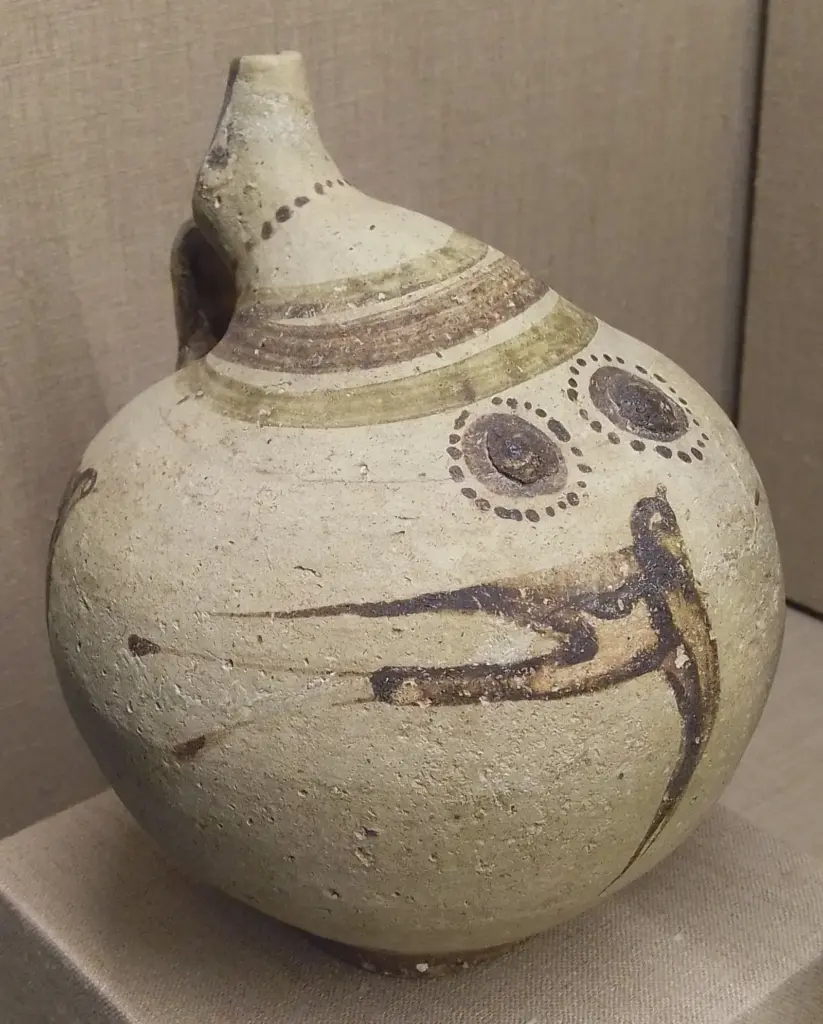
Central Fira, the key that unlocks Akrotiri. Visit this before the site if you can. The Ministry describes four sections: how the island was researched, its geology, its history from the Neolithic to the early 17th century BC, and Akrotiri at its height. You’ll see plant fossils from before people arrived, Early Cycladic marble figurines, pottery from the Christiana islets south of Santorini, a run of Middle Cycladic jugs painted with swallows, and finds from the Akrotiri houses, including wall paintings. Walk the ruins afterward and they make sense.
Plan it: EUR 10, EUR 5 reduced; 08:30-15:30 year-round, closed Tuesdays (Ministry schedule). It stands next to the Orthodox cathedral, a short walk from the bus station. The Ministry lists a combined ticket that also covers Akrotiri and Ancient Thera; ask at the desk for its current price. Best for: hot afternoons, a windy day when boats aren’t running, and anyone who wants the paintings Akrotiri doesn’t show.
3. Ancient Thera
The mountaintop Greek and Roman city above Kamari. The ruins sprawl along a ridge 396 meters up, with the sea below on both sides, and a walk from end to end takes in the agora, the Royal Stoa, houses, sanctuaries, the church of Agios Stefanos and the rock-cut shrine of Artemidoros. It’s less complete than Akrotiri and far more exposed, but the setting beats every other site on the island, and you’ll share it with far fewer people.
Plan it: EUR 10, EUR 5 reduced. Summer hours 08:30-15:30, closed Wednesdays; in November it opens Friday to Sunday only, from December 1 to February 28 by appointment only, and in March Thursday to Monday (Ministry schedule). Drive or take a taxi up the hairpin road from the Kamari side, or hike up from the Sellada saddle between Kamari and Perissa; KTEL buses reach Kamari from Fira for EUR 2.20. Bring water, a hat and shoes with grip. Best for: walkers, photographers and anyone who has already done Akrotiri.
4. Archaeological Museum of Thera
Fira’s museum for the Greek and Roman centuries. Reopened on June 13, 2025 after works, it covers the long stretch after Akrotiri: sculpture and inscriptions from the Archaic to the Roman period, and painted vases and clay figurines from the Geometric to the Hellenistic. The building is history too, a 1960 replacement for the 1902 museum the earthquake brought down.
Plan it: EUR 10, EUR 5 reduced. Summer hours Tuesday to Friday and Sunday 08:30-15:30, Saturday 09:00-21:00, closed Mondays and public holidays. Pair it with Ancient Thera on the same day, or use the Saturday late opening for an evening visit before dinner in Fira. Best for: people who liked Ancient Thera and want to see what came off the mountain.
5. Pyrgos Kasteli
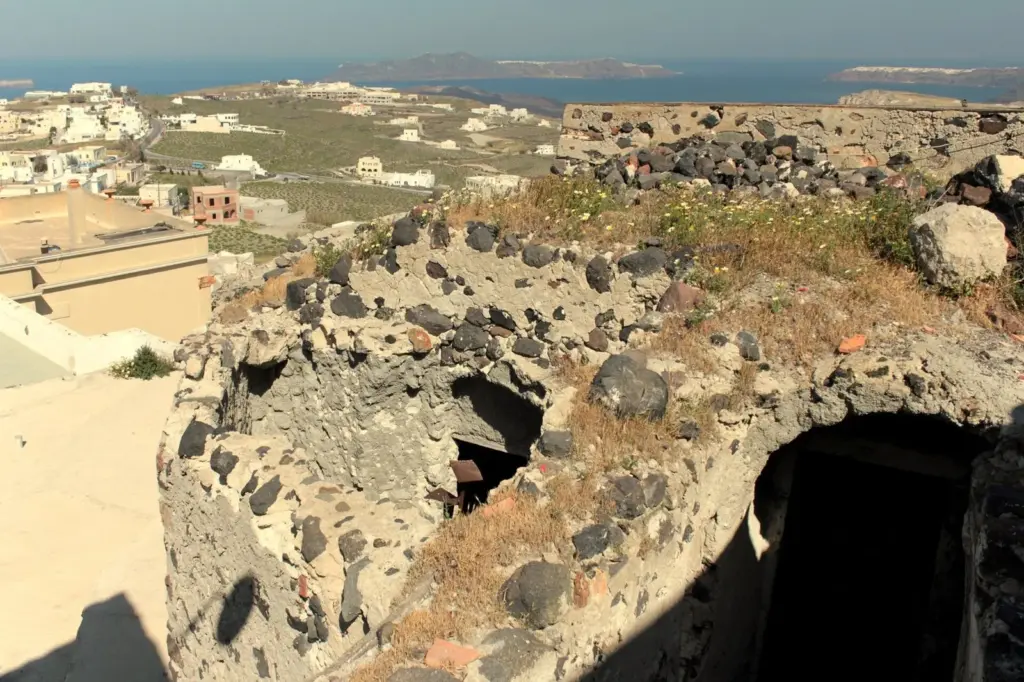
The best preserved of the five Venetian castle villages. Pyrgos climbs in rings to the walls of its Kasteli, and the lanes up mix restored mansions, churches and plain old houses. The Zannos Melathron, a hotel at the castle entrance, dates its neoclassical mansion to around 1870. At the top you get one of the widest views on the island, over the caldera on one side and the vineyards and the Aegean on the other. Of the five kastelia, this is the one to walk.
Plan it: free and always open, though midday in summer is hot and the steps are steep. KTEL buses from Fira cost EUR 2.20 (May 19, 2026 table). Come in the late afternoon, climb to the top, and stay for dinner in the village. Best for: anyone who wants a Venetian village that still feels lived in.
6. Emporio Kasteli
The south’s medieval maze. Emporio, also spelled Emborio, is a working village first, which is exactly its appeal. Its kasteli is a knot of narrow lanes, arches and dead ends built to slow down raiders, and it does the same to anyone following a phone map. Look up as you walk: the houses on the outer ring were the wall.
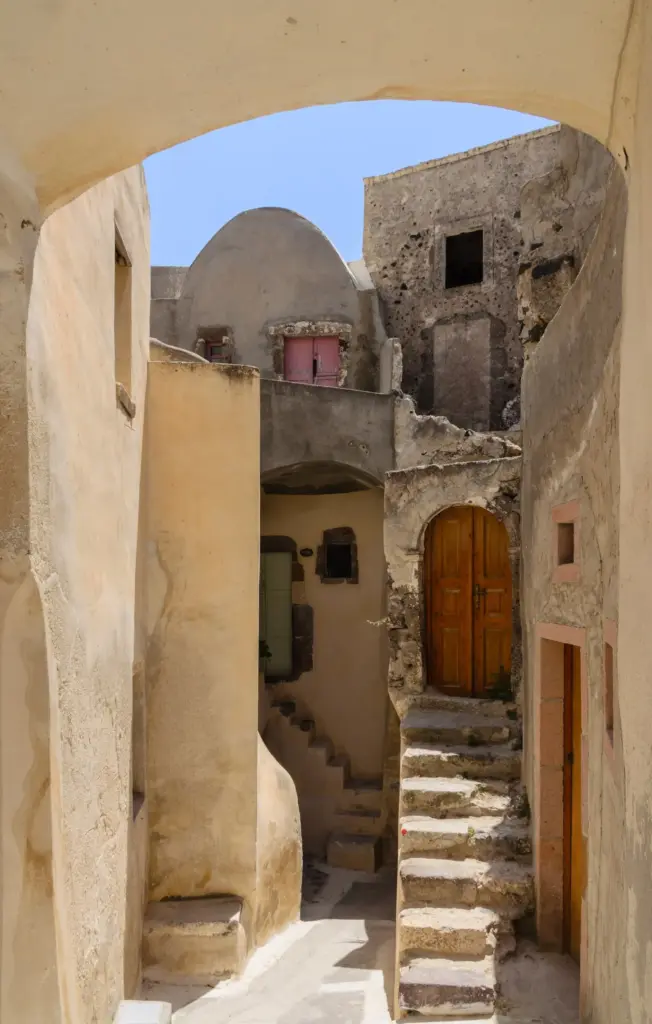
Plan it: free. The village sits on the road between Fira and Perissa, so it fits neatly into a beach day in the south. Keep your voice down and your drone at home: these are people’s homes, not a film set. Best for: travelers who found Oia too polished.
7. Oia Castle (Agios Nikolaos)
Venetian ruins at the tip of Oia, now the island’s sunset grandstand. Little is left of the castle of Agios Nikolaos, one of the five kastelia, but its position at the end of Oia explains why it was built: from here you could watch every ship rounding the north of the island. Today that same view draws the biggest sunset crowd on Santorini. Come in the morning for the history and the quiet; come at sunset for the people-watching.
Plan it: free and open. On the walk out, notice how the sailors’ cave houses sit below the larger captains’ houses on the ridge. The Naval Maritime Museum nearby tells Oia’s shipping story; check its hours before you go. Best for: pairing with a day in Oia, ideally outside the sunset hour.
8. Megaron Gyzi
Fira’s history museum and cultural center. This is the source we leaned on for the island’s Venetian and modern centuries, and its museum is the place to fill the gap between the ancient sites and the present. It also stages exhibitions and the Megaro Gyzi Festival, whose 40th edition ran August 3-13, 2026; the center says admission to its events is free.
Plan it: open May 1 to October 31, Monday to Saturday 10:00-16:00 (2026 schedule), so you have until the end of October this year. Ask at the museum for the ticket price. Best for: anyone curious about the 800 years between Byzantium and the cruise ships.
9. Tomato Industrial Museum “D. Nomikos”
Vlychada, the island’s industrial past. Santorini’s tomato paste fed a real industry, and this museum, in the old D. Nomikos plant that now houses the Santorini Arts Factory on the south coast, shows how the work was done. It’s a useful corrective to the idea that the island only ever made wine and postcards.
Plan it: EUR 12, EUR 10 reduced (ages 8-18, students, the unemployed and over-65s), free under 8; Tuesday to Sunday 10:00-18:00 from April through November, closed Mondays (2026 season). Pair it with Vlychada’s beach and marina. Best for: families and anyone who likes industrial history.
10. Koutsoyannopoulos Wine Museum
Vothonas, the wine story underground. The family behind it dug a cave 8 meters below ground and 300 meters long, a job its site says took twenty-one years, and filled it with the tools and scenes of the island’s winemaking past. It’s commercial and it ends in a tasting, but it’s still the clearest explanation of how Santorini grew grapes on volcanic ash.
Plan it: visits are sold as packages with an audio guide in 15 languages. In 2026 the Bronze package was EUR 30 for 75 minutes and four wines, Silver EUR 55 for 120 minutes and seven wines including Nykteri, Mavrotragano and Vinsanto, and Gold EUR 90; book on the museum’s own site. Best for: wine drinkers who also want the history.
How to Plan a Santorini History Day
The order that works is built around the closing times, which are earlier than most visitors expect:
- 08:30, Museum of Prehistoric Thera, Fira. An hour with the finds and the paintings, so the site makes sense. Not on a Tuesday.
- 10:00, bus or drive to Akrotiri. The KTEL fare from Fira is EUR 2.20. Spend two hours under the roof.
- Lunch near the site or in Akrotiri village, then climb to the Venetian tower at the top of the village.
- Late afternoon, Pyrgos. Walk up to the Kasteli for the view, then stay for dinner.
For a second morning, do Ancient Thera early, before the heat and the 15:30 close, then the Archaeological Museum of Thera in Fira; on a Saturday you can push the museum into the evening. If you only have half a day, do the Museum of Prehistoric Thera and Akrotiri, in that order. Don’t try to fit both ancient sites into one afternoon: they sit on different sides of the island and close at different times.
Buses from Fira serve Akrotiri, Kamari and Pyrgos for EUR 2.20 each way (May 19, 2026 table), but the hairpin road to Ancient Thera needs a car, a taxi or your legs. For the inland villages, Pyrgos, Emporio, Megalochori and the rest, our guide to the Santorini villages explains how each one fits into a trip.
What’s Changed Since 2025
Santorini historical facts don’t change, but opening hours, access and closures do, and the earthquakes of 2025 and 2026 changed a lot of them.
| Site or rule | Before | Now (checked September-October 2026) |
|---|---|---|
| Akrotiri | Closed in early 2025 for a post-quake safety inspection | Reopened April 11, 2025; EUR 20 full ticket in 2026 |
| Archaeological Museum of Thera | Closed for works in 2025 | Reopened June 13, 2025; EUR 10, closed Mondays |
| Ancient Thera | Guides disagree on the closed day (Monday, Tuesday or Wednesday) | Ministry: closed Wednesdays in summer; November Fri-Sun; Dec 1-Feb 28 by appointment; March Thu-Mon |
| La Ponta, Akrotiri | Bagpipe exhibition in the Venetian tower | Left in 2017; the team opened Symposion Cultural Center in a former Megalochori winery in 2018 |
| Skaros Rock | An easy scramble to the ruins of the Venetian capital | The slope was hit by landslides in the 2025 swarm; check access locally |
| Fira’s Old Port and Ammoudi | Open harbors | A restricted visitor zone at the Old Port and a closed Ammoudi road (municipal shuttles excepted) under Civil Protection measures to March 31, 2027; the cable car and the Old Port footpath are not restricted |
What to Skip
- Walking to Red Beach from Akrotiri. The cliff path has been closed since 2013 because of rockfalls, and the 2025 earthquakes brought down more rock. It’s boat access only.
- Ancient Thera in the afternoon. It closes at 15:30, there’s almost no shade, and the drive up eats time.
- Expecting the famous frescoes at Akrotiri. They’re in Fira and Athens. The site is about the town.
- “Atlantis” sales pitches. Plato never mentions Santorini, and any tour that promises proof is selling a boat ride.
- A Monday or Tuesday museum plan. The Archaeological Museum closes Mondays and the Museum of Prehistoric Thera Tuesdays, so pick another day if you want both.
Santorini History FAQ
What is the history of Santorini in brief?
People settled at Akrotiri by the 4th millennium BC, and the town became a major Aegean port before earthquakes and an eruption ended it in the late 17th century BC. Dorian Greeks founded Ancient Thera in the 9th century BC. Venetians ruled from 1207, Ottomans from the 16th century, and the island joined Greece in 1830.
Was Santorini the lost city of Atlantis?
There’s no evidence it was. Plato’s Atlantis story, written in the 4th century BC, places Atlantis beyond the Pillars of Heracles and never mentions Thera. In the 20th century some scholars suggested that memories of the Bronze Age eruption fed the legend. It’s an interesting idea that can’t be proven either way.
When did the Santorini volcano erupt and bury Akrotiri?
The Hellenic Ministry of Culture dates the end of Akrotiri to the last quarter of the 17th century BC: earthquakes drove people out and the eruption followed. Older books say about 1500 BC, while radiocarbon studies point earlier. The volcano’s most recent eruption, on Nea Kameni in the middle of the caldera, was in 1950.
Why is Santorini called Santorini?
The name comes from Santa Irini, Saint Irene, and Latin sailors and rulers used it from the 13th century. Herodotus records older names: Strongyle (the round one), Kalliste (the fairest) and Thera, after the Dorian colonist Theras. Thira, the modern form of Thera, is still the island’s official Greek name.
What happened in the 1956 Santorini earthquake?
On July 9, 1956, a magnitude 7.7 earthquake, Greece’s largest of the 20th century, struck between Amorgos and Santorini, followed 13 minutes later by a magnitude 7.2 shock near Santorini. With the tsunami it killed 53 people across the islands, destroyed hundreds of houses and set off heavy emigration from Santorini.
Is Akrotiri open in 2026, and how much is the ticket?
Yes. Akrotiri reopened on April 11, 2025 after a safety closure during the earthquake swarm, and in 2026 the full ticket is EUR 20. In the first half of October it opens 08:00-18:30, with shorter Monday and Thursday hours; in winter it opens 08:30-15:30 and closes Tuesdays. Entry is free on October 28.
Who ruled Santorini over the centuries?
After the Bronze Age town and the Dorian city, the island passed through Hellenistic, Roman and Byzantine rule. From 1207 it was a Venetian fief within the Duchy of the Archipelago, then Ottoman, in stages from 1537 and permanently from 1579. It joined the free Greek state in 1830.
Does Santorini have history worth seeing, or is it all sunsets?
It has more than most Greek islands. Akrotiri is one of the best-preserved prehistoric towns in the Aegean, Ancient Thera sits on a spectacular ridge, and the Venetian villages of Pyrgos and Emporio are still lived in. One full day covers the essentials and makes the sunsets mean more.
Related Santorini Guides
Sources and How We Checked
We checked site histories, hours, ticket prices and reopening dates against the official sources below between September 24 and October 1, 2026.
- Hellenic Ministry of Culture: Akrotiri of Thera (history, buildings, hours and tickets)
- Hellenic Ministry of Culture: Ancient Thera
- Hellenic Ministry of Culture: Museum of Prehistoric Thera
- Hellenic Ministry of Culture: Archaeological Museum of Thera
- Megaron Gyzi: Santorini history (Venetian, Ottoman and modern periods)
- KTEL Santorini fare table (updated May 19, 2026)
- Tomato Industrial Museum “D. Nomikos”
Santorini Tourism Guide is an independent publication. We are not affiliated with the Municipality of Thira, the Greek National Tourism Organisation, the Hellenic Ministry of Culture, Megaron Gyzi, the museums and wineries named here or any business listed here, and no one paid to be included.
Photo Credits
- Akrotiri excavation under the roof: photo by Joyofmuseums, via Wikimedia Commons (CC BY-SA 4.0)
- Swallow jug, Museum of Prehistoric Thera: photo by User:Andrew Dalby, via Wikimedia Commons (CC BY-SA 4.0)
- Portico ruins at Ancient Thera: photo by No machine-readable author provided. H-stt assumed (based on copyright claims)., via Wikimedia Commons (CC BY-SA 3.0)
- Ypapanti cathedral and Museum of Prehistoric Thera: photo by Norbert Nagel, via Wikimedia Commons (CC BY-SA 3.0)
- Skaros rock from Imerovigli: photo by Zde, via Wikimedia Commons (CC BY-SA 4.0)
- Catholic cathedral, Fira: photo by Mstyslav Chernov, via Wikimedia Commons (CC BY-SA 3.0)
- Oia on the caldera ridge: photo by Taxiarchos228, via Wikimedia Commons (FAL)
- Cave houses above Fira's old harbor: photo by Norbert Nagel, via Wikimedia Commons (CC BY-SA 3.0)
- Pyrgos Kasteli walls: photo by Edal Anton Lefterov, via Wikimedia Commons (CC BY-SA 3.0)
- Emporio kasteli lane: photo by Norbert Nagel, via Wikimedia Commons (CC BY-SA 3.0)