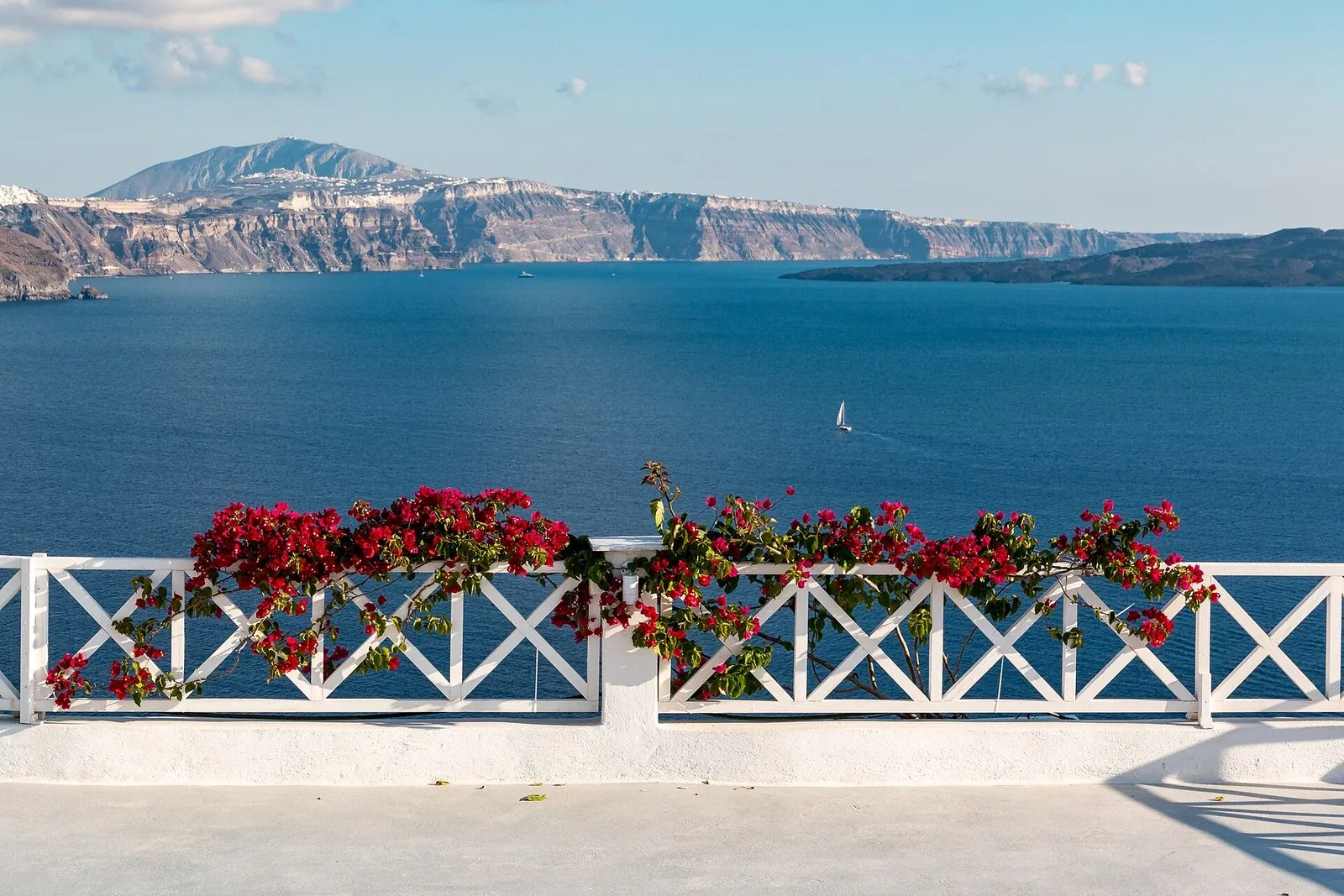
The best time to visit Santorini is late April to June and September to mid-October. In those months the weather is warm and settled, the sea is swimmable for much of the time, nearly every hotel, restaurant and boat is running, and the crowds and prices are well below their July and August peak. Summer works if you want the hottest sea and the liveliest island and can live with the heat, the crowds and the cost. Winter is cheap and quiet but many places close. The right month depends on what you want most: warm water, empty lanes or the lowest price.
Quick answer: Go in May, early June or the second half of September for the best balance of weather, crowds and price. Go in July or August for beach days and a buzzing island, but book early and expect high prices. Go in late October or April for value with most things open, and in winter only if quiet matters more than beaches or choice.
Last updated October 3, 2026. We used the National Observatory of Athens (meteo.gr) climate data for its Santorini station, our calculated 2026 sunset times, the opening seasons on hotels’ own booking engines, Greece’s cruise fee calendar and event dates confirmed with official sources in September 2026. Weather varies from year to year; the figures below are averages.
- Warmest months: July and August, with a mean daily high of about 30°C at the Santorini station and almost no rain. The hottest reading in the record reached 39.4°C in July.
- Coolest and wettest: December to February, with mean highs of about 14-16°C and 43-55 mm of rain a month.
- Hotel season: most hotels open between April 1 and late April and close between late October and mid-November; a few in Fira stay open from March to late November.
- Cruise traffic: Greece’s cruise fee at Santorini is highest from June to September (EUR 20 per passenger), a good guide to the busiest months; the island caps cruise arrivals at 8,000 passengers a day.
- Easter 2027: Greek Orthodox Easter falls on May 2, 2027. It’s a lovely time to be here, but book early.
- Sunsets: from about 17:04 in mid-December to about 20:37 in mid-June and mid-July (our calculated times for Oia).
On this page: Month-by-month grid | Season by season | Why shoulder season | Month by month | What’s running when | Cheapest time | Avoiding crowds | Best time for your trip | Events and holidays | Wind, heat and rain | What to skip | FAQ
Best Time to Visit Santorini: The Month-by-Month Grid
Temperatures and rainfall are the National Observatory of Athens’ averages for its Santorini station; sunset times are our calculations for Oia on the 15th of each month in 2026. Crowds, prices and “what’s open” are our summary of the hotels’ seasons, the cruise calendar and prices on the hotels’ own sites.
| Month | Mean high / low (°C) | Rain (mm) | Sea | Crowds | Prices | What’s open | Sunset |
|---|---|---|---|---|---|---|---|
| January | 14.1 / 9.9 | 54.9 | Cold | Very low | Lowest | Little | 17:24 |
| February | 14.8 / 10.5 | 43.4 | Coldest | Very low | Lowest | Little | 17:57 |
| March | 16.0 / 11.2 | 48.1 | Cold | Low | Low | A few hotels reopen | 18:25 |
| April | 19.6 / 13.6 | 12.1 | Cool | Moderate | Moderate | Most hotels reopen | 19:51 |
| May | 23.3 / 16.9 | 8.2 | Fresh | Moderate | Moderate | Almost everything | 20:16 |
| June | 27.9 / 21.0 | 3.3 | Swimmable | High | High | Everything | 20:37 |
| July | 30.1 / 23.2 | 0.0 | Warm | Very high | Peak | Everything | 20:37 |
| August | 30.2 / 23.5 | 2.5 | Warmest | Very high | Peak | Everything | 20:11 |
| September | 27.2 / 21.3 | 3.0 | Warmest | High, easing | High, easing | Everything | 19:27 |
| October | 22.9 / 17.6 | 15.1 | Warm early, cooling | Moderate | Moderate, falling | Most, closing late in the month | 18:43 |
| November | 19.4 / 14.7 | 33.7 | Cool | Low | Low | Closing; a few stay open | 17:11 |
| December | 15.6 / 11.5 | 54.9 | Cold | Very low | Lowest | Little | 17:04 |
The Best Time to Visit Santorini, Season by Season
Spring: April and May
Spring is our favorite season for everything except swimming. Santorini weather in April and May is mild and mostly dry, with average highs of about 20°C in April and 23°C in May at the Santorini station, and the countryside is at its greenest. The hotels reopen through April, the boat trips start running, and the lanes of Oia and Fira are still calm. The sea is cool, so beach days are for sunbathing more than swimming until late May, and heated pools are worth paying for. Greek Orthodox Easter usually falls in April or early May (May 2 in 2027), when the villages celebrate in style and the island fills with Greek visitors.
Summer: June, July and August
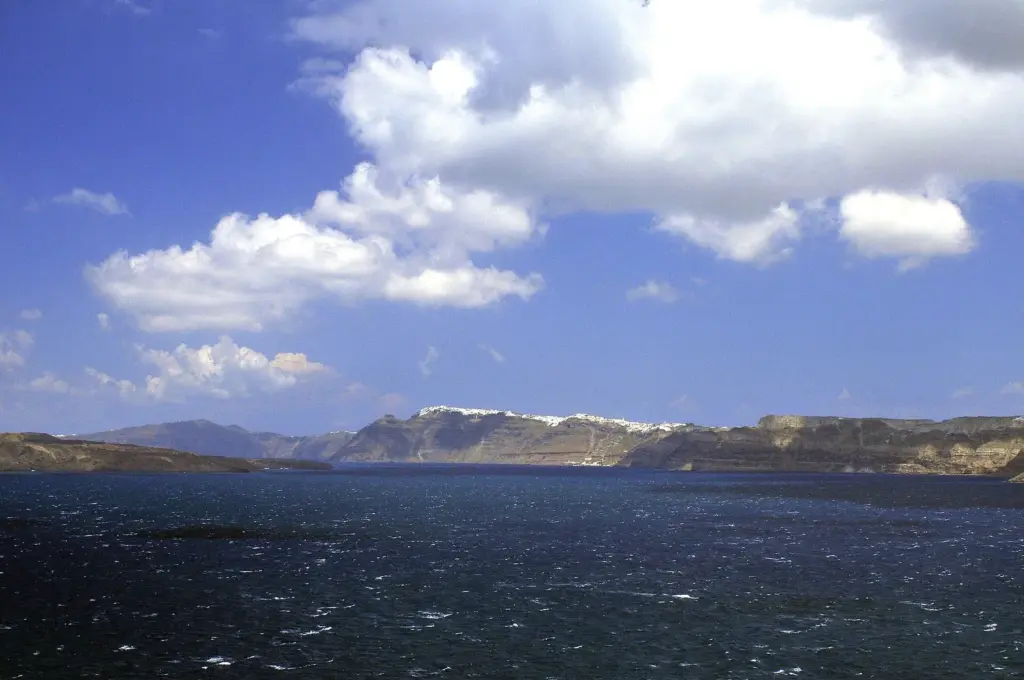
Summer is Santorini at full volume. The sea is warm, the sunsets come late, around 20:37 in mid-June and mid-July, every business is open and the island buzzes day and night. It’s also the most crowded and expensive time of year: July and August bring the highest hotel prices, the most cruise passengers and the longest lines for the cable car and the Oia sunset. Average highs at the Santorini station reach about 30°C in July and August, and it barely rains. The strong north wind known as the meltemi often blows in high summer, which keeps the heat bearable but can make the sea rough and disrupt ferries. June is the best summer month: warm, long days, with a little less pressure than July and August.
Fall: September and October
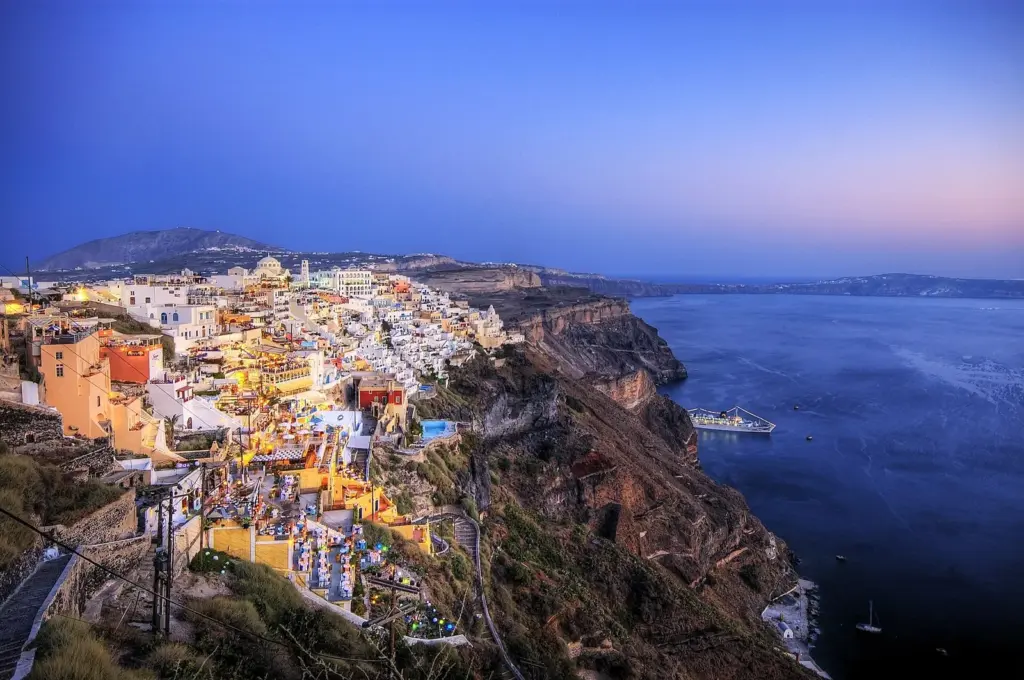
Early fall is the other sweet spot, and for many visitors the best of all. The sea is at its warmest after the summer, the evenings are soft and long, the harvest is in and the crowds begin to thin in the second half of September. Average highs fall from about 27°C in September to 23°C in October. October is quieter and cheaper still, but the season winds down: some hotels and boats close in the second half of the month, and on September 24, 2026, several Oia hotels’ own sites showed late-October nights at a fraction of their early-October prices.
Winter: November to March
Santorini in winter is a different island: quiet, local and much cheaper, with the caldera views all to yourself. But most hotels, many restaurants and nearly all boat trips close from November to March, the weather is cool and changeable, with 43-55 mm of rain a month from December to February, and the wind on the caldera rim can be cold and strong. The archaeological sites keep shorter hours, and Ancient Thera opens by appointment only from December to February. It suits walkers, photographers and people who want to see the island’s everyday life; it doesn’t suit anyone looking for beaches or a big choice of hotels.
Why the Shoulder Season Wins
“Shoulder season” on Santorini means the weeks either side of the summer peak: roughly late April to mid-June and September to mid-October. It’s the best time of year to visit Santorini for most people because it keeps almost everything good about summer and drops most of what’s bad.
- You keep: warm, dry weather (mean highs of about 23-28°C at the Santorini station), long evenings, open hotels, restaurants and boat trips, and, by late May and in September, a sea you’ll want to swim in.
- You lose: the worst of the crowds, the peak prices and the midsummer heat, and much of the pressure on the famous spots, from the Oia sunset to the cable car.
- You trade: a cooler sea in spring and a few closed businesses at the very edges of the season, in April and late October.
If your dates are flexible, aim for the middle of these windows, late May to mid-June or mid-September to early October, when everything is open and the weather is at its most reliable.
Is There a Bad Time to Visit Santorini?
Not for sightseeing: the caldera, the villages and the archaeological sites are worth seeing in any month. But there are bad matches. Mid-winter is a poor choice if you want beaches, nightlife or a wide choice of hotels and restaurants. August is a poor choice if you hate crowds or have a tight budget. And a very short trip in any month is a poor choice if the weather turns and the ferries stop. The best defense is to match the month to what you want most, and to leave a buffer day before any flight home.
How the Season Changes the View
Photographers and sunset-watchers notice something else about the seasons: the air. Summer days can be hazy, softening the view across the caldera, while the clear, washed air after a spell of north wind, or on a bright winter day, makes the far rim and the islands look close enough to touch. Clouds, more common from October to April, often make the most dramatic sunsets. And the low winter sun lights the caldera villages from the side for much of the day, which is why so many of the best photos of Santorini are taken outside the summer.
Santorini Month by Month
Here’s what each month is really like, with the averages, what’s open and who it suits.
1. January
Santorini in January is the island at its quietest. Mean highs are about 14°C and lows about 10°C at the Santorini station, and it’s one of the two wettest months, with about 55 mm of rain on average. Most hotels, many restaurants and nearly all boat trips are closed, but Fira keeps a few places open, the caldera views are clear on sunny days, and sunset comes at about 17:24. The Ministry of Culture’s sites are free on the first Sunday of each month from November to March.
Getting here means flying via Athens or taking the year-round Blue Star ferry from Piraeus, weather permitting; most direct international flights are summer routes. The prehistoric town at Akrotiri keeps winter hours of 08:30-15:30 and closes on Tuesdays, and the Museum of Prehistoric Thera in Fira opens 08:30-15:30 except Tuesdays, which makes a rainy day easy to fill. Best for: solitude, photography and very low prices.
2. February
Santorini in February is similar to January, with mean highs of about 15°C, the coldest sea of the year and the lowest temperature in the record, -0.4°C. Storms can disrupt ferries: Blue Star posted bad-weather itinerary changes for several spells in January and February 2026. Carnival season, before Orthodox Lent, brings some local celebrations.
Bring layers and a rain jacket, and keep plans flexible around ferries. Ancient Thera is open by appointment only from December to February on the Ministry of Culture’s schedule, so the museums and wineries are the better bets for sightseeing. Best for: walkers and anyone who wants the island almost to themselves.
3. March
Santorini in March is the turning point. Mean highs climb to about 16°C, the rain eases toward the end of the month, and the first hotels reopen, including a few in Fira that open from mid-March. It’s still quiet and cool, and ferries can be affected by spring winds, as they were from March 24 to April 7, 2026. March 25 is Greek Independence Day, a national holiday.
Clean Monday, the first day of Orthodox Lent, falls 48 days before Easter (March 15 in 2027) and is celebrated with kite flying and picnics. Ancient Thera reopens on a Thursday-to-Monday schedule in March, 08:30-15:30, and a few hotels open their season: Santorini Camping from March 1, Hotel Keti from March 15 and Villa Renos from March 20, on their own engines. Best for: low prices and early-season walks.
4. April
Santorini in April wakes up. Mean highs reach about 20°C, rain drops to about 12 mm, wildflowers color the countryside, and most hotels reopen during the month, with sunset moving to about 19:51 by mid-April. The sea is still cool for most swimmers. When Easter falls in April, as it did in 2026, the island fills with Greek families for the holiday weekend.
Most of the big caldera hotels open during the month: on their own engines, Canaves Oia Suites and Canaves Epitome from April 1, Esperas from April 15, Perivolas from April 17 and Santo Pure from April 20, with beach resorts such as Santo Miramare and Costa Grand following in the last week. The Tomato Industrial Museum opens for the season in April, and April 18 is a free day at the Ministry of Culture’s sites. Best for: sightseeing, hiking and good value before the crowds.
5. May
Santorini in May is one of the best months to visit. Mean highs are about 23°C, it rarely rains, almost everything is open, and the crowds are well below summer levels. The sea warms through the month and is swimmable for many by late May. In 2027, Greek Orthodox Easter falls on May 2, so expect the first weekend of May to be busy and festive.
The season is fully open by now: Megaron Gyzi in Fira opens from May 1, as do later-opening hotels such as Aigialos and Grand Ambassador. May 18, International Museums Day, is another free day at the Ministry’s sites. The north wind can start to blow in the second half of the month, so pack a light layer for evenings on the caldera. Best for: almost everyone, especially couples and hikers.
6. June
Santorini in June has the longest days of the year, with sunset around 20:37, warm weather (mean highs about 28°C) and a sea that’s comfortable for swimming. It’s busy but not yet at its peak, and everything is open. From June 1, the cruise passenger fee rises to its summer rate, a sign of the busy season ahead.
Sunrise comes just before 06:00, so early risers get Oia’s lanes almost to themselves before the heat. The longest day is June 21, with sunset around 20:39 by our calculation. Book popular boat trips and sunset dinners a few days ahead from now on. Best for: beach days, long evenings and honeymoons.
7. July
Santorini in July is hot, bright and crowded. Mean highs reach about 30°C, it essentially never rains (0.0 mm on average), and the record high for the month is 39.4°C. The meltemi can blow for days, cooling the air and roughening the sea. Hotels are at peak prices, the Oia sunset is packed, and the cable car line can be long.
The open-air cinema in Kamari runs nightly through the summer, a cool way to spend an evening. Plan outdoor sightseeing for the early morning, keep the middle of the day for the beach or a long lunch in the shade, and carry water everywhere. Ferries can be disrupted by wind: Blue Star changed itineraries for bad weather from July 28 to August 2, 2026. Best for: beach lovers and anyone who wants the island at its liveliest, with bookings made early.
8. August
Santorini in August is the peak of the peak. It’s as hot as July, the sea is at its warmest, and the island is at its fullest, especially around August 15, the Assumption holiday, when Greeks head to the islands. Wind can disrupt ferries even in summer, as it did from July 28 to August 2 and August 9 to 11, 2026. It’s also harvest season in the vineyards, and in 2026 the Vedema harvest festival took place on August 2.
If you’re coming in August, book everything early, from hotels and ferries to cars and restaurant tables, and consider staying on the beach side, where prices and crowds are lower than on the caldera. The warm evenings are made for village feasts and late dinners. Best for: warm-water swimmers who don’t mind crowds or prices.
9. September
Santorini in September is our pick for the single best month. The sea is warmest after the summer, mean highs are a comfortable 27°C, rain is rare, and the crowds ease in the second half of the month. The island’s cultural calendar is busy too: in 2026, the Ifestia festival, which re-creates the volcano’s eruption with fireworks, was held on September 19. On the last weekend of September, the Ministry of Culture’s sites are free for European Heritage Days.
The prehistoric town at Akrotiri keeps long hours in September, 08:00-19:30 in the first half of the month and 08:00-19:00 in the second on the Ministry’s 2026 schedule (shorter on Mondays and Thursdays), and sunset comes around 19:27 by mid-month, which leaves time for a swim, a sunset and a relaxed dinner. Best for: almost everyone.
10. October
Santorini in October is warm early and winding down late. Mean highs are about 23°C, the sea stays swimmable for much of the month, and the light is soft and golden, with sunset about 18:43 by mid-month. Prices fall as the month goes on, and some hotels and boats close in the second half; others stay open into November. In 2026, the Santorini Experience sports weekend, with a caldera swim and trail races, runs October 16 to 18. October 28 is a national holiday, and the Ministry’s sites are free that day.
Akrotiri’s hours shorten to 08:00-18:30 in the first half of the month and 08:00-18:00 in the second. Watch the closing dates if you’re coming late: on their own engines, Cavo Tagoo closes on October 19, Notos on October 23, Santorini Kastelli on October 25, Aigialos on October 26, Costa Grand on October 28, and Perivolas and Santo Pure on October 31. Summer time ends on October 25, 2026, when the clocks go back an hour. Best for: value, walking and a calmer caldera.
11. November
Santorini in November is the start of the quiet season. Mean highs are about 19°C, rain picks up to about 34 mm, and most hotels close during the month; on their own engines, several Oia hotels close between October 31 and November 15, while a few in Fira stay open to late November. The sunset comes early, at about 17:11.
The Ministry of Culture’s sites are free on the first Sunday of the month, and Ancient Thera opens only Friday to Sunday, 08:30-15:30, in November. Some places stay open well into the month on their own engines: Canaves Oia Suites to November 15, Hotel Keti to November 20, Villa Renos to November 29 and the campsite in Fira to November 30. Best for: travelers who want peace and low prices and don’t need a beach.
12. December
Santorini in December is quiet, cool and often wet, with mean highs of about 16°C and about 55 mm of rain. Most tourist businesses are closed, but the island celebrates Christmas and New Year in its own way, with decorated squares in Fira and the villages and church services, and the Ministry’s sites are free on the first Sunday of the month. Sunset comes at its earliest, about 17:04.
Akrotiri and the Museum of Prehistoric Thera keep their winter hours of 08:30-15:30, both closed on Tuesdays, and Ancient Thera is by appointment only. Expect a handful of hotels and tavernas open, mostly in Fira, and pack for cool, windy and sometimes wet days. Best for: a quiet winter break and a glimpse of island life.
What’s Running When
Beyond the weather, what’s open decides a lot. These are the seasons from official sources and the businesses’ own sites in September 2026.
| What | Season or hours |
|---|---|
| Akrotiri prehistoric town | All year: winter 08:30-15:30, closed Tuesdays; long days from spring to October, shorter on Mondays and Thursdays |
| Museum of Prehistoric Thera | All year, 08:30-15:30, closed Tuesdays |
| Ancient Thera | Summer 08:30-15:30, closed Wednesdays; November Friday-Sunday; December-February by appointment; March Thursday-Monday |
| Tomato Industrial Museum | April to November, Tuesday-Sunday 10:00-18:00 |
| Megaron Gyzi, Fira | May 1 to October 31, Monday-Saturday 10:00-16:00 |
| Caldera hotels | Mostly April to late October or mid-November; a few in Fira from March to late November |
| Beach resorts | Mostly late April to late October |
| Direct flights from Europe | Mostly spring to October; Athens flights all year |
| Ferries | Blue Star from Piraeus all year; most fast boats spring to fall |
| Caldera boat trips | Mostly spring to fall; few or none in winter |
The Cheapest Time to Visit Santorini
The cheapest time to visit Santorini is November to March, when hotel prices fall sharply, but many hotels, restaurants and boat trips are closed, so choice is limited. For the best value with most things open, go in April, early May or late October. The difference within a single month can be dramatic: on September 24, 2026, one Oia hotel’s own site priced its cheapest room at EUR 652 for two on October 1 and 2, but EUR 194 on most nights from October 16 to 31, and another Oia hotel’s lowest nightly price fell from EUR 1,915 on October 2 to EUR 613 in the last ten days of the month.
The cheapest time to go to Santorini is also about the rest of the trip. Athens-Santorini flights on the airlines’ own sites started at EUR 49-50 one way for late-September and October 2026 dates, and early booking helps in summer. If you’re traveling on a budget in peak season, the biggest savings come from staying on the beach side or inland rather than on the caldera, and from using the buses.
The Best Time to Visit Santorini to Avoid Crowds
Santorini crowds follow the calendar, the cruise ships and the clock. The quietest months with most things open are April, early May and late October; the busiest are July and August. Greece’s cruise passenger fee gives a useful picture of the cruise season: EUR 20 per passenger from June to September, EUR 12 in April, May and October and EUR 4 from November to March. The island caps cruise arrivals at 8,000 passengers a day, but on a summer day that still means busy lanes in Fira and Oia.
Time of day matters as much as the month. Oia is quiet before 10:00 and packed from late afternoon for the sunset; Fira is busiest in the middle of the day, when cruise passengers are ashore. Visit the famous spots early, spend the middle of the day at a beach, a winery or a museum, and watch the sunset somewhere other than the Oia castle.
The Best Time for Your Kind of Trip
| If you want… | Go in | Why |
|---|---|---|
| Beach days and warm water | July to September | The warmest sea, every beach fully set up |
| The best all-round weather | May, June, September | Warm, dry, everything open, fewer crowds than July-August |
| Hiking the caldera | April, May, October | Cooler temperatures on an exposed trail |
| Photography | April-May, late September-October | Clear light, softer sun, fewer people in the frame |
| Wine | August and September | Harvest season in the vineyards |
| A honeymoon | May, June, September | Warm evenings, long sunsets, everything open |
| Families with children | June and early September | Warm sea, open everything, before and after the peak |
| A tight budget | April, late October | Lower prices with most things open |
| Solitude | November to March | Empty lanes, but limited choice |
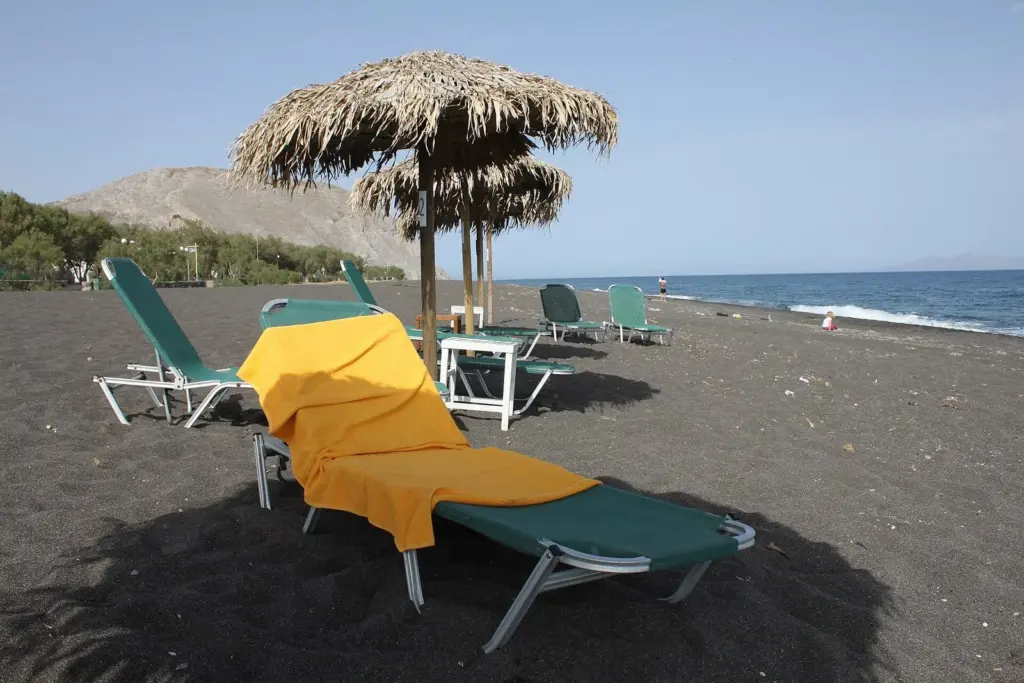
Beaches deserve a word of their own: Santorini beaches are volcanic black sand and pebbles, and our guide to Santorini beaches covers which are best in which conditions. And whatever the month, where you base yourself changes the trip; our guide to where to stay in Santorini covers the areas and their seasons, since many hotels close from November to March. Once you’ve picked your dates, a Santorini itinerary that puts the outdoor sights in the mornings will make any month more comfortable.
Events and Holidays Through the Year
Santorini events are concentrated from Easter to October, and most dates are announced only a few months ahead, so check the organizers before you plan around one.
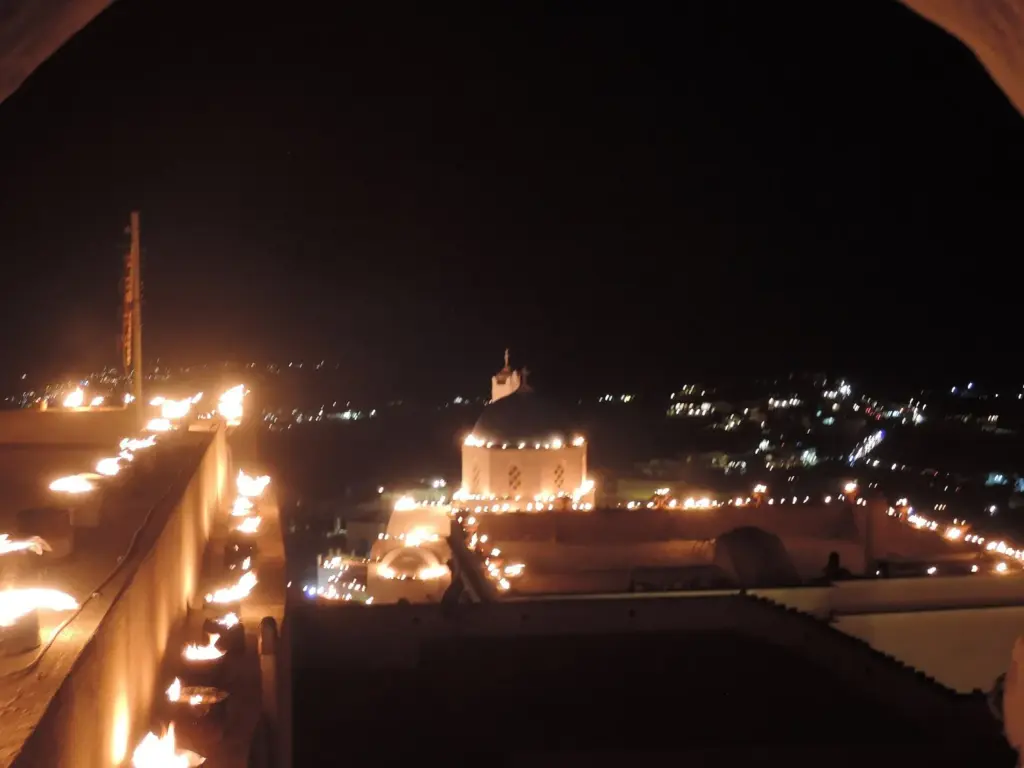
- Greek Orthodox Easter: the biggest celebration of the year. Santorini Easter is famous for Good Friday in Pyrgos, when the village is lit with thousands of small flames. Easter falls on May 2 in 2027 (it was April 12 in 2026).
- March 25 and October 28: national holidays with parades; the Ministry of Culture’s sites are free on October 28.
- August 15: the Assumption, one of the most important religious holidays, when Greeks travel to the islands and village feasts are held.
- Summer village feasts: each parish celebrates its saint’s day with food, music and dancing, mostly between June and September.
- The grape harvest: August and September; in 2026, the Vedema harvest festival took place on August 2, with free admission.
- Ifestia: a festival that re-creates the volcano’s eruption with fireworks over the caldera, held on September 19 in 2026; check the 2027 date before you plan around it.
- The Santorini Experience: an October sports weekend with a caldera swim and trail races, held October 16-18 in 2026.
- Christmas and New Year: a quiet, local Santorini Christmas, with decorated squares and church services rather than big events.
How Far Ahead to Book, by Season
- July and August: book caldera hotels months ahead, ferries and rental cars weeks ahead, and boat trips, wine tastings and sunset dinners several days ahead.
- May, June, September and early October: book hotels well ahead for the best rooms, especially over Easter and in September; activities can usually be booked a few days before.
- April and late October: good availability, but check that the hotel, restaurants and boat trips you want are running on your dates.
- November to March: book the few hotels that are open directly, confirm restaurants and sights, and keep flexible around ferries in bad weather.
What to Pack, Season by Season
- Spring and fall: light layers for cool evenings and windy viewpoints, a light rain jacket in October, swimwear for the pool and the warmer beach days.
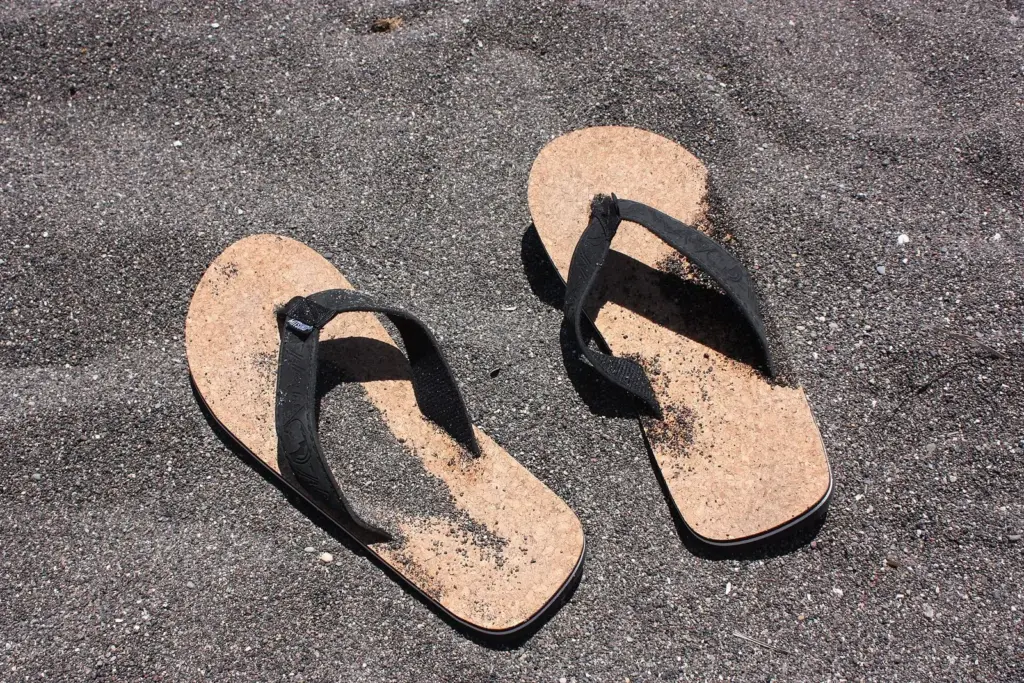
- Summer: hat, high-factor sunscreen, light clothes, beach shoes for the hot black sand, and a light layer for wind on the caldera and boats.
- Winter: warm layers, a windproof and waterproof jacket and proper walking shoes; the rim can be cold even on sunny days.
- All year: shoes with grip for the marble paths and steps, and a daypack with water.
Wind, Heat and Rain: What Can Go Wrong
- Wind. The meltemi, a strong north wind, often blows in July and August, sometimes for days. It cools the air but can make the sea rough, the northern beaches unpleasant and the ferries late or canceled. In 2026, Blue Star posted bad-weather itinerary changes in eight separate spells, including two in summer.
- Heat. Mean summer highs of around 30°C don’t sound extreme, but the sun is fierce, shade is scarce and the white walls reflect the heat; the record July high at the Santorini station is 39.4°C. Plan outdoor sights for the morning.
- Rain. Almost all of the year’s rain falls between October and March, with about 55 mm in both December and January. Summer showers are rare.
- Closures. From November to March many businesses close. Check that your hotel, restaurants and any boat trips will be running before you book a winter trip.
Daylight by Month
Daylight shapes a trip more than people expect: a June day gives you nearly five hours more light than a December one. These are our calculated 2026 sunrise and sunset times for Oia on the 15th of each month, in local time.
| Month | Sunrise | Sunset | Daylight (approx.) |
|---|---|---|---|
| January | 07:29 | 17:24 | 9h 55m |
| March | 06:31 | 18:25 | 11h 54m |
| May | 06:12 | 20:16 | 14h 04m |
| June | 05:59 | 20:37 | 14h 38m |
| August | 06:35 | 20:11 | 13h 36m |
| September | 06:59 | 19:27 | 12h 28m |
| October | 07:24 | 18:43 | 11h 19m |
| December | 07:22 | 17:04 | 9h 42m |
The practical upshot: in winter, plan sightseeing around a short day and an early sunset; in summer, use the long mornings for the hot outdoor sights and save the late evening, with its 20:30-plus sunsets, for dinner and the caldera.
The Short Verdict on Every Month
- January and February: quiet, cheap and cool; for walkers and solitude seekers only.
- March: the season stirs; good prices, few people, changeable weather.
- April: spring flowers and reopening hotels; great for sightseeing, cool for swimming.
- May: one of the best months; warm, dry and not yet crowded.
- June: long days and warm water, busy but not yet at the peak.
- July and August: hot, crowded and expensive; the best beach months if you book early.
- September: our favorite; the warmest sea and easing crowds.
- October: golden light and falling prices, with closings late in the month.
- November and December: quiet and local; many places closed.
What’s Changed for 2026-2027
| What | Now |
|---|---|
| Greek Orthodox Easter | May 2, 2027 (April 12 in 2026) |
| Festival dates for 2027 | Check the organizers’ sites; 2026 dates: Ifestia September 19, Santorini Experience October 16-18 |
| Civil Protection measures | In force until March 31, 2027 (Ammoudi road and path, Fira Old Port zone, Athinios traffic control) |
| Cruise passenger fee | EUR 20 June-September, EUR 12 April-May and October, EUR 4 November-March (since July 21, 2025) |
| Summer time | Ends October 25, 2026; clocks go back one hour |
What to Skip
- August on a tight budget. It’s the most expensive month and the most crowded. If you can shift by a few weeks, do.
- A winter beach holiday. The sea is cold and the beaches are closed up from November to April.
- Assuming everything is open in November or March. Check hotels, restaurants and boats before you book.
- The Oia castle at sunset in July without a plan. Arrive very early, or watch from somewhere else.
- A ferry on the day of your flight home in windy months. Leave a buffer day.
Best Time to Visit Santorini FAQ
What is the best month to visit Santorini?
September is our pick: the sea is at its warmest, mean highs are about 27°C, it rarely rains and the crowds ease in the second half of the month. May and June are close behind, with warm, dry weather, everything open and fewer visitors than July and August. Late October and April are best for value.
What is the cheapest time to visit Santorini?
November to March has the lowest prices, but many hotels, restaurants and boat trips close. For value with most things open, go in April or late October. Prices can fall sharply within October: one Oia hotel’s lowest nightly price dropped from EUR 652 on October 1-2, 2026 to EUR 194 later in the month.
When is Santorini most crowded?
July and August, especially around August 15, when Greeks head to the islands. Cruise traffic is heaviest from June to September, when Greece’s cruise passenger fee is at its highest rate of EUR 20. Oia is busiest from late afternoon through sunset, and Fira in the middle of the day.
Is Santorini worth visiting in winter?
For the right traveler, yes: it’s quiet, cheap and the caldera views are all yours. But most hotels, many restaurants and nearly all boat trips close from November to March, it’s cool and often wet, and the wind can be strong. It suits walkers, photographers and anyone curious about everyday island life.
When can you swim in Santorini?
Most people find the sea comfortable from June to October, with the warmest water in August and September. May and late October are fine for the brave. From November to April, the sea is cold. Wind matters too: on meltemi days the north coast can be rough while the south coast stays calmer.
What is the weather like in Santorini in October?
Warm and settled early in the month, cooling later. Mean highs are about 23°C and lows about 18°C at the Santorini station, with around 15 mm of rain on average. The sea stays swimmable for much of the month, and sunset comes at about 18:43 by mid-October. Some hotels close in the second half.
Is it windy in Santorini in summer?
Often. The meltemi, a strong north wind, blows on many days in July and August, sometimes for several days in a row. It keeps the heat bearable but can make the sea rough and disrupt ferries, as it did for Blue Star in late July and mid-August 2026. The south coast beaches are usually more sheltered.
When is Easter in Santorini in 2027?
Greek Orthodox Easter falls on May 2, 2027. It’s the biggest celebration of the year, best known on the island for Good Friday in Pyrgos, when the village is lit with thousands of small flames. Hotels fill with Greek visitors over the Easter weekend, so book early.
Sources and How We Checked
We checked the sources below in September 2026 and calculated the sunset times with NOAA’s algorithm for Oia’s coordinates; weather figures are long-term averages, not forecasts.
- meteo.gr (National Observatory of Athens): Santorini climate data
- NOAA Solar Calculator: the method behind our sunset times
- Ministry of Culture: Akrotiri, including free-admission days and seasonal hours
- Blue Star Ferries: 2026 bad-weather itinerary notices
- The hotels’ own booking engines, for season dates and October 2026 prices
Santorini Tourism Guide is an independent publication. We are not affiliated with the Municipality of Thira, the Greek National Tourism Organisation, the National Observatory of Athens or any business listed here, and no one paid to be included.
Photo Credits
- Terrace in Oia, late September: photo by Dietmar Rabich, via Wikimedia Commons (CC BY-SA 4.0)
- The caldera in April: photo by LBM1948, via Wikimedia Commons (CC BY-SA 4.0)
- Fira in August: photo by Wolfgang Staudt from Saarbruecken, Germany, via Wikimedia Commons (CC BY 2.0)
- Beach in April: photo by Klearchos Kapoutsis from Santorini, Greece, via Wikimedia Commons (CC BY 2.0)
- Pyrgos at Easter: photo by Georgios Michos, via Wikimedia Commons (CC BY-SA 4.0)
- Summer on black sand: photo by Klearchos Kapoutsis from Santorini, Greece, via Wikimedia Commons (CC BY 2.0)